Capturing Bigfoot shatters a legend and tells a family story
Capturing Bigfoot director Marq Evans and DP Jason Roark blow up the story of the infamous Bigfoot film with new footage and interviews. Podcast highlights include: -How a three-camera interview setup in ultra-wide, medium and close-up kept the look consistent over a two year production. Jason used Blackmagic Pocket cameras with Veydra lenses for a vintage character and a Super 8 camera for recreations. -How the crew stayed ready for anything with a drone and gimbal on hand. With last-minute access to subjects, the small crew had to be prepared for anything. -Matching the archival with lighting and post production. Jason used dramatic light and campfire glow for some interviews, and subtly added dust around the projector beam. Marq chose subtle film grain in post to help match the 60-year-old 16mm footage. Find Capturing Bigfoot: https://www.capturingbigfoot.com/ Instagram: @capturing_bigfoot Find Marq Evans: https://www.themccaw.studio/marq Instagram: @marqevans Find Jason Roark: https://www.jasonroark.com/about Show rundown: 02:12 Close Focus 09:51-58:26 Interview with Marq Evans and Jason Roark 59:11 Short Ends 01:09:39 Credits The Cinematography Podcast website: www.camnoir.com YouTube: @TheCinematographyPodcast Facebook: @cinepod Instagram: @thecinepod Blue Sky: @thecinepod.bsky.social
Show notes
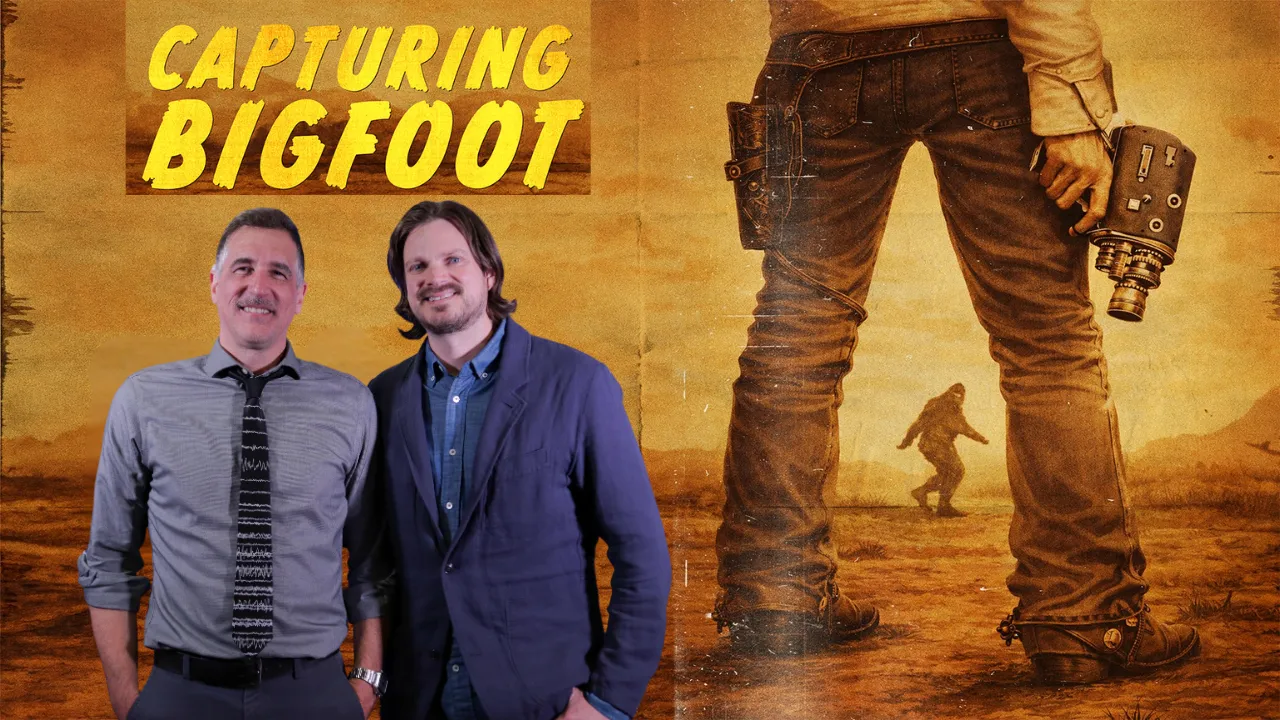
Director Marq Evans and cinematographer Jason Roark’s Capturing Bigfoot documentary reveals new information about the infamous Patterson-Gimlin film, the most iconic piece of Bigfoot evidence ever shot. But the filmmakers say the real subject is the Patterson family. “Somebody described it as a Bigfoot film about humans, or a Bigfoot film about a family,” Evans says. “And that’s what excited us every step of the way.”
The project began in June 2022, when Evans received an email about a 16mm reel that had sat in a safe for nearly 60 years. After a rigorous authentication process, the team spent nine months on the film before reaching out to the Patterson family, assuming they’d say no. It turned out Clint Patterson, the son of Roger Patterson who had made the Bigfoot film, wanted to tell his story. “He’s a documentarian’s dream as a character because he just wears his emotions on his sleeve,” says Evans.
Roark set the look early and kept it consistent. Most interviews used three cameras: two Blackmagic Pocket 4Ks with Veydra lenses for a vintage feel, plus a Pocket 6K. That gave them an ultra-wide, a medium and a close-up. Roark shot the few recreations on Super 8, and Clint and his brother Brad stood in for their father, Roger. Occasionally, Evans got last minute access to interviewees, so Roark and the crew stayed ready for anything with a drone and gimbal on hand. Roark made sure to have plenty of charged batteries at the ready. “You can redo an interview, but you can’t redo an in-person revelation,” he says.
Lighting fit each character. Scientific Bigfoot experts were evenly lit, while Sasquach hunters were lit dramatically. Campfire glow enhanced some scenes. “There was a little bit of thinking about how we were going to light specific characters for their role in the story,” says Roark. “But a lot of the verité just is what it is. We’re at the campfire and when it’s roaring, it makes for some beautiful light.”
Evans and Roark enhanced the archival look with simple, practical effects and in post production. When subjects watched the 1966 mystery footage, the crew set up the film projector and Roark gently shook dust into the beam for a dramatic look. To match the archival footage, Marq added subtle film grain in post, even to the interviews.
The film doesn’t claim Bigfoot doesn’t exist, only that the Patterson-Gimlin footage is definitely fake, based on the new evidence and interviews. Evans says the response has been intense. “There’s just so much attention from this community on the film. A lot of mean things being said, but also a lot of positive things. Overall, it’s been a positive experience, but I mostly try to avoid the more negative things that are out there. The last thing I’m going to do is go argue with people on the internet.”
Capturing Bigfoot is streaming exclusively on Amazon Prime Video.
Find Capturing Bigfoot: Instagram: @capturing_bigfoot
Find Marq Evans: Instagram: @marqevans
Find Jason Roark
Transcript
Read full transcript
MARQ EVANS: My name is Marq Evans. I'm the director of Capturing Bigfoot. JASON ROARK: I am Jason Roark. I'm the cinematographer behind Capturing Bigfoot, and we're on the Cinematography Podcast. INTRO TEASE, MARQ EVANS: One of the most emotional scenes in the whole film is shot on Clint's friend's cell phone. And he's like, you know, I'm going to my mom's house. And we're like, well, wait for us. We want, you know, we want to be there for that. And he's like, I'm going. Fortunately, his buddy said, I'm going to put this phone rolling. You know, in hindsight, it's like, well, it's probably even better that way versus. I don't know what the moment would have been like if there was, you know, these professional cameras and a bunch of people around versus just capturing that moment as it was happening. INTRO, BEN ROCK: This is CinePod, the cinematography podcast, a program about the art, craft and philosophy of the moving image brought to you by Hot Rod Cameras. I'm your host, Ben Rock. Today, Alana Kode and myself interview director Marq Evans and cinematographer Jason Roarke, whose documentary collaborations go back 10 years. Their latest Capturing Bigfoot premiered at South by Southwest. The infamous Patterson-Gimlin Bigfoot film has been analyzed by experts and championed by believers for nearly 60 years. And if you've ever seen a footage of Bigfoot loping through the woods, that's the film we're talking about. In their documentary, interviews with the Patterson family and, yes, new footage discovered years later, changes the story of the most infamous Bigfoot evidence ever filmed. In this episode, we dive into how a three-camera interview setup in ultrawide, medium, and close-up kept the look consistent over the two-year production. Jason used Blackmagic pocket cameras with Veydra lenses for a vintage character and Super 8 cameras for reenactments. How the crew stayed ready for anything. with drone and gimbal on hand. With last-minute access to subjects, the small crew had to be prepared for whatever happened. Matching the archival with lighting in post-production, Jason used dramatic light and campfire glow for some interviews and subtly added dust around the projector beam. Marq chose subtle film grain in post to help match the 60-year-old 16mm film footage. After the interview, stick around for our short ends, our pet obsessions of the week. But first, find out what's going on in the world of entertainment in our segment called... Close Focus. CLOSE FOCUS: BEN ROCK: Before we get into that amazing interview with the Capturing Bigfoot people, it's time for our Close Focus. And I'm joined today with our producer, Alana Kode. Thank you so much for coming on. ALANA KODE Hi. Yeah, well, you know, we're doing our wraps together because we did the Capturing Bigfoot interview together. BR: I know. So cool. I hope everyone goes to see this film. I said it during the interview and I'll say it again. If I was teaching a class in media literacy, I would start with this film. It's so good. AK: Well, it's on Amazon now, so people can go see it there. BR: Definitely check it out. This has been kind of a slow news week because the giant midterm elections and all that stuff, and we didn't want to get political, and yet... Here we are. We're not here to talk about the United States Congress or any of that stuff. But one thing that I think really has a huge, profound influence on the entertainment business is the mayor of Los Angeles. AK: Yeah, the politics in Los Angeles. BR: We're in a weird, weird, weird-ass place with that at the moment just because... It looks like the progressive. Nithya Raman. Well, here's the thing. Here in L.A., you know, in most places you'll have like... conservative and a liberal or a democrat and a republican or you know maybe maybe those and an independent or whatever but here because we had a runoff election where it was basically karen bass the incumbent nithya raman uh who's also a democrat so karen bass is a democrat and then spencer pratt reality tv show personality please go away spencer pratt those are our three choices and we had a runoff in june and spencer pratt was given his walking papers he was told to pound sand by lots of people because mostly because hey if you want to be the mayor of la maybe maybe serve on a neighborhood council or something like you don't just jump into being mayor just because you're famous and he's not that famous so AK: Look at- I'm sorry who's our president? BR: Yeah, yeah. Well, I'm trying to stay out of that. But yes, but go piss up a rope, Spencer Pratt. Go prove to us that you have any qualifications. So Nithya Rahman is a city council member, Harvard grad. But anyway, I was kind of like pulling my hair out on election day or the day before election day when I actually voted about who to vote for, Karen Bass or Nithya Rahman. And my opinion was this to be perfectly candid. I voted for Karen Bass. I have found her to be an unwonderful. mayor it was under her mayoralcy that we ended up losing the pacific palisades and altadena to a fire now she didn't set the fire but she was in south america i believe at the time didn't come back immediately and according to her fire chief like two three years ago so this isn't like a an election era thing i heard an interview with her fire chief and she was saying that basically Karen Bass's policies kind of left them flat footed and unable to fight the fire the way that she wanted to fight the fire. And people remember that, even though it was a few years ago. And she's been generally not the most exciting mayor. And then Nithya Raman, not quite as extreme as Spencer Pratt, but it's like you're going to go from city council member to mayor. That seems like. quite a jump she seems like a smart person harvard grad and also it makes me happy to know that her husband is a tv writer and producer so she's got a real connection to to the entertainment industry karen bass pushed for the merger of warner brothers and paramount which i think a lot of us- AK: So did governor Newsom BR: Yeah. Well, yeah. Governor Newsom wasn't on the ballot this time. So, you know, he's he's all done. It's it's just an interesting thing because you don't really think about it if you're just going to the movies. But who the mayor of Los Angeles is, is going to have an effect because, you know, Karen Bass, as I recall, came in and was involved in the strikes and stuff like that. So, you know, because because we're an industry town here, whoever's mayor of L.A. can really get in there and accomplish something. manipulate things and Nithya Raman is advocating for an uncapped tax credit for filming in LA and you know so anyway I don't know that I have a lot of brilliance to add to this conversation but I think if you're listening to the sound of my voice and you're interested in learning more about it you know look up Karen Bass look up Nithya Raman and you know if it had been Spencer Pratt versus either one of them my vote would have been locked in very easily the problem is that Karen Bass and Nithya Raman probably the Venn diagram of what they stand for overlaps pretty heavily. So it's like, okay, do I want someone who is a little disappointing, but maybe learn whatever lessons needed to be learned? Or do I want someone who's a little bit inexperienced and is a little bit more on the progressive democratic socialist wing of the democratic party? Which way do you go? And also like, how much can that person's leanings affect? our city, but also our industry. AK: Yeah. And also, let's remember, too, that the Congress has to vote on the federal tax incentives for film and television coming up before the end of the year and the lame duck session now that the midterms are over. So if you are interested in pressuring Congress and in California, I guess that would be Congressman Adam Schiff who introduced the bill. BR: But in any state, you can, you can call your congresspeople and push them. AK: This is a federal incentive. This is not just for California. This is for everywhere. This would be helpful to keep productions in the United States and would help also take the caps off of salaries for producers and things like that. It would be a great thing for our business and keeping business in the United States and staying competitive with the rest of the world. So if you're interested and you live in another state besides California, make sure that you're interested in having filming continue in your area or get some kind of a national incentive for this to happen, you can sign the Film USA petition which will help pass the American Federal Film and TV Production Incentives. So it lets Congress people know that people are invested in this and really want it to happen. And actually not a lot of people have signed still, so it would actually be really good. But they want a coalition of unions, actors, directors, producers, vendors, film commissioners, and studios to sign letters from the film community in every state to senators and representatives. And all you have to do is go to filmusa.org and literally click read and sign and you can send it to your state. BR: I think I'm definitely going to do that. AK: Yeah, I already did it. Illya had mentioned it in his short ends a few weeks ago and it's definitely worth it on the federal level to make sure this doesn't die and that this can get passed before and it should go into effect, they say, if it does pass by. But Congress has to vote on it. BR: I mean, it's a pretty popular I mean, like it's one of those rare things that both parties are are on board with. And part of it is that it was like initially spearheaded by John Voight. So he's someone who's well known in the entertainment industry and well respected, but also very conservative and in league with the Republicans right now. And I don't think the Democrats are going to want to spit on this because I feel like they know damn well that this represents a lot of money, not just to California, but to every state. AK: Yes. So I hope that, you know, the Congress can pass it. And if they do, it'll go into effect by December 31st of this year. BR: Sweet. With that, let's get into our interview with the Director and DP of Capturing Bigfoot. AK: Here we go. INTERVIEW BR: Firstly, I just want to congratulate you both on an amazing documentary. It rocked my world. I watched it. When Alana told me that we could have you on, I'd heard about it. I was like, oh my God, I'm dying to see that documentary. And I have an eight-year-old kid and it's hard to peel off and go to the theater sometimes. So I jumped into it. So I want to, before we even start, I want to put something on the table about myself, which is that I am a child of the 70s and the 80s. And I grew up watching In Search Of, and I believed in all of this stuff. Years later, in the year 2000, I found myself as one of the producers on a reboot of In Search Of with the original Alan Landsberg who had created... in search of and i remember there was a day where like the scales fell from my eyes when uh i assumed alan landsberg believed all the stuff that he put on in search of or at least was open to the idea because he had a strict no skeptics rule you wouldn't have someone come on and say the patterson gimlin film is real and here are my things then you have someone else come on and say well here's why it isn't You would only have one person say, here it is. And then you'd have another person say, here we are at Bluff Creek. And I have looked at this footage my whole life. And I remember Alan, I said something to him that implied that I thought he believed it all. And his reaction was to look at me like I was the biggest idiot in the world. And he said, and I'll never forget, he said, I believe people will watch it if you put it on TV. And I was like, oh my God, like everything, UFOs, ancient aliens, Loch Ness monster, all that, all that stuff. And, you know, like one by one, you know, the chips. of so many of those things have fallen, the things that we were told were real. And I feel like this is one of the big ones. I don't mean to spoil it for people, but a quick Google search will tell you, they might not tell you the how of it, but this is a movie that not only debunks the Patterson-Gimlin film, doesn't debunk the existence of Bigfoot, I guess, but debunks the most iconic piece of evidence, quote unquote, evidence anyone ever had, but also does something. You guys do a magic trick that I think is amazing, which is you make it a very personal story about a family. And that is actually the bigger takeaway. What was your intention walking into this film? Did you have any idea that you were going to blow it up the way that you did? MARQ EVANS: Yeah, I mean, you said it really well, Ben, that the intention was to make a great film, tell a great story that was character driven about these these people that we had kind of unprecedented access to which is the patterson family telling the story for the first time which led us to a lot of other people that had not really ever talked about it as well and so when we got into it i realized like okay these are these characters are awesome like the the 1960s characters of like roger patterson and bob gimlin these were cowboys from yakima washington which is actually where i was born BR: oh wow ME: like a great connection to that right away and then eventually when we meet clint patterson who you know his dad was the one that filmed this famous footage he's a documentarian's dream as a character because he just wears his emotion on his sleeve yeah so raw and and was just you know that that kind of changed everything where we realized like this is the story i always knew that it was going to be you know certainly it's surrounding this this famous film The whole film kicked off with this new footage that had been locked in a safe for 50 years that we can get into. That's what sparked the whole project to begin with. That was first. But then it was during my research, finding these characters, finding these people, figuring out the family story, the family dynamics. That's what really was exciting for me to be able to tell this story through them. BR: Yeah. I mean, you could do a hard hitting journalism kind of thing, that's just about the film. I mean, like going in, did you know what was on that new footage, quote unquote, new footage from 1966? ME: Well, I mean, we, I saw it early on and the curiosity of, well, what is this and how. these stories that the owner of that footage, Teresa was telling her family stories, how was it connected to the Patterson film? That's what, that's what started this whole thing. So I got to see that early, but I didn't know what I was looking at. And so it was just, you know, many, many months of research and development and trying to figure out what is this, how does it connect? And then, like I said, when I got to the Patterson family, that's, that's really where the emotional side of the story opened up. BR: And how did you get the Patterson family to open up the way they do? Because obviously some of them were advocating for it being a hoax. Some people were incentivized to not financially. And so they're not going to want to shake up their life for just anyone. How did you approach them and how did you kind of earn their trust to get inside to make such an intimate family portrait of them? ME: Well, I mean, we were probably nine months into making the film before we even reached out to them. And who we reached out to was Clint Patterson. But we were making the film based on this mystery film that we got, based on also tapes, audio tapes we had from Greg Long, who 20 years ago wrote a book called Making of Bigfoot. And he recorded all of his interviews. So we had access to those and we had some archival. So we thought we had a film there. We also thought that we just assumed that the Patterson family was not going to participate because they've never done interviews. They've never gone on the record with this. Their role has been, you know, Roger Patterson died in 1972. When he died, he left this film essentially to his wife, Patricia, who had three young kids to take care of and to feed and, you know, put a roof over their heads. And she's got this one of one asset, which is this Patterson-Gimlin film. And so she starts, you know, there's demand to license it. So she's licensing it to document. documentaries in the seventies, like in search of, Oh God. Yeah. And so that was kind of, you know, the way that she survived and, but they didn't ever want to get into, they didn't want to be on TV. They didn't want to be giving interviews where they're having to answer, you know, their opinions on if this footage is real or not. Clint has told us many times, you know, when people would ask him, his response was always just, well, I don't know. I wasn't there. But he's known the truth about it for a long time. And it was really, you know, what we found out is when we finally got in touch with him, it was really wearing on him. And so we did, like I said, like nine months or so into the process, we thought, well, let's at least reach out to the Pattersons. They're going to tell us no. But we got to at least take a take a shot at it. And we eventually get to Clint through his cousin. And what we find out is that Clint for eight years at that point had been wanting to tell the story. BR: Oh, wow. ME: He was going to write a book about it when he had told his mom that he was going to do that. That was a big rift. And in fact, they went eight plus years without talking because of it. But, you see in the film you know the reality like the healing starts happening in the film you see it take place um they're still in a great place with their relationship which is just you know awesome to be able to help bring that together it started with clint that's who we got to first um again he's just an amazing person an amazing character for a documentary film and his participation really helped open a lot of doors for us BR: Yeah. ME: And it takes some really great emotional turns and there's a lot of emotional stakes in it, which I think really helps bring it together and make it more so that people want to care about what's going on here. You know, it's like more of almost more of a story about a family too, you know. BR: Yeah, absolutely. ME: And that's really, you know, somebody described it as it's a Bigfoot film about humans or a Bigfoot film about a family. And that's what excited us, you know, every step of the way is to make that film. I wouldn't really care or be interested in making a film that was just like, this is a film about Bigfoot and footprints and all this, you know, in the weeds stuff. Like, not really that exciting to me. You know, we get into some of that stuff, but really it's more about the people and the emotions and the stakes behind it. BR: But had they not agreed, had Clint not agreed to be part of it, what would your film have been then, mostly? ME: It's a good question. Jason and I shot another film together in 2021, came out called Clay Dream, and a piece of footage that came very late in that film. So that was about Will Vinton, who is like the godfather of claymation, the father of claymation, did the California Raisins. But he had Phil Knight from Nike came in. and essentially ended up taking the company from him. So that was going to be part of the story, but I never knew how to tell that story. And then two years into the project, Will Vinton says, hey, did I ever give you the footage of the whole depositions and the whole legal battle that happened? I was like, well, no. And so... knew that in that case, I knew that I was going to tell that part of the story, but I didn't know how. I think about that with this film. We were making a film. I don't know what that would have ended up. I think it would have been a good film, but I think we ended up with a really great film because of that access. So I don't know what it would have been, but it would have been a completely different film for sure. BR: Jason, at what point do you come into the process of this? Are you involved at all in the research phase? Where do you come in on a project like this? JASON ROARK: Yeah, in a kind of a tertiary sort of way. I'm involved. Marq and I have worked on a lot of projects together over the years. This is the third feature film, feature documentary that I've made with him. And it's a small crew, I think. At most, there were five of us at a time. So Marq got this new footage, which was extremely exciting. But so many of the primary characters that are in the film kind of introduced themselves along the way. We got so lucky to have such great access to all these principal characters and, you know, huge props to both Marq and our producer Tamir for, you know, really cold calling some of these characters. Bob Hieronymus, who is a really principal guy in this story, I remembered. Marq, Tamir, and I are waiting outside, and he knocks on the door. Bob's wife, Glenda, kind of answers reluctantly with a crack in the door, and over time, we see it open up, and after a while, he goes inside. ME: So many of these characters were just eager to tell the real story and the truth of this crazy lie that had been told for so many years. It evolved really naturally, and to have the emotional access to the family was the key to how the story evolved. I mean, the footage is one thing, but the family story is really everything that this film is about. And I think in development, I teach... at a college where I live. And so I had some students help with some like initial development interviews before we knew if it was a project or not. We ended up reshooting those later once we realized that there is a project here. That's where it's like, all right, Jason, let's go. You know, we've got a film here. So from that moment on, you know, yeah, Jason was DP. And like he said, it was a small crew. We would generally have maybe one or two other people working alongside of Jason kind of in the cinematography department. But we kept it tight. AK: How many cameras and like what cameras did you choose? JR: Primarily we used Blackmagic cameras. Most of the interviews were like three camera setup. BR: Which Blackmagic camera? JR: Most of the interviews were like two pocket 4K cameras with like little cinema lenses on them, Veydra cinema lenses, which are kind of really... they kind of have a vintagey look um great pair with the with the pocket 4ks and then we used to pocket 6k too for the third camera in that setup so we'd have an ultra wide kind of a traditional medium and a and a close-up depending on location you know we would set up generally in that configuration but it's a that's a lot of data too at the end of the day we just do hours long interviews and Marq would wrangle all of the data at the end of the day himself and you know did the initial edit on the film as well i've got the hard drive sitting here it's a 72 terabyte hard drive oh my god it's getting full yeah so the workflow is kind of kind of insane ME: Jason somebody actually asked me the other day and i couldn't remember what what did you usually use for like a run and gun camera when we weren't on you know on sticks with the black magic? JR: I really like the, I have a Pocket 6K Pro, and it has built-in neutral density filters, which are really important when you're outside, just to be able to adjust that quickly. Kind of, you know, the sunglasses for your camera. And that went on the gimbal nicely, so a lot of our kind of walking shots, or when we're moving around a lot, we were on a Ronin with the 6K camera. But often, you know, there were... would just be thrown into a situation where we had access to a character kind of last minute and we're running over to a location. Oh, would we throw the drone in the car? Yeah, we have it. Okay, how many cameras do we have? Let's go. So we would often, you know, put up a couple cameras in those situations and they were on sticks or on the Ronin. ME: One of the most emotional scenes in the whole film is shot on Clint's friend's cell phone, you know, which is, you know, He tells us he's going there. He calls us and he's like, you know, I'm going to my mom's house. We're like, well, wait for us. We want, you know, we want to be there for that. And he's like, I'm going, you know, fortunately his buddy said, I'm going to put this phone rolling. Um, not really to get the footage, but just, you know, literally they didn't know for security, like for safety, like he didn't know what to expect. And so they put that phone in his camera and, you know, in hindsight, it's like, well, that's, it's probably even better that way versus. I don't know what the moment would have been like if there was, you know, these professional cameras and a bunch of people around versus just capturing that moment as it was happening. BR: Like how long of a shoot is it? Like, you know, I mean, obviously, if you're making a narrative film, you schedule all your days together. But when you're doing something like this, where you may or may not have access to certain people or revelations are coming up as you're going, like from your first shoot day to your last shoot day, how many days, weeks, months are we talking about? ME: So development started from when I got this initial email about what ended up being this mystery film. That was in June of 2022. And it was really slow development, some interviews, some archival, some sizzle reel creation, really for almost like a year and a half. And then in January of 24 is when we got some financing to really start. And then it would just be based on schedules, based on time. of certain things. And so it wasn't like a sprint, but we really, the bulk of production was between January, 2024 and probably June, 2025. And, you know, we interviewed a lot of people, even more than you see in the film. There are certain characters we interviewed that had to be cut and they are three camera interviews. And depending on the subject, I mean. At the minimum, it would be like a two hour interview, but there was a lot of interviews that were six to eight hours or over multiple days. BR: Yeah. ME: Marathon type interviews. And then, you know, one of the other visual languages in the film or components is we have to show everybody this new film. Many of the subjects get to see this new, you know, what we were calling the mystery film from 1966 of a Bigfoot. And we would set that up on a projector, an old projector and, you know. Jason would get the lighting all right, the mood set. And so you see a lot of that as well. And there was some fun stuff that we did from, you know, obviously it's a documentary, but we do want the production value to be, of course, as high as possible. And I just remember like, we loved the look of dust flying in some of those shots with the projector. So we're above like with like a pillow and hitting those. So yeah, a lot of fun trying to make it look as pretty as possible. BR: Were you actually running that film through a projector for people? ME: no we made one copy of it BR: so okay i was like i mean like that's like gold you can't so you ME: so whenever we're analyzing the film like the physical film with some of the experts that's the camera original because only the camera original has certain data on it that um that people need to see in order to be able to authenticate it but then whenever we threw it on a reel that was the one the one copy we had and and it survived it survived the shoot the projector didn't really by the end of it it was kind of broken and we had to shoot around some of the aesthetic issues with with the projector at that point i mean that thing what is it from the probably the early 60s or something. The bulb still worked and it went back and forth on the plane any number of times and continued to come through until the end for us. BR: So, Jason, I mean, like this is like a year and a half long process, but obviously you're there when they need you and off doing other stuff. Do you do a lot of this kind of shooting and how do you balance keeping all the balls in the air of various projects while you're working on them? JR: This film was great in that it had, you know, some pretty decent financing. It's so much that I could prioritize blocking out dates for it this is the kind of work that i really love to do i shoot a lot of commercials as well and you know do many documentary stuff but i love working with Marq and this story was just so captivating that i wanted to be working on it all the time and You know, it was really good. And I want to emphasize again that it just came together so naturally. We were all available at the right times to schedule these three or four or five day shoots and clusters. There was definitely some travel involved to, you know, different interview subjects in different locations. But we spent a lot of time in Yakima. It worked out great to kind of intersperse my commercial life with this documentary. We were Yakima, Washington, Seattle, Montana, California. I'm sure I'm missing some places. I don't think we had to go across the country at all, if I can recall. ME: I love working with Jason so much, and now we've got 10 plus years of experience, you know, not just the films we've done, but other films that we've tried to get going that maybe still are going to come or haven't weren't going to happen. And so we were able to kind of like try to work around each other's schedules. I don't I don't remember any days where we couldn't get you because we had to go shoot something. We were able to kind of arrange if Jason wasn't available. Well, let's make sure we schedule this around when he is because we just work together really well. BR: Well, I guess my question is more about like, you know, if you're a DP on a feature or whatever TV show, like you're just living in that world the whole time. while you're working on it but this is like spread out over a year and a half so you're shooting in clusters and you're you're off doing commercials you're maybe shooting other documentaries like when you come back together is there how do you get your head back into the world of this film or another project when again it's it's a different lifestyle than just like i'm only shooting this one thing for these four weeks or whatever JR: Since these were such targeted and really full days, we would do 10-hour, 12-hour days from time to time and add the data management for Marq on the tail end of that. We weren't sleeping a lot. But we were embedded with Clint and Vale and these characters and quickly hit it off with everybody, I'd say. Such a good working relationship with all of the principal characters in the film. And it was really easy just to fall into the rhythm that we kind of established early. And I'll say that it was a lot of improvisational days where we might be able to do this thing, or we might have access to this character a little later on. And we had to be willing to, on the fly, kind of like figure out how to make all that happen. You know, a lot of the film is verite, where we're not lighting anything. BR: Yeah. JR: following these characters but it's important to have you know the right number of batteries on your person because you don't know how long this setup is going to last and you'll often only have key moments uh that are very important you don't want to miss and yeah you can redo an interview but you can't redo uh in-person revelation yeah and i think it was the combination of being really prepared and early on establishing this like three camera setup with an ultra wide a medium and a close-up and then kind of just The look, you know, we established that early and then we just try to stay consistent with it. And then on the other side, being totally wide open to whatever happens, you know, that's like we can we have some control over the interviews, but then you can't control a lot of the other things. But being prepared for that and being ready to move quickly and be in the moment. AK: Did you try to make the film look a certain way to kind of help match some of the archival footage that you had? ME: Yeah, definitely in production in a way with the lighting and then certainly in finishing. That was something we worked with a company called Therapy Studios out in L.A., Omar, our colorist, applied a little subtle film grain to even the interviews and everything. And so that was something that we did, you know, as much as we could in production and then also in post to try to make it feel like it was, you know, it was it was matching in a certain way, for sure. AK: And tell me a little bit more about like the story of how. you got the footage in the first place. I mean, I know you go into a little bit in the documentary, but- ME: we don't, we don't really go into it. AK: That's why I was like, it's a little convoluted, even the origins of the footage itself. ME: Yeah. And of course there was a question of like, should that be part of the film or not? We, we, we knew that it would be a question, but then that doesn't necessarily mean you have to answer it in the film. There are certain things it's like, that could be a story that lives outside of the film. And that's ultimately where we landed because. I mean, at one point we had a three and a half hour cut and there was. Yeah, there's so much to talk. Yeah. And it was a question of like, is this is this a series or is it a standalone film? We down the road figured out and decided like that's a standalone film was what we want to do. And so so much is cut. You know, there was there was discussions early on. Do we introduce this new mystery film at the beginning of the film and run both stories parallel? We realize. that would be really confusing for an audience we need to kind of introduce them or reintroduce them to the patterson film and let that play out and then this is like you know what we decided on is like this this third act bombshell but then when you don't introduce it until the third act that leaves a couple challenges one you can't introduce too many new characters because you know, the film is, you know, we're coming to a conclusion. So you've got to introduce just enough information where, you know, where it's satisfying for the audience. So all those decisions are being made. And one of the things that left was... real explanation. You see a title card that says, you know, essentially the filmmakers have come into possession of a 16 millimeter film reel hidden in a safe for, for nearly 60 years. Right. And then, but we realized like that's going to be the number one question in the Q & A or online when people ask me about it is like, I want to know more about that. And there's a lot more to just that whole story also that ends up being on the cutting room floor. But the way it happened was I got an email June of 2022 from Teresa Brooks. So she's the one that had. This mystery film of a Bigfoot. It had been in her father's safe for 50 plus years. Her origin story surrounding this film is I think she watched In Search Of. And everybody at school had watched In Search Of. So this is like early 70s. And she, everybody at school is talking about it. She's a little girl and she's terrified. And she lived in the woods. So that day she has to go through the woods to get home. And she just thinks there's a Bigfoot following her the whole time. And she gets home crying and her dad asks her what matters. And she says, Bigfoot, he says, listen, don't worry about it. I was involved in the making of that film. It's not real. It's okay. And so that was like the introduction to her and Bigfoot. And then as the years go by, her mom kind of had a rule. We don't talk about Bigfoot in our house. We don't want dad and uncle Dave to get in trouble. And she's just hearing these little things, but not really knowing the full story. But she knows that there is a... of a Bigfoot in her dad's safe, along with like rare coins and other things. Her parents pass away and she has access to the safe and to this footage. And she just wants to know more about it. She wants to see what's on there. And that's where I get an email from her. And the reason it came to me is she teaches at Olympic College. I think I said earlier, I teach film there. She knew we had a film department. And so she just wanted to see, could we show it to her? Could I help her project it? We didn't have that ability at the school. So I helped her get it scanned. And then it comes back and it's this other Bigfoot, but very similar to the famous one that we all know. And so just all kinds of questions of, well, what's this? What's the story behind this Bigfoot? Let's go down that path. And where it took us was what you see in the film. AK: Wow. BR: Wow. No, that's crazy. AK: And her dad had it because he developed the film, Patterson had originally approached him to develop it for him? ME: Yeah. So Norm Johnson, Teresa's dad, was the head of the Boeing Film Lab in the 60s. It's never been proven who developed the famous Patterson film. That's always been really a hot topic because there's been questions about the timeline of how they shot that film. if they did on Friday, October 20th, and then on Sunday, October 22nd, they were already viewing it in a basement together. And so the problem with the timeline there is no lab could do it that fast. And if no lab could do it that fast, and that raises questions, did they really shoot it on Friday, October 20th, like they said they did? And then that just raises a whole bunch of questions on if they're lying about the timeline, then is it real or not? And so I believe they probably shot it earlier than that. But this new revelation of Norm Johnson being involved in the story, that was not a name that any of these researchers had ever heard before. What people did research before was that maybe it was processed at Boeing. And a couple of researchers had gone down that path, but they couldn't figure out who at Boeing it might have been. They would run into a wall every time they got there. And so they kind of gave up on it. And then lo and behold, we find out that this other film ends up. in the safe of Norm Johnson, head of the Boeing Film Lab. So he probably developed both of those films, the 1966 mystery film and the 1967 Patterson film. BR: Is it reversal film? Was it shot on reversal? ME: I believe so. I'd have to double check the Kodak Kodachrome 2. I believe it's reversal. BR: I always assumed it was Super 8. I didn't know until the film that it was 16. I know it looked like... looked like Super 8. Like when I was watching it and it said, and there was a 16 millimeter camera, I'm like, that can't be right. But I mean, like of all the things that blew my mind, that was the least of them. AK: And the detail that he basically stole the camera. ME: Yeah, he just never gave the camera back. I mean, we had like, he shot the famous film in October. Let's just say October. I mean, he still had the camera. I think he got arrested for it in November of 1967. In the archives, we actually have a letter from the camera shop way back from May where they were already saying, hey, this is what way past due. We need it back. So he had it many, many, many months past the due date. And yeah, he was eventually arrested for keeping the camera for so long. BR: As I was watching the film, I kept wondering, do you guys ever go to Bluff Creek? And I don't recall you going there in the film. ME: Jason and I, just the two of us, it was a two-person crew, went to Willow Creek. in june of 2025 or july i think of 2025 for what they call bigfoot days d-a-z-e which has been going on since since the 60s before 67, actually, I think it started in like 63. So that is the town closest to Bluff Creek. You see the closing credits. It's out like the parade there. We did talk to like this Bluff Creek project that was there. These are the guys that kind of helped identify, re-identify where the shooting location was and they've mapped it out and it's pretty cool. So they showed us how to get there. We started driving that way. We shot a little recreation of the roads that's in the film, but we got started a little late in that day because we had some other things to shoot. We'd never made it to the actual film site, but we were in the vicinity. BR: Yeah, I just always wonder, like, how much of it, you know, is there a Starbucks there now or does it basically look the same? ME: No, not at all. It's really, I think it's like a two-hour drive up in the mountains and then a 45-minute walk. It's pretty remote. AK: Yeah, we used to go, my family used to go camping up there. BR: Really? AK: Yeah, near there. Well, I guess my other question is, you know, The reaction from the Bigfoot community, what's that been like? ME: It's pretty intense. You know, regardless of the film, what film I make, I generally try to not pay too much attention to the conversations around it or reviews, like David Lynch said. you know, the good ones aren't good enough and the bad ones will destroy you or whatever. And so, and I've always kind of felt that way. So I like to have a general sense of like, how's it being reviewed? How's it being received? And then if we're working with a little team, like, hey, if there's anything that we do need to like be responding to. And so this one is different because there's just so much attention from this community on the film. A lot of mean things being said, but also a lot of positive things as well from that community because that community is split between people who believe in Bigfoot, or are skeptics like the whole phenomenon so of course the skeptics are you know loving our film and then the but then the true believers are split between people who believe the patterson film and who don't and so you've got the people that never really believed in it they just love our film for the wild ride and then you've got the people that have always believed in it and you have their split between oh wow okay you just you just proved something that i didn't think was true or the the really hardcore ones a lot of them that have money and books and stuff writing on it, they're the ones that are coming out and just kind of attacking the film. And they started well before the film was even out, you know? So we've been dealing with this for many, many months. Overall, it's been a positive experience, but, and I mostly try to avoid some of the more negative things that are out there just because it's not healthy to really, the last thing I'm going to do is go argue with people on the internet. BR: Well, and your film doesn't attempt to prove or disprove the existence of Sasquatch, just this one film. ME: Not at all. And there was a lot of people before the film came out talking about that, that like, you know, being so mad, like how dare us try to say, you know, that Bigfoot doesn't exist. It's like, well, that's not what we're saying at all. And I think the film is pretty clear of that, the way it's presented. And so that's calmed down a little bit, but it certainly hasn't stopped plenty of people for, you know, throwing all kinds of mud on the wall to disprove or discredit our film. saying that this new film is AI and all kinds of things. BR: Oof. Well, and to me, one of the things that's interesting about it, and if I was going to teach a class in media literacy, I might play this film on the first day, is that you have Dr. Jeff Meldrum and Bill Munns. Dr. Jeff Meldrum is a zoology professor or something. He's teaching college right now. And Bill Munns, who is a Hollywood special effects makeup guy. And at the end of the movie, if I'm not mistaken, they're both like, no, this is real, I don't care what you show me. The Patterson-Gimlin film is authentic. ME: So Dr. Jeff Meldrum, he sadly passed away last year. BR: Oh. ME: So yeah, I mean, we obviously were hoping that he would be part of this whole rollout and be part of the conversation with us. Really enjoyed our couple days that we got to spend with him. He was a professor of anatomy, tenured professor at Idaho State University. BR: Yeah. ME: Who, I mean, his, you see in the film, like he saw that footage the first time when he was 10 years old. So it was just this very special romantic thing for him. So he really believes strongly in it, plus Bigfoot in general. I mean, he went out on the line. It almost cost him his tenure, but he strongly believed in it. And there's been people that said, oh, he didn't really believe in it, but it was a money-making thing. I don't think that's true at all. I think he absolutely believed in both the Patterson film and Bigfoot. But he does come around at the end. He says, you know, he comes to the conclusion, well... it is the case that the Patterson film is not real, but it doesn't change my opinion about Bigfoot. BR: Okay, that's where I got that opinion. But Bill Munns doesn't move, does he? ME: Correct, yeah. So we kind of have three central Bigfoot life for people in there. You've got Dr. Meldrum, Bill Munns, who did costumes, and then Larry Lund, the Sasquatch sleuth. Larry comes fully around. He realizes exactly what it is, and he's willing to admit it. And then you've got Bill Munns, who's on the total opposite side, who understood. He wrote us an email couple weeks after we shot with him and he analyzed the film and he was able to break down everything totally accurately based on what he's seeing And then he said, therefore, with all that said, my conclusion is that this means nothing, that this was just a recreation of the famous film, which there's no evidence at all that that's the case. And so but he is 100 percent convinced based on his analysis that the Patterson film is real and that nothing can change his mind. And so if you're 100 percent and minded, then of course, you're not going to have a different opinion based on everything we provide. BR: I just feel like as someone who like made monster suits or whatever, as he did like looking at, you know, your evidence where you clearly see the seam down the back. I mean, I guess if you were going to recreate it one way or the other, maybe you would, you would go out of your way to recreate those things. I started as a special effects makeup artist and I, I mean, admittedly in the nineties, but, but it's like, you know, when he's saying that they didn't have the technology to do that in the sixties, I'm like, eh, bullshit. Like I, I, uh, they totally had the technology to make a suit like that in the 1960s. ME: Yeah. And there's other, costume and special effects experts that disagree, you know, and plenty of people that just want to believe so bad. Well, they're going to either not listen to those people or they're going to discredit them and they're going to say, Bill knows what he's talking about and nobody else does. And even if you couldn't do that in Hollywood in the 60s, that doesn't necessarily mean that somebody like a Roger Patterson couldn't do it because Roger was solving a different problem. Roger wasn't trying to make a movie for hollywood where they had to have all these different costumes they had to talk and they had to be able to take it off for breaks and stuff. BR: Make it safe! ME: yeah make it safe he was trying to make a 60 second film from a distance shot on 16 millimeter and he was a brilliant artist he was a craftsman AK: And purposely shaky. ME: Purposely shaky. Yeah. So and then when you add in the fact that there was a call it a rehearsal film where he could see like, OK, the face needs more work. The head needs a little bit more work. And I got to get further back to really sell this thing. And he was kind of he was this outsider artist. He was working with not the same materials that Hollywood was working with. He was working with styrofoam, you know, football helmets and pads and horse hide. He was he was this cowboy. He had a different set of materials to work with. And I think, you know, art. history of art is filled with those stories of like you got lack of resources well then do something that nobody else has done before and i think that's what he did. BR: Yes it's so funny to think about but it really is true that a hoax is just a work of art and being able to fool the world i mean you know it's he's not a hoaxer necessarily but banksy does provocative art that has a mystery around it. And I feel like that's one of the things, kind of a question to both of you two was you start the movie with the deep tease of showing us that a film exists. And of course, we're all, you know, as an audience, I'm like, what's on that film? And you kind of tease it throughout. You do a really good job of kind of laying a trail of breadcrumbs for us. But the whole movie feels, in addition to feeling like a family drama, there's a mystery to it. There's kind of a mystery tone. How conscious were you in the filming? and to you, Jason, the cinematography, that this was kind of a mystery, even as you guys, you know, because you're making a documentary, you don't know where it's all going to end. You're kind of embroiled in it yourselves. How do you set that tone? Or is that just something you find in post? ME: A little bit of both. I mean, I think we... knew that early on that it's like there's kind of this true crime element to it there's this like investigative element and we certainly didn't want that to take over the film but we wanted to have that present it's it's a mystery has been a mystery for you know many many decades so we did want to lean into that certainly with the edit i don't know jason was that on your mind? JR: i can't remember like how much we talked about that as like a visual language as well You know, I think so. And we definitely talked about the way that we were going to light different characters. For example, like Dr. Meldrum, he's a little more evenly lit, a little more flat lit, I'll say, in this kind of like revelatory scientific presentation, whereas like the Sasquatch Sleuth or Terry are very dramatically lit. And it kind of went along with the character study, I think, a little bit. There was a little bit of thinking in that and how we were going to light specific characters as to their role in the story itself. But then a lot of the Verite is just is what it is. We're at the campfire and when it's roaring, it makes for some beautiful light. AK: And you didn't do any recreations for this at all, right? Because you had a lot of archival footage from Clint. ME: Yeah, very little recreations. There was a time where we thought we would maybe even cast for all the main characters and do recreations and stuff. And ultimately, for me, I love archival so much. I only want to do that if you have to. And ultimately, we just kept adding more and more archival and realized, hey, we're not going to have to do these recreations. We're going to be able to tell it through archival. There's a small amount of just recreations. just used to match the archival. And in fact, actually both Clint Patterson and his brother, Brad Patterson. So Roger's two sons, they both have a shot or two in the film where they're standing in for their dad, which was kind of fun to do one where like. It's as if it's Roger, like pulling a cast out of a briefcase. That's Brad. And then Clint from a distance is on a horse. And Clint especially is just like a spitting image of his dad. And so there's a handful of recreations, but we shot those to match the archival. And that's where the Super 8 came in. Some of those key moments on Super 8 to match the vibe. BR: Nice. Yeah, it looks good. Yeah, I assumed that that was actual archival because it's super eight. ME: We scanned so much 16 millimeter, including like the the original film, the documentary that they toured around the country with that that we talked about in the film. Oh, we had actual reels and those I mean, they cleaned them like crazy. They showed us the synch of just how dirty those were i mean they really took great care to clean those off very we're very you know protective of those and had beautiful scans so um so we had all of this archival some of the archival that we had some of the 16 millimeters were not even developed yet and so we didn't know jesus we didn't know what was going to be on there and we spent quite a bit of money just by chance hoping that there was some things on there and there was there were some things we used which was oh wow so like 60 year old 16 millimeter reels that hadn't been processed still had an image on them yeah and i mean there's two shots i can think of and they're really under i was looking in the film i think it's more of just because they're washed out because of age we got lucky with that and then so that same that same company the eight millimeter that jason shot scanned those two and it's just beautiful i mean some of it like i think we had to dirty up a little bit more in post because it was just like so pretty it was so clean and so clear and it was like oh this doesn't look vintage enough it looks too new So even though it was shot on eight, it just, yeah, we had to dirty it up a little bit more. I think one of the key things with the Patterson-Gimlin film that we've all been seeing, you know, these many years is that we're looking at kind of copies of copies and it may be like a VHS copy that we're seeing on In Search Of or, you know, on the internet in more recent years. It is so much farther away than the mystery footage that we have and maybe kind of intentionally a little bit out of focus. The subject is a little bit out of focus. So all those things kind of culminate in it looking more lo-fi and for the viewer to be able to project their imagination on what they're seeing ultimately, I think. And I think going back to just Roger Patterson is this artist, this outsider artist. I mean, he was a filmmaker in many senses by the time. he was doing this, like he was shooting a documentary documentary. He had all kinds of other footage that he shot. I mean, he was, he was using this Kodak K 100 camera that, you know, he basically stole, but he was working with other cameras as well too. And so I love that part of the story is like, you know, we know of this guy is the guy that shot this Bigfoot film, but he was really also, you know, an artist and a filmmaker. And he was also kind of like an influencer or, or like predicted hustle culture that is so prominent now in a lot of ways. BR: So true. ME: He was filming everything. He would never, never wanted to work for anybody but himself. And so I think he was like really ahead of his time and he was 38 years old when he died. So, I mean, I just wonder what, what he would have accomplished had he lived a normal life. BR: What is in those documentaries that he made? Cause I mean, like obviously he doesn't have any Bigfoot footage in there, but those documentaries are about looking for Bigfoot, right? ME: Yeah the main documentary that came together he started he shot it mostly in may of 1967 and it was him and his buddies his cowboy buddies and they were on the hunt for bigfoot and so all that footage that he shot um he kind of ran out of money he didn't he didn't ever finish his own version of that but when he then shot the patterson gimlin bigfoot film they licensed that bigfoot footage and all the documentary footage to the bbc And the BBC put together a full-length documentary. They aired that in the UK and then worked out a deal with Roger and his brother-in-law, Al, that they could have that film and show it as long as they never showed it on TV. So they added some stuff to it. They kind of made their own version based on that. And then they toured the whole country for two winters in a row and made tons of money. Mostly it went to Roger's brother-in-law, Al, who just kind of forced everybody else out. So, I mean, they had this... documentary film and and that's the one where we were able to get a 4k scan of that film that that'll actually come out on our blu-ray eventually which is pretty cool to be able to include that. BR: oh my god i'm i'm dying to see it but it's like they don't find bigfoot so is it just about them out in the woods looking for bigfoot and talking about bigfoot ME: the patterson film does go into that so they do AK: they shot that to put into the documentary basically BR: oh it all makes way more sense now ME: They were just trying to make their documentary. It was part of a bigger, yeah. Okay. So the way Clit Patterson puts it is, if you're making a documentary about Bigfoot, you got to have the star of the show. You can't not have the Bigfoot. BR: And this is maybe more of a legal question, but in the modern day and age in 2026, is there any concern about the fact that this could be brought up for fraud? Because Patterson is no longer with us. Gimlin is. Bob Hieronymus has been openly admitting to being the guy in the suit. And when you show the footage of him walking, I'm like, yeah, that's either a guy doing a perfect impersonation of the Bigfoot or using Occam's razor. guy in the suit. But is there any concern about fraud? Because Bob Gimlin, who's pretty old now, but is still going to Bigfoot conventions and making money on the claim that this is genuine. ME: I mean, I think ultimately it would be considered entertainment. And I know when Clint Patterson took over the rights, he... is the one in charge of licensing that footage out for the family. And then they all had to have their own deal with the three siblings and the mom of like any money that split off that. But he negotiates the deals. When he did take that over from his mom, because she was getting older, he went to an attorney and said like, hey, am I exposed legally with this? And they said, no, this is an asset. Now you're not declaring, you're not signing a notarized thing that says that this is a real Bigfoot. They want this asset. They want to license it. You have it. You can license that. I mean, I'm not- BR: yeah i'm just curious because yeah i mean i i feel like there is there's less damage done by believing in Bigfoot. All it is is like, it's a cryptid, whatever, move on with your life. ME: You know, but you look at somebody like Lorne Coleman, who spent an entire life looking for cryptids and putting his entire reputation on the line. I don't know if it was specifically behind this footage. It plays a part, I'm sure. Most people that really get into it, you know, certainly a certain era, this film did play a big part in that. It's mild compared to like, you know, crimes, but it's not a victimless crime, though. You've got people like a Rene DeHinden. who really cost him his family. He left his family to Bigfoot. And really it was this film that was the biggest reason that he thought Bigfoot existed. I mean, he tried to disprove the film. He thought for sure it was fake and he can never prove that it was fake. So ultimately he believed that it was real and therefore Bigfoot is real and he's going to keep looking for it. AK: Crazy. So as far as like with Bob Gimlin, did you guys ever hear anything else from him after the film came out? ME: Yeah, we had several phone calls and mostly just his wife would answer. And we did want them to not be blindsided. We called them before South by Southwest. We called them before the film came out, just making them aware of it and offering an offer. ramp. Even after South by Southwest, when the film was done, there was still an opportunity that if they did want to work with us and kind of come clean with it, that we could do it in a respectful way. we are sure that they would eventually be forgiven, you know, as a whole. And, you know, ultimately they decided to just kind of stick with the story. AK: So as far as like the DeAtley family, like, cause I know that you had the interview with, with Al's wife and, and then it was like shut down and stuff. So did anything happen with that and the estate? ME: We haven't heard anything since then. That was definitely a first for us. Jason had, I think we had our two camera operators along with him. And they're getting set up. So Iva invited us into the house, invited Clint. Clint said, we're all going to finally tell the story. And she said, great. I'm excited to get it off my chest. Come on over. We had a date and time. And we get there and pretty quickly when we get there, there's a caretaker that kind of, you know, works on that mansion and has been there for like 25 years. And he didn't know anything about it. She didn't tell him that we were coming over. And so he gets on the phone with like the estate and the bank and everything. And Jason and the crew are getting set up. And I have Al's wife is telling us all these just great stories about how Al would come home with glue and stuff and for all the socks. And he's cussing about Roger. And, you know, Roger had me wearing the suit and everything. And so she just got full of story. And we're like, OK, we got to save him for the camera. And then we basically get her sat down and the bank representatives arrive, like the vice president of the bank. And they essentially shut it down. And, you know, we didn't argue. OK, you know, whatever is it. What's the process you'd like us to go through? And they explain the process of how you how we were supposed to, you know. apply to do an interview with her and so of course we you know immediately put in that request and within like two minutes later they emailed back saying denied but what we end up getting is what you see in the film of her you know just making the one comment of like look i just want to i just want to set the record straight on this thing it was it was a hoax you know and and she's talking you know her brother was roger that was her her you know they were like the youngest in the family they were very very close and she she loves her brother and is you know proud of him for everything and but she thought We should tell the truth with this. We haven't heard anything else. I mean, I imagine eventually we might. You know, the film's only been out as we record this for nine days. That was the first, though, in an interview. I've never been, like, had one shut down before. It actually makes for a very dramatic and cool scene. BR: It's currently in theaters, right, in limited release? ME: It was limited release right away. We did a road show as well where we were touring in a capturing Bigfoot van, kind of paying homage a little bit to... how they toured their documentary in the 60s. So Amazon Prime Video, though, is our exclusive partner on the release. So that's the best place to rent it or to buy it. And then people can also follow along, go to our website, capturingbigfoot.com, follow us on our socials. We're continuing to release. A lot of really cool content, behind the scenes stuff, bunch of clips that didn't make it into the film. We have a podcast. We have a companion film. So there's all kinds of fun things around the film that we're really excited to share. BR: Jason, where can we find you online if we're looking to learn more about your work? JR: You can see a lot of my work on my website. It's just JasonRourke.com. I think there are a few Jason Rourkes out there, but I'm the only cinematographer, so. BR: Well, congratulations. I just think it's an amazing piece of work. And again, if I ever find myself teaching a media literacy class, I think I would start with this because it's such a great document of a phenomenon that became kind of accepted canon in the world, needed to have been treated with a little bit more healthy skepticism, shall we say? ME: Yeah. Yeah. Thanks, Ben. Yeah. AK: Nice job, you guys. JR: Thank you. Thank you both. BR: Again, check out Capturing Bigfoot right now streaming on Amazon Prime. I just can't recommend it highly enough. I know that the world might be talking about one to two other big documentaries that are hogging up a lot of the documentary space. But if you like you a good documentary, I think more people should see this movie. It's so cool. And it blew my mind in ways that very few movies ever do. And it's fun. AK: You know, if you like Bigfoot, it's about that. It's about a family. BR: If you like Bigfoot, prepare to be sad. AK: Yeah, I guess so but they're not saying Bigfoot doesn't exist. BR: No, no, no one's saying that there's no Sasquatch. It's just, you know, Patterson-Gimlin film. SHORT ENDS BR: It is our time for our short ends, our pet obsessions of the week. Alana, what is your pet obsession this week? AK: Well, it has to be Wildwood. BR: Oh, I just saw that last night. AK: I live in Portland, well, in the Portland area. And so anticipation, of course, has been huge in this area. I really feel like Laika has done a good job of embedding itself into the community here and really building the anticipation. You know, they didn't think the movie would make a lot of money worldwide, but I would really like to see the box office returns for just Oregon. Because I'm sure that every person who lives here, or at least in this area, has gone to see this movie. Every showing has been sold out and just packed. And people have been just, it's been great. BR: Can I ask you a quick question about it? Because I've been to Portland. My sister lives in Portland. The scenes that take place in Portland, how accurate is that to actual portland? AK: it's totally accurate. BR: really AK: so okay so it's not accurate, necessarily, i mean what they did was sort of like it's kind of making fun of itself a little bit BR: oh yeah AK: where things are located isn't realistic. Like where she takes, she goes on a bike ride and she takes her, her little brother like all around and where she lives in St. John's, it's like the Californians with what highway you're going to take. It's going to take you a while to get from St. John's down to like downtown Portland and then go over to here and then over to here and then back this way and that way. So, but there, those locations are real. BR: I mean, I mean, I recognized Powell's books and I'm like, you know, living in LA, we're used to the phenomenon of like, you're at a movie theater and you're watching a movie and you see a location that you've been to or go to all the time. AK: in in a movie sequences in la where they'll go you know they go one place and then they go to and you're like that's not realistic BR: they're in Pasadena from here and five minutes later they're in culver city and anyone from la is laughing right now and anyone not from la is like i have no idea where those two places are AK: that's with portland BR: but did you have that sense watching it like oh wow i've been there like that's that's AK: sure, yeah all those places are real. And you can't see like Haystack Rock from the top of Mount Hood, you know, but and you can't like there's certain things they just kind of changed a little bit, but it's like a fictional world. BR: And is there a train track that leads into a weird underworld of animals? AK: You wish. BR: Yes. Don't I? Don't I ever? AK: But yeah, it's really worth seeing. It's amazing. It looks great. It's not for little kids. There is violence and some animal death. But, you know, if you have older tweens or teens, it's definitely worthwhile. I'd say maybe 10 would be okay. BR: I was, I mean, my son's eight now and I was like, would I take him to see this? And I think he would like it, but I'm not sure. It's crazy visual. And one thing that blew my mind about it is it's like, I know it's all stop motion. They have kind of transcended any stop motion I've ever seen. And it doesn't quite look like a CGI animated feature, but there's something about the stop motion. AK: We're going to need to talk to Caleb Deschanel, who we're going to have on the show. BR: That's burying the lead there. We're getting to talk to one of the greats. AK: I wonder, I think some of it could be augmented with some CGI potentially. I'm wondering if maybe some of the water. BR: I mean, you assume that there's cleanup and stuff involved in a lot of it. But yeah, I mean, we'll talk to him about it. And, you know, I mean, he may or may not. have worked in departments that dealt with it? AK: You know, there's little tastes of what they've done with it online that you can see. You know, it'd be nice to see a little, I love the process. I love watching the process videos. BR: Yeah. AK: And there's a little bit at the end of the movie. And I mean, really, the most important thing, I think, is that it's supporting something that's art. You know, and it's actually good. Here's something that's artful and took a lot of time and care and is also a very good film. BR: Excellent. Excellent. AK: So, Ben, what's your short end this week? BR: My short end is the death of a notorious filmmaker who I find endlessly fascinating, maybe more fascinating in his films. Tinto Brass, who is probably best known over here as the director of Caligula, passed away this week at the age of 93. And Caligula, to me, it's like a weird source. of fascination as a movie because the story, at one point I was trying to come up with a way to pitch it as a TV miniseries, The Making of Caligula, because it's basically in the mid 70s, Bob Guccione, who was the editor of Penthouse, reaches out to Gore Vidal, who's like a very respected writer and political commentator about doing this thing about Caligula. And so Gore Vidal writes it and like what, what Bob Guccione was after was to basically make pornography mainstream. And if you think about it, it's not as weird of an idea. as it might seem to be because just a few years earlier, Deep Throat had been like one of the most financially successful movies ever. So it's not just being watched by the creepy long trench coat sunglass crowd, you know, like regular people like. Jackie Onassis and Johnny Carson were going to see it. And so I think Bob Guccione kind of saw that he had a moment and he had a lot of money. And so he got Gore Vidal and then he tapped Tinto Brass to direct it. And Tinto Brass was like a European director of weird erotica, mostly. And that was what he was best known for. He had made a movie that's pretty well known that's like a World War II era film called Salon Kitty. I have never seen any of his other films. And I'll barely say that I've even seen Caligula, although me and my friends watched it in high school. You know, the thing about Caligula is it stars like the Royal Shakespeare Company. Peter O'Toole, Helen Mirren, Sir John Gielgud, and Malcolm McDowell is the lead. You know, Malcolm McDowell, fresh off of Clockwork Orange. Like, it's got a damn respectable cast, but unbeknownst to Tinto Brass, at night, Bob Guccione would bring porn actors into the sets and film hardcore porno scenes that Tinto Brass did not... to make did that one in his film had never sanctioned that was not his work and so the movie that came out and it took them like six years to finish it it came out in the early 80s is like this weird frankenstein monster that all the people who'd made it including the actors had kind of disowned it um you know for instance like gore vidal had thoroughly disowned it so the credit doesn't say screenplay by Gore Vidal it says based on an original screenplay by Gore Vidal I don't know that I've ever seen that credit anywhere else but like Gore Vidal was you know I mean like it was all these respectable people mixing with the seedy world of 1970s and early 80s pornography and that was are the scenes like with the porn stars like all the like all the orgies and stuff yes And they're explicit. But also, this movie is not just that. This movie is extremely gory and violent. It's a historical epic on the scale of Spartacus or something like that. But then it crosses the line into this hardcore porno stuff. And Tinto Brass never sanctioned it again. AK: So do the people who are doing the porn, does it match? I mean, I'm guessing all the people who were there weren't doing nudity correct? BR: no, well okay, if you ever see it there's tons of nudity in this movie i mean like tons of pundones and and the the excesses of The Roman Empire with Emperor Caligula is what's being highlighted here. I get it. Definitely not safe for work kind of film, but a different thing to go from that to the hardcore pornography, which is, again, shot on the same sets with the same lights. And it was done in the dark of night. So a year or two ago, some filmmaker, and I apologize, I don't have his name in front of me, came across all of the original elements and the script, I believe, of Caligula and reassembled it the way that Tinto Brass had intended. Now, it was my understanding that Tinto Brass was dealing with dementia at the time. He's 93 when he passed away this week. They re-released it, and Malcolm McDowell, who maybe is not known for being super discriminating in what he endorses these days, but Malcolm McDowell basically said, yes, this is the movie I agreed to be in. And they found the circle takes, they found the script logs, they put together as best they could the version of the film that Tinto Brass had wanted to make. and cut out all of the Bob Guccione hardcore pornography. This is why I feel like this would be such a great fodder for a miniseries, just because it's salacious, but it's all real. And it has all these real people involved in crazy shenanigans and kind of cloak and dagger and messing with each other. And it's a very interesting story. As I was growing up, Caligula was like the forbidden fruit of almost a mainstream film. You could find it on the regular video racks, but definitely containing material that was not designed for anyone under the age of 18 to watch. A movie that would never get made today and shouldn't probably have been made when it was made. It's just a crazy interesting story. And when I saw that Tinto Brass had passed away, it kind of brought all that back to me because, again, I just think it's fascinating. The whole story of the making of Caligula is just ripshit bonkers. AK: Wow. Art historian Thomas Ngovin spent three years cutting the near 100 hours of footage. BR: Oh, okay. Who did it? AK: Found in Guccione's mansion. BR: Yeah, because I don't remember when Guccione passed away, but it wasn't that long ago, I don't think. AK: Yeah, I guess he did this back in 2023. BR: Yeah, it was released. I started watching it, It was released on Kanopy and a couple other places. And I started watching it and I feel like I'm probably not alone when I say, I think the story of the making of the film is more interesting to me than the film itself. Although to see just a stacked cast like Helen Mirren, Sir John Gielgud, Peter O'Toole, Malcolm McDowell, like this cast is... amazing. And for somebody like Tinto Brass, I'm sure that he looked at this and said, this is my chance to cross over into making big Hollywood movies. The sets they built, like it was a very much a spare, no expense kind of thing. None of this looks like pornography. This looks like the most lavish period, you know, Roman period piece ever, but it's just thoroughly, thoroughly debauched. I don't know that I would call that my weekly obsession, but like when I read that, I just think it's an interesting story. Yeah, that about does it. Before we go, where can people find you online? AK: Well, people can find me at growwithgreentree.com. That's my website. And it's where I have all my things for marketing. And if you want to start a podcast or have some social media management done, that I can do for you. BR: All right, cool. And you can find me at benrock.com. I can direct and I can edit. If push comes to shove, I can do After Effects. AK: Who do we have to thank? BR: We have to thank you because you are our producer. You set up the aforementioned Caleb Dachanel interview that we're supposed to be doing in a couple of days. So we got to thank you for producing and editing. Thank you. The 10,000 jobs right there in those two jobs. AK: So we also need to thank Kays Alatrakchi. BR: Yeah, for creating all the music that you hear on the show, check out Kays's website, musicbykays.com, or Kays's website, other website, Kays Lab, where Kays will fix your synthesizer. Got a synthesizer? Needs fixing? AK: Yeah, so Kays Lab on YouTube and as a website. BR: All right, well, Alana, that about does it. You want to take us out? AK: Thanks for tuning in. BR: This has been CinePod, the cinematography podcast presented by Hot Rod Cameras. Find your next camera, lens, or accessory at hotrodcameras.com. Watch and subscribe to our show on YouTube or listen on Apple Podcasts, Spotify or wherever you get your podcasts. Follow and interact with us on Instagram threads, Facebook, Blue Sky and LinkedIn. But not not X. Don't do that. Thanks for tuning in.