Inside the IMAX Camera Department with Scott "Smitty" Smith
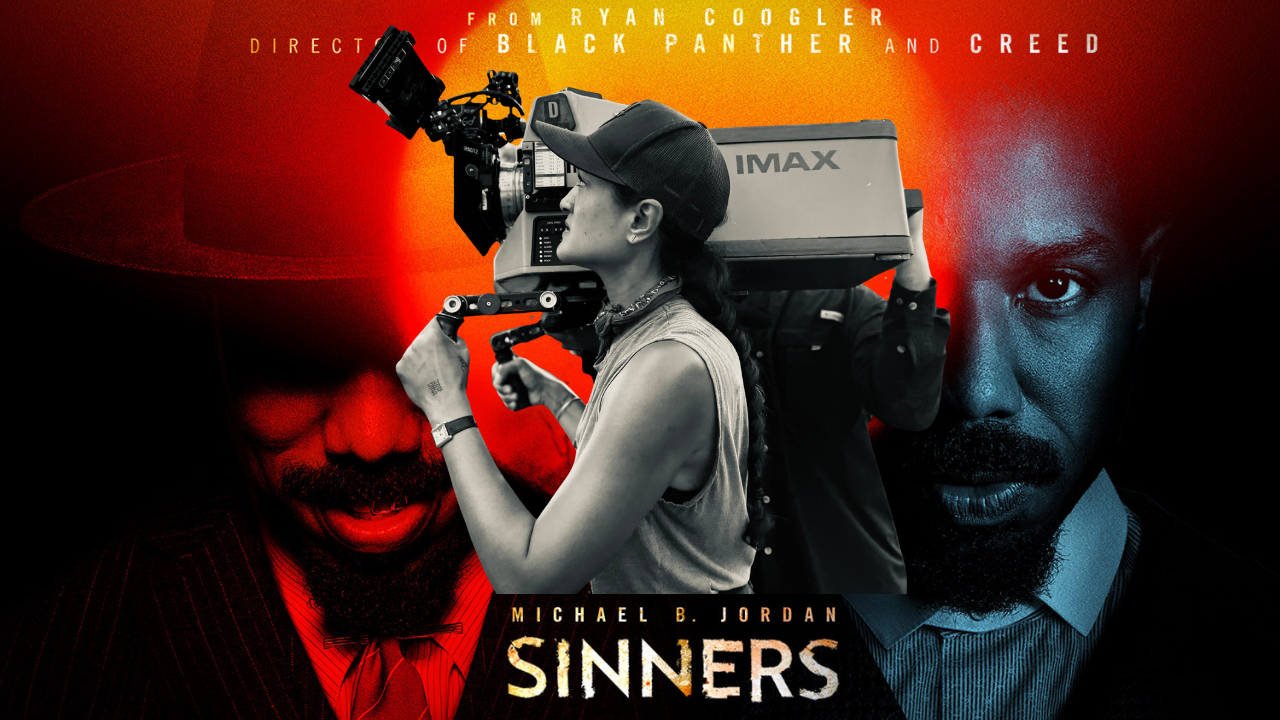
Scott "Smitty" Smith, the IMAX camera technician behind Oppenheimer, Sinners and The Odyssey, on large format film, servicing cameras and why film costs less than you'd think. This episode is packed with technical detail for anyone who wants to understand the mechanics of shooting IMAX, from servicing the cameras to what the premium ticket actually buys. Podcast highlights include: -How Smitty’s zigzag career built a one-of-a-kind specialist. From Learjet periscope systems and aerials to IMAX documentaries and features, Smitty developed IMAX camera technician into its own job. He services every camera that runs more than a mag or two a day, with partial teardowns at lunch and at night. -How three-minute mags shape the rhythm of a set. Reloads happen in under two minutes, giving the director a beat with the actors while everyone stays on their A-game. -How film and digital each has their place. Film rules the highlight roll-off, while digital rules the shadows and low light. Budget-wise, large format film costs less compared to digital than most filmmakers think. -How not every IMAX theater is the same IMAX. A high-reflectance screen, twin 4K laser projectors, a 12-speaker array and a protected 1.9 aspect ratio are what the premium ticket buys. 15-perf film projection tops it all, at three times the resolution of 70mm.
Show notes
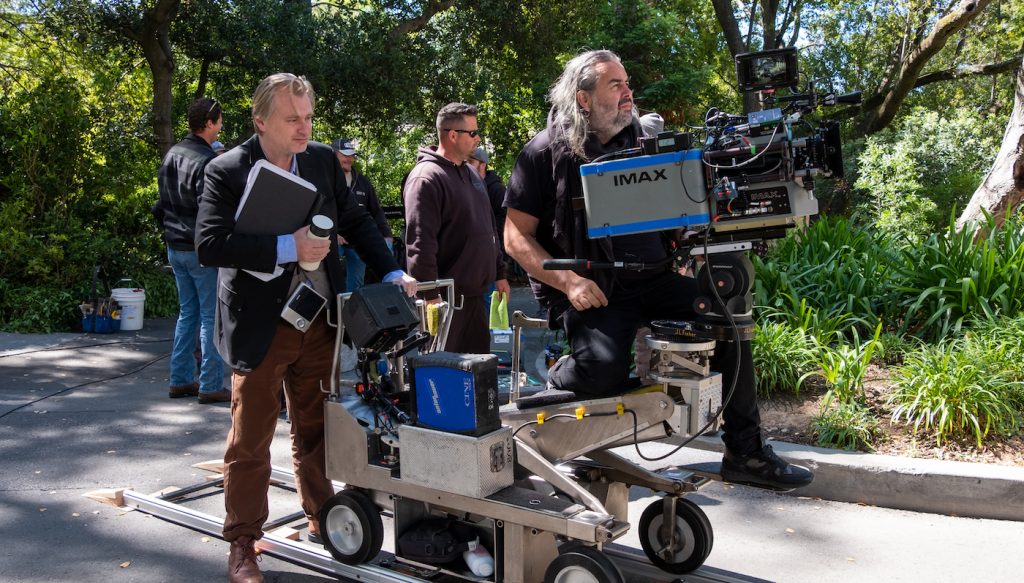
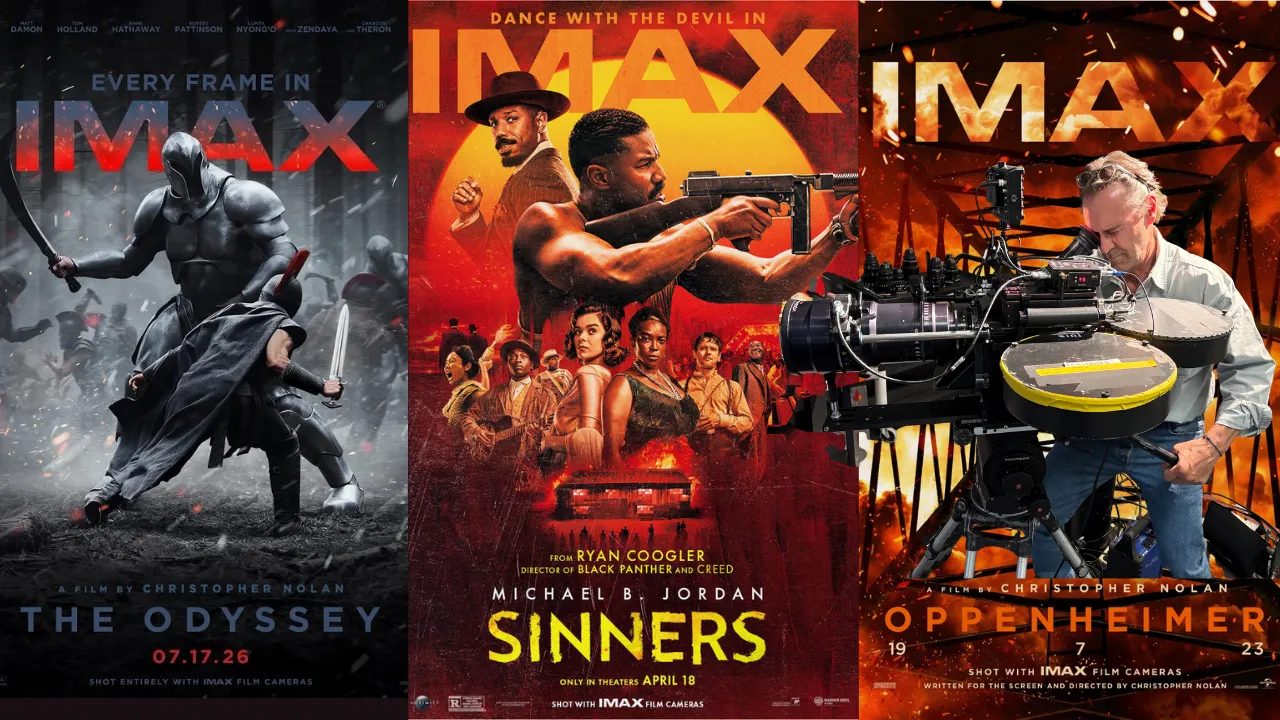
Scott “Smitty” Smith is an IMAX and large format film camera technician whose credits include Oppenheimer, Sinners and Christopher Nolan’s The Odyssey. As the caretaker of the cameras, Smitty services each one that runs more than a mag or two of film a day. That means pulling the movement, cleaning it and re-lubricating it, sometimes at lunch as well as at wrap. It’s more than a first AC has time to do.
A 1,000-foot IMAX load runs just under three minutes at 24 fps, which sounds exceptionally difficult on a working set. “You’ve only got three minutes of film in that thousand-footer magazine,” says Smitty. “People say, well, how can you run a set when you’re interrupted by a reload every three minutes? It turns out that it’s actually kind of a cool rhythm on the set. When film is rolling, especially in an IMAX camera, it gives it this gravitas. Everybody’s on their A-game when that camera’s rolling.” Reloads take under two minutes, which gives the director a moment with the actors. He also argues that the cost to shoot IMAX isn’t the barrier many filmmakers assume. “The difference in cost between shooting large format film and digital is just not as big as people think. IMAX is still the finest commercially available imaging system in the world.”
“LieMAX” is a derogatory term used by movie fans for retrofitted, digital IMAX-branded theaters that feature much smaller screens and lower-resolution projectors compared to original, purpose-built IMAX cinemas. Smitty defends the theaters and the extra five dollar charge. “First of all, they will not put the name IMAX on those theaters unless their guys have modified or built it from scratch. I mean, you can’t just build it to their specs. They bring their guys in to do it,” he says. Those specs include a high-reflectance screen, twin 4K laser projectors, a 12-speaker sound system and a protected 1.9 aspect ratio with more picture. At the top sits 15-perf film projection, with three times the resolution of 70mm. His advice to the IMAX higher-ups is to educate the moviegoing public as to what they’re getting for their money, and they will go to those theaters.
Smitty’s path to director Christopher Nolan’s sets wasn’t a straight climb up the camera department. He worked on Learjet periscope camera systems, aerials and remote heads, then went out on IMAX documentaries in the 80s, when almost no one in a regular camera crew knew the cameras. These days, he also shoots SpaceX launches, using lenses up to 1680mm.
Smitty credits Nolan for pushing IMAX into features, and he’s glad to see film’s momentum building. As he puts it: “I’m an analog guy. I consider myself an ambassador for film, for Kodak, for large format, for IMAX, for theaters.”
His next project may be the upcoming Black Panther 3 with director Ryan Coogler and cinematographer Autumn Durald Arkapaw.
Find Smitty on IMDB.
Transcript
Read full transcript
SCOTT SMITH: I'm the caretaker of the cameras. You've only got three minutes of film in that thousand-footer magazine. People say, well, how can you run a set when you're interrupted by a reload every three minutes? It turns out that it's actually kind of a cool rhythm on the set. When film is rolling, especially in an IMAX camera on a set, it gives it this gravitas. Everybody's on their A-game when that camera's rolling. BEN ROCK: Hey, this is Cinepot, the cinematography podcast, a program about the art, craft, and philosophy of the moving image brought to you by Hot Rod Cameras. Hey, I'm your host, Ben Rock. Today on our show, we speak with IMAX in large format film camera technician and aficionado, Scott Smitty Smith, whose credits include Oppenheimer, Sinners, Christopher Nolan's The Odyssey, and just about every other IMAX film you've ever, ever, ever, ever heard of, and lots more. Trigger warning, this episode is packed with technical detail. I know we talk art, craft, and philosophy all the time. This is a technical show. So the technical details for anyone who wants to understand the mechanics, the logistics of shooting on IMAX, from servicing the cameras to what your premium ticket at the movie theater actually buys you. In this episode, we dive into how Smitty's zigzag career forged him into a one-of-a-kind specialist. From Learjet periscope systems and aerials to IMAX documentaries and features, Smitty created the position of IMAX technician and became the singular expert in that world. He services every camera that runs more than a mag or two a day with partial teardowns at lunch and at night. How three -minute mags shape the rhythm on a set. Reloads happen in under two minutes, giving the director a beat to talk with the actors or whoever else they need to talk to while everyone stays on their A game. How film and digital each have their place. Film manages to rule the highlights and the roll -offs to the main image while digital rules the shadows and the low light. Budget-wise, though, large format film costs less compared to digital than most filmmakers think, so think about you shooting it on your next project. How not every IMAX theater is the same IMAX. A high-reflected screen, twin 4K laser projectors, a 12-speaker array, and a protected 1.9 aspect ratio are what the premium ticket buys you. 15 perf film projection tops it all at three times the resolution of 70 millimeters. After the interview, stick around for our short ends, our pet obsessions of the week. But first, find out what's going on in the world of entertainment in a little patent pending segment we like to call Close Focus. ILLYA FRIEDMAN: Hey there, Ben Rock. It is Close Focus. It's the time we talk about the world of entertainment and what's going on. What is going on? BR: It's something you brought to my attention that was a very underreported acquisition. And it's not the one you're thinking of if you're listening to it. IF: No, we're not talking about Paramount and Warner Brothers. We're talking about BlackRock. It's behind a paywall, but we'll put a link to the Bloomberg article that came out about this towards the end of August. But really underreported. I think that the Paramount Warner Brothers acquisition is taking up all the oxygen right now. And there just isn't a lot of conversation about the other things that's happening. But it's really typical that when some big headline story becomes the thing that everyone's paying attention to, that other things can slip through the cracks. And this is no exception. So MBS, the world's largest studio. Well, specifically a subsidiary of BlackRock, but they actually say on their website that they are a part of BlackRock it literally says that and uh frankly uh BlackRock, if you're not familiar with who they are they are the world's largest global asset management firm and they oversee approximately 15.3 trillion dollars in investments which is just a staggering amount of money to to think about so they have played in investing in media and entertainment they hold shares of Disney and other people like that but this is the first time that I'm aware of BlackRock buying an operator. MBS is an operator, meaning that they are physically involved in the production for hire of tons and tons of things. In fact, they also own ISS, the world's largest independent prop house company. BR: That's pretty recent. Didn't they just do that? IF: This is very, very recently. BlackRock's acquisition was really very recent. But no, MBS has owned ISS for quite some time. And I think it makes sense to talk a little bit about how these things were valued. And by the way, if you're if you're in the film industry in L.A. or probably throughout the world and you've used a prop, you've probably had something that was rented from ISS. They also are the world's largest or at least the country's largest private armory because they have they have so many weapons. BR: Oh, God. IF: Yeah. Movies and stuff. It's crazy. But in addition to the holdings of MBS, besides ISS, all these acronyms, you've probably heard of CBS Television City. BR: Never. IF: CBS Radford, which was actually just sold to Netflix, but also the Manhattan Beach stages and so many others in New York Silver Cup Studios. It goes on and on and on. And we'll put a link to MBS, the MBS group on the show notes over at Cam Noir. So you can actually see how many companies this really is. Well, BlackRock bought them in a debt for equity swap, which is typically something that happens like when a company goes bankrupt. and someone else comes in and they basically mandate the debt for equity swap. Essentially, Hackman, who was the previous owners of MBS, was laden with so much debt that BlackRock was able to come in and said, okay, we're going to take care of a huge portion of this debt for you, invest some extra money for cash flow, and in exchange, we're getting all this equity in the company. MBS was essentially a distressed asset, and Hackman paid $650 million for it in 2019, which wasn't exactly the piece. but pretty close to the peak so it was a pretty big loss for them all this to say is though it's interesting what new players are getting into this space now in particular with the possibility of a national production incentive going into effect, which would be an extra 20 plus percent on every single production. If you think about that from the investment standpoint of BlackRock, if you're getting that government money, which essentially is what we're talking about is government handouts, government incentives to get production going. And there's plenty of good reasons and there's people who will debate on either side, but there's plenty of good reasons to believe that money actually spent on entertainment entertainment production specifically does actually result in much larger net positives to the community in which those productions are being filmed so the fact that a national incentive means that there's so many places that this could take place and MBS could be the recipient of tons of that money due to producers saying oh we would like to shoot here in a space near an MBS property or company or thing so MBS might be the recipient of a huge new wave of production. BR: well yeah i mean if there's a tax incentive coming in there. No matter what, if you own all these sound stages and all this stuff, you're going to get a lot of rentals because a lot of people are going to be incentivized to shoot in America. And honestly, you don't have to really incentivize Americans to want to shoot in America because that's where we keep all our stuff. So we'd rather shoot here, all things being equal, than go to Bosnia or something. No offense to the amazing film industry in Bosnia, but we'd rather sleep in our own beds, as would everybody else. IF: What I think is going to be quite interesting, though, is to see if foreign productions decide that they will follow the money to the U.S. to try to take advantage. well too because BR: that would be cool IF: we're talking about huge amounts of incentives so in some places it might equal 50 so let's say you are an investor let's say you're a private equity company let's say you've got some money and you want to put it into entertainment let's say it's a 10 million dollar budget with the incentives that exist that means you've made back five million dollars potentially of your money before the film's ever edited before the film is ever distributed before any of the other stuff so you're getting 50 cents back on your dollar upfront. Some people will use that money to make a better movie. Other people will just say, I'm I'm cashing out right now. BR: No, that's very optimistic of you. IF: Well, I think that as the budgets get smaller, there's more chance of that happening. One thing I haven't heard is what sort of minimums will be required to take advantage of this national incentive, which could price some people out. So I don't know what's going to happen. BR: But I mean, honestly, it doesn't matter, though, because like, let's say you're investing in a movie. If it succeeds, you're golden. If it flops, you're screwed. But if you're the guy who owns the soundstage, you win either way. IF: That's true. BR: And keeping these sound stages or all of these different holdings that they have rented and income generating. It's a good thing. But to me, beyond the national tax incentive, I do hear about this and wonder, does this show that the moneyed forces in the world are seeing our industry as a better bet than they have for the last few years in general? Or do you think it's just because of the tax incentive? The tax incentive, by the way, which is not passed and isn't a thing yet. BR: It isn't a thing yet, but it has been introduced and there is petitions. No, no. I mean, it's in our Congress. It's very bipartisan. Supposedly the president is behind it. You know, like supposedly there there's pretty much no force working against it. And so it's hopefully going to happen. But I've been surprised before. IF: Agreed. I do see actually new investment coming in and sort of nontraditional players. I think there are some people who are starting to look at the economics of entertainment and decide that there is something here. And especially we are at a historic bottom of the market right now. Like really, if you look at all the different bottoms that the entertainment industry has had, this is really about as bottomy as you can get. BR: It could get more bottomy. We could keep careening down into the Marianas Trench of entertainment industry. IF: Well, we've fallen a long way. fallen a long way. Cinelease was also acquired, sold by the Hertz company. Cinelease of course, is a competitor to MBS. They got purchased for about $100 million maybe a year ago, a year and a half ago, and they are continuing to expand and increase their holdings. They just picked up all the grip and electric equipment from Quixote Studios. BR: Yeah, yeah. When you first told me about this, I thought that that's what you were talking about because I'd heard about the Cinelease acquisition. But again, when I hear that, it's like, you know, if Quixote just, you know, went out of business and was selling in a C-stands like a bake sale for, you know, 10 bucks a stand, that would be depressing. But the fact that they're, you know, moving, they're kind of moving up or, I don't know, laterally through the food chain. I don't know who's bigger, Cinelease or Quixote. IF: Cinelease, yeah. BR: But anyway, Quixote is a pretty big operation out here. You see their trucks out in LA all the time. IF: Yeah, they're a local player, whereas Cinelease is a national player and even international. They have some international locations. BR: I didn't realize there was a country outside of Los Angeles. This is pretty much it for me. IF: I think that just about does it for this conversation, Ben. We should get to our interview with Smitty. BR: Here, let's go. Oh, I just want to, before we get into it, I just want to thank Mark Walpole for introducing me to Smitty in the first place. He's a producer and stuff in D.C., but he started out as an AC for Smitty, in fact. Shout out to Mark Walpole. IF: All right. Well, let's do it. BR: I feel like we’ve had kind of a seismic shift in the industry over the last 10 years towards large format. You’ve been kind of in the trenches of the IMAX world, and in a lot of ways, you are one of the people responsible for IMAX even being able to do what it’s done. You’ve been a lynchpin in this transition, and I feel like the IMAX screenings and stuff like that are partly responsible for what is raising box office revenues even, the ripple you started has created kind of a big revolution in the whole industry. Maybe I'm over-exaggerating it, but it seems like that to me for real. SCOTT “SMITTY” SMITH: Well, I appreciate that you would think that I'm the reason, but I give total and complete credit to Chris Nolan because he's the guy that as a young man saw IMAX, you know. National Geographic-style documentaries on this huge screen projected in film and said, wow, I want this for my movies. And he slowly but surely incorporated it into his feature films and eventually... created the position that I fulfill now in features with IMAX cameras. But I did start with IMAX cameras many years before that, going out on these documentaries. IF: Can you explain what that position is? Because I'm sure that all of our listeners and viewers would like to know, like, what is it that you're doing? SMITTY: Okay, the proper title I asked for that never shows up in the credits, because it's too long, is IMAX and Large Format Film Camera Technician. So basically... I'm the caretaker of the cameras. IF: So how is this different from like a first assistant cameraman? SS: Well, I was a first assistant for many years, but they, in using and incorporating IMAX cameras into the feature world, we realized that for two reasons, the first AC cannot fulfill the duties that I'm responsible for, and that is... you have to service every camera that runs at least a mag or two a day, every day. And sometimes, if a camera's being used a lot... In the morning, I'll service it at lunch. IF: Wow. What does the servicing look like? Is this a complete tear apart? SS: Yeah, it's a minor tear apart. You have to remove the movement of the camera. You have to open up the movement. You have to clean and re-lubricate. And you use all kinds of different lubricants and stuff. It's a little bit of an involved process, which a first AC would never have time to do. And not only at the end of the day, like I do on the set. the last guy in the set with the loader, us two are the last two guys to leave. But also if there's problems with the cameras, if there's issues, then I either tell the director I can rectify within 10 minutes or the camera goes back to the truck and we work on it while another camera comes in. IF: Is there a lot of film emulsion buildup? Is that what you're constantly fighting? SS: Well, for a long time, We were dealing with Remjet. IF: Yeah, the backing. SS: Emulsion would build up, but emulsion was a little bit more slippery than Remjet. BR: What is Remjet? SS: Remjet is the carbon black backing on the film itself. So Remjet served four purposes for film, and the most important of which is anti-halation, which when the light comes, when the light touches the film, that black... coating wouldn't allow the light to then go through the film, hit the pressure plate, and reflect back. Which was a real problem for a lot of films. What it does is it makes it look like there's a halo around your actor or around specular lights like street lights at night. It looks like there's this glow around, which is kind of cool in a way, but it's not what everybody wants all the time. That's one thing. It was also anti-static. It also provides extra lubrication because basically it's carbon. It's like charcoal. And then the fourth thing is it's also scratch protection because if you scratch the REMJET, but it goes no deeper than the REMJET, the first... the process in the lab is that REMJET gets washed off the film. In fact, it's called remove with water jet. That's why it's called REMJET. And it's a very dirty process, very anti-ecological, and obviously the labs wish they could get rid of it, and that's what's happening right now. Kodak has come up with this new film stock, and you're not going to be able to get REMJET film anymore. It's called AHU, which is anti-halation undercoat. IF: All right, so you clean out the REM jet, you clean out emulsion buildup because you've got these pull-down claws that are engaging with the perforations on the film. And even though it's pin registered and as accurate as can possibly be, this thing is happening really, really fast. It's a big piece of film. it's getting some tiny microscopic amount of deterioration. And then when you run a mag, I don't know how large an iMax mag is, but you go through a mag and then it's like, okay, you've built up all this stuff and it's got to get cleaned out in order to make sure that the next time you use it, it works okay? SS: Yeah, one of the things I instituted years ago was one of the things I'm kind of proud of coming up with is... I noticed that when we were getting camera jams, usually you'd find a little bit of REM jet buildup somewhere in the gate, somewhere in the channel that the film goes through as it goes through the gate. And if you cleaned off that REM jet, you wouldn't have any jams for a while until it built up again. So I started using Teflon, dry Teflon in the gate, and it completely changed everything. We used to have... A couple jams a day. And we got to the point where if we had one jam, you know, in a week, people would be, you know, concerned about it. But I remember when I did it, the guys at IMAX were like, I don't know, Smitty, that's not part of our process. I don't know about using that. I'm like, I go, well, you know, I got to tell you guys. IF: We've tuned it like a microchip. You can't have anything. BR: Yeah, really. SS: We've got this, you know, established process. But anyway, basically I just said, look, guys, it's too late. Because I've been doing this for like, you know, a year now or whatever it was at that time. And it's made a difference. And it really, you know, it's made a difference for us. And it's like, you know, as you guys are aware, set time is so valuable that whatever can eliminate the slowdowns or the stoppages is huge and it's valuable. BR: And when you're shooting IMAX, each whole load is only like two and a half minutes, right? SS: Yeah, it's a thousand feet of film at 24 frames a second, which is our standard frame rate. roll is two minutes. It's three minutes. It's two minutes and 58 to be exact. BR: It's like a Super 8 cartridge. SS: Yeah. IF: And you get how many mags before you have to tear down and clean? How many? SS: Well, like I say, any camera that's run any substantial, more than one or two mags a day, I'll service at the end of the night. IF: Wow. SS: If we say we run... 17 or 18 rolls before lunch, I'll service the camera at lunch. IF: Gotcha. Okay. Wow. And so you've got cameras that you are leapfrogging. And I assume that usually it's a one camera shoot. You guys are not trying to do both cameras simultaneously. SS: Yeah. Chris works as basically a one camera set. And he stands right next to the camera. But you're right. We're leapfrogging. There's maybe one on the crane. There's one on the helicopter. There's one setting up for the next putting, you know, getting set up for the next setup. And, you know, so, yeah, we on any given production of that size, we're usually taking six or seven bodies with us. BR: Crazy. I mean, if you're doing a big explosion or a big stunt of some kind, does he ever pull all of them out and shoot it all? SS: Oh, yeah, yeah. There are times where there's multiple cameras, for sure. Especially, like you're saying, in situations where... might only be able to do it once or twice. However, I'm always surprised at what they can reset. They can blow up everything and say, yeah, sure, we can reset it. Give us a half an hour. BR: Big words from someone who worked on Oppenheimer. IF: I was just going to say, I remember from the past, people have brought up from here and there, oh, what about using IMAX for narrative productions? Because it really used to just be a bastion of large forms. giant screen documentaries, and specialty science and nature types of things. And one of the things that was always reported to me is what a hassle it is to work. with IMAX, how big and how heavy and how unpredictable and the jams and everything else, and that it has to be this thing. It sounds to me like you've developed a system to minimize all of the inherent problems that come along with working. BR: Except size. IF: Except for, well, I mean, but even now I hear there's a smaller camera. BR: But on the Odyssey, didn't they have to use mirrors and stuff for over-the -shoulder shots? SS: Yeah, it's funny that the mirror thing is what everybody brings up. They've heard about it. But, you know, to me, The blimp itself is a pretty high-tech thing. You wouldn't suspect that putting a camera in a box to make it quieter is high-tech, but there's a lot to it. But what everybody hears about is the mirror system, which is actually a great idea. And I believe that that assignment came down to Keith Davis, who's the focus puller for Hoyta. They basically put a... a beam splitter, which is a half mirror in front of the box that's sort of at a 45 degree angle. It would take an image from the back corner of the blimp. an actor talking, and he'd be looking into some glass that would then reflect off that glass so that the actor who's acting to the camera is looking into the eyes of the person. BR: Oh, it's like the eye direct. SS: Because that blimp is so big, you can't get the person close enough to make the eyeline work correctly. You would have to put like a little tape X on the matte box. But that was basically just for eyeline. But the cool thing about the blimp itself is it allowed you to get that lens two or three feet from an actor who's whispering to somebody and it works. I mean, that's the reason that we made it all the way through Odyssey with 15 per film because prior to that, we'd have to use the Panavision System 65 cameras, which are vertical. vertical travel, five perfs at a time, but they're sound cameras. I mean, they're absolutely quiet as they roll. So that was the compromise that you'd have to go to a little bit smaller format to get the quiet dialogue. BR: And that's like how they did Dunkirk. That's how they did Sinners. That's how they did pretty much every IMAX, quote unquote, shot on IMAX. SS: Yeah, that was the recipe. For me and IMAX specifically, our task with Chris was to make the 15 per film cameras conducive to feature filmmaking. And I give him total credit for the guy that got this ball rolling. And you're right, the fact that it is such an unbelievable... theater experience to see it projected in 15 per film with the whole IMAX setup. It's so immersive that, yeah, it's increased the popularity of the format and of the experience. All these people want to shoot film. I'm an analog guy. I consider myself an ambassador for film, for Kodak, for large format, for IMAX, for theaters, I mean, for the theater experience, because, you know, there was a moment, you know, just after COVID where everybody thought, well, theaters are just going to go away. BR: Yeah. A movie like Sinners comes out, people flock to it. a movie no one wants to see comes out, they don't. SS: Yeah, and that Sinners was a good example. It really made me feel great that what happened was that Ryan Coogler and Autumn were thinking of shooting Sinners in 16 mil just for that look. BR: Yeah, we had Autumn on. She talked about that. SS: But the studio guys came to them and said, have you guys considered large format? And it's like, God bless you, that's cool. When you get the studio guys on board, that's a biggie, you know? BR: Well, it's because they get to charge a premium for those tickets. SS: And I feel like on Oppenheimer especially, it kind of showed that Oppenheimer did very well theatrically, but a giant chunk of its revenues were from IMAX screens. IF: I hadn't noticed. BR: Anyone who bought a ticket noticed. SS: Well, you know, you were talking about the fact that you've only got three minutes of film in that thousand-footer magazine. People say, well, how can you? run a set when you're interrupted by a reload every three minutes. Well, it turns out that it's actually kind of a cool rhythm on the set. If you stare at your watch for three minutes, that's a pretty long take. Admittedly, you want to do the courtesy to your actors to be able to maybe do a longer take. I get that. But it's a cool rhythm where the reload, by the way, the reload, these guys are fast. I mean, that reload can be done in under two minutes, including in the blimp, because all you've got to do is open the blimp, pull the camera back, and do the mag change. The blimp doesn't really add any time to it. But during that moment... Chris has a second to step in and give or take notes with his actors, and everybody has a second to breathe. And when film is rolling, especially in an IMAX camera on a set, it gives it this shot. Gravitas. I mean, everybody's on their A-game when that camera's rolling. Whereas, you know, digital cameras, I'm sure all you guys know that in these big productions that are being shot digitally, sometimes the reset can be 30 seconds and they'll just keep the camera rolling. I mean, that camera doesn't stop rolling all day. And then you need an army of guys downstream to do the editing and people to actually just look at the footage and see what you got. I mean, there's a big difference. I mean, the difference in cost between shooting large format film and digital is just not as big as people think. BR: No, I mean, I always think about how they made The Brutalist, a three-hour-long movie in VistaVision for under $10 million. I think it was a... SS: Partial VistaVision. BR: Oh, really? SS: There was a lot of four perf in that movie. BR: Still, to pull off a under $10 million movie that's three hours long, shot entirely on film, and primarily on VistaVision, a period piece, all the things that they did on that movie, to me, I feel like for a lot of filmmakers, it was like, oh, shit, you could actually, it's not going to be a massive... different cost. You know, if you're if you have $100,000, you're not going to be able to shoot film. But if you are in the millions, you could probably open that conversation and maybe cut a deal with, you know, Kodak or PhotoChem or whoever and be able to get your stuff done. You're going to take a hit. But, you know, we've talked to even lower budget filmmakers who did sort of what what Greg Frazier did with the Dune movies, doing a film out and then re-scanning the film for release on not micro budgets, but like tens of million dollar movies. SS: Yeah and you know at the echelon we're talking about there's a lot of economics and a lot of politics involved but fortunately right now the trajectories is up for for for kodak for large format for film film out and film projection and uh it's I love it. I mean just for Odyssey they resurrected 10 more of the uh 15 perf projectors around the world, now there's like 41 there was 31 when we released Oppenheimer. You know I think that if the people upstairs see that it's pushing forward, it's making money, then they get on board. And then we've seen actual presentations at IMAX headquarters for producers who are sort of not leaning toward film at all, get to see the projection, side-by-side projection of digital and film on the full-size IMAX screen. You've seen them say, oh my God. Now I see what you're talking about. I mean, there is a huge difference. BR: I mean, maybe this is a question for both of you because you work on the technology side as well. But is there a point at which the digital cameras that we have are going to reach IMAX level resolutions? Or are we hitting some kind of physical barrier where it can't get there? SS: Yeah, I mean, it'll get close. But there's some aspects to digital that will never quite reach. film does. I mean, what you have to do is think about it on a very microscopic level. Every frame of IMAX film, to this day, IMAX is still the finest commercially available imaging system in the world. And it has been since the 60s or 70s. I mean, it's pretty unique. But when you think about it on a microscopic level, each frame of the negative as it's exposed, is let's say you have a field of color, like a red field of color. On the microscopic level, those silver halide crystals are laying, that emulsion is laying on that film. It's a laminar flow. It's put on that film. It's dried in a... in some pattern okay the next frame that comes in all those microscopic crystals are laying in a little bit different pattern so as you're watching the film being projected it's like a live it's got an organic feel to it and it's more like your eyes the back of your eyes are like moving cells you know in digital you've got photo sites on the sensor and you've got you know pixels that that red color field stays exactly the same every frame Yeah. So there's something sort of more cold and hard about it where film has this thing just in a physical sense that you're never going to be able to actually do with digital unless they have some kind of algorithm that makes it microscopically change as the frames go through. You understand what I'm saying, right? IF: I know exactly. I definitely understand what you're saying. I understand how it's making those differences. Film and digital. have different strengths and so there are things already and for many years that digital does that is superior than film from both a resolution and a dynamic range standpoint which is what of course everyone always touts is these are the big features of especially IMAX but they're not always practical to use on a scale but when you talk about like the james webb space telescope that's a that's a digital system and it has incredible resolution capture and then there's there's all kinds of things that are happening in the scientific standpoint that is not necessarily entertainment so when we're talking about entertainment is probably easier and less expensive if you want certain qualities of filmmaking to end up on the big screen from IMAX. And it is to try to adapt digital systems or systems that are not necessarily about making the most pleasing image. Now, film rules in the shoulder, the highlights. So everything that's up there, the roll off from film is the thing that makes everyone go. Oh, look at that. Oh, that's so lovely. Digital rules in the toe. Film is not particularly sensitive. And as you start to get lower light levels and lower values, just fewer number of photons, what you see out of digital is incredible and there is nothing. that film can do to match that. There is some hard limits of the size of those little crystals, some hard limits that will make it. more difficult to make film more sensitive and better overall without having more of the objectionable grain or the type of noise that then makes what you're trying to see harder to see. But when you have the aesthetic qualities of film, of course, it's an easy way to get that look. With digital, you can emulate a lot of things, but it might require more work in the post-production process, more work to add on top of that. SS: Yeah, I remember the first time 25 years ago when I first realized... that a digital camera can see details and shadows that your eyes can't. I couldn't believe I was looking at a monitor and I'm looking at them like, how is that camera seeing more than my eye can see? But that's that's the truth. IF: Yeah, it's it's all really fascinating. There's people who love to like I was a film purist for a very long time before I started working on the team that was building the 4K camera. So it was like really, really. to me it was like there's a gold standard we've already achieved how are you going to get there and it was like well we will get there in increments but first of all they started leaning into the stuff that it does really well which was you know sensitivity. Sensitivity and apparent resolution too, because you have to also look at the entire exhibition process, which is, I give Chris Nolan a ton of credit for this, because he really wanted to make sure that it didn't matter if you shot on IMAX, if you went to the local multiplex and you saw it in this terrible, this way that betrays the intention of what you went into it. And to have to bring out more IMAX 15 projectors into the world is really amazing, because that gives more people the opportunity to have this immersive experience. SS: Well, you know, let's talk about that for a minute. The digital projection experience for IMAX. When you go to a multiplex here in L.A., maybe, you know, you have 12 theaters in there. Maybe two or three of them will have the IMAX logo on them. And this has happened with my own friends. BR: I got suckered in by this myself. I was expecting IMAX. IF: LIMAX film. SS: Now, hold on. You can use the word LIMAX. But it's kind of unfair. It's a tad ignorant to use that word. IF: I agree, but it's entered the lexicon. BR: When I think of IMAX, I think of the way the IMAX theater itself is built. And you and I were talking about like the Universal CityWalk one, but like the IMAX theater that you would go see at a science museum or something where there's like a very specific architecture to an IMAX theater. And when at the Sherman Oaks Galleria, the theater near my house, when they redid it and turned it into IMAX, I have no idea. that the IMAX technicians came in and made sure that it was up to their specs but it still wasn't a it wasn't built for that initially this IF: they became more liberal i think for the specs at imax they said that now we can do these dual digital projections we can do this this level of room and we can certify it and i don't think there's anything wrong with that nothing wrong but i think that uh from the consumer perspective who's only grown up with the science center experience and then to go into this other theater it was like What? This is both IMAX? BR: But you were telling me about all the other things about it. Yeah, go ahead. SS: Let me explain for you. And I blame the big shots at IMAX for this. BR: You hear that, big shots at IMAX? IF: Yeah, in your face, IMAX. SS: I've talked to some of them, and I've said, please listen to what I'm saying because I think it'll make a difference. And here's what that difference is. It's when you're in this multiplex. You've got like three theaters in there with the IMAX name on them. Now, if you want to see your movie in the IMAX theater, you're going to spend four or five more bucks on your ticket. Now, my own friends have come back and said, Smitty, I ducked into the theater next door and the screen was the same size. So I feel like I got ripped off. I'm never going to spend that five bucks again. Blah, blah, blah. And I said, well, the thing that I always ask is, was it a good movie? And they'll say, yeah, it was a great movie. And I'll say, well, let me explain to you what you got for your extra five bucks. Yeah, yeah. And that is that, first of all, they will not put the name IMAX on those theaters unless their guys have modified or built it from scratch. I mean, you can't just build it to their specs. They bring their guys in to do it. And that includes a super high-luminance screen. No matter what the size of the screen is, they've got this super pure, it's aluminum. Some aluminum flaker powder that is very expensive. The theaters next door don't spend that kind of money on their screens. So it's a super high reflectance. And it's got to be audibly transparent for the speakers behind it. They have the best projectors out there because they have a team of guys at IMAX. super genius at that specific discipline is building and designing and building these projectors. They're twin lens, 4K, laser. I mean, comparing to next door is not even. And then the sound system kicks ass on THX or Dolby or any. I mean, it's the best sound system in the world. And it's a 12. 12-speaker array and, you know, super bass. And then on top of all of that, if you're going to release your movie into these theaters, you have to have a contract with IMAX that says that the cinematographer will protect for 1.9 aspect ratio, which is not lettered box to fit. It is actual information that the people next door are not getting. So you're getting a taller rectangle, more information on the screen. So with all of that said, my friends, who I explained this to, said, oh, well, if there's a movie I really want to see, I'll spend the extra five bucks now. But the problem is that IMAX just says the best experience out there. I don't know what their tagline is, but instead of that, I've tried to tell these guys, educate the moviegoing public as to what they're getting for that five bucks, and they will go to those theaters. And I think... pretty aware of it in China. The Chinese love to see IMAX as opposed to standard projection, no matter where or when or however they're seeing a movie. IF: You and I agree 100% on this. I think that the public education when it comes to the moviegoing and theatrical experience is woeful. And I don't necessarily completely... IMAX. IMAX only needs to be responsible for their own stuff. But I would say, overall, across the entire industry, there hasn't been any real effort to educate the people who are coming there. I will tell you that I think the theaters don't really want an educated populace, because once you do know that, it changes where you typically will sit in the theater, where people quite often sit in the theater. They're looking at standard definition resolution because they are so far away from what's happening on that screen. IMAX forces you to be within a proper viewing distance to make sure that you're actually seeing what's going on. BR: And that's like, you know, like if you go to Universal CityWalk, like all the seats are kind of in that zone, right? IF: Very much so. And then, of course, there's also the other extreme. They want to make sure that people really will sell those, buy those seats in the front row. When you're in the front row, it can be a very... disturbing experience depending on where you're at. BR: One of the things, like when you talk about the education thing, I don't know if either of you saw, Ryan Coogler made this video when Sinners came out that walked through every format he was releasing it in and what was different about each one. And he did it in such a way that, I mean, like obviously I'm a camera wonk and I want to know this stuff, but I think even if I didn't, if I was just someone who liked movies, I'd be interested to hear, and his enthusiasm was also just contagious about it, but I'd be interested to hear how he was describing it because it was so thoughtful. and well thought out and had to go back to when they were filming it. They had to protect for all these different releases that they had to do. SS: For this Odyssey release, I've never heard more people that are not in the business know to try to seek a film projector, especially a 15 perf projector. Nobody's ever seemed to know about that until you let them know what the difference is. But I mean, those digital theaters in the multiplexes, they are. a definite step above the theaters next door in the multiplex, but then you might have a chance to see it in what they call 70 millimeter film in the ads or the theater menu. IF: Yeah, yeah. SS: And that is, we shoot 65mm negative, but they then release it in 70mm. It used to have room on the print for a soundtrack. They don't use that anymore because it's all digital sound. But it's 70mm film going through a projector vertically, five perfs at a pole. So it's still a large format projection, and it's beautiful. It's sumptuous. Then the next step and the ultimate step is 15 perf film going through a projector horizontally, 15 perf set of pull sets, three times the resolution of that other film presentation. IF: It's impressive. It's really cool. I think we should talk about some of the projects and works you've done. You've done a ton of aerial work as well, too. SS: I got a degree in filmmaking in San Francisco. IF: Oh, where? SS: San Francisco Art Institute. Then I wound up working for a film services and rental company in Marin in Sausalito. And we used to do service Lucasfilms and Coppola. We were the largest exterior lighting and generators and grip trucks and stuff. BR: What year is this about? SS: Well, I got my degree in 81. I almost don't like telling people how long ago that was. BR: But you're there like when Lucas and Zoetrope and everyone are kind of at the height of their powers. SS: Yeah, it was pretty cool. place to be. And actually what happened is a couple of union guys cornered me at one point and said, so Smitty, I understand you're interested in camera. And I said, absolutely. That's what I want to do. And they said, well, you know what you have to do if you want to be in camera. And I said, what? Now what? They said, you have to move to Los Angeles. I'm like, don't tell me that. Because there was always this rivalry between Northern and Southern California. IF: It's a one-sided rivalry. Everyone in LA loves San Francisco. SS: At any rate, they were right. If you, you know, there was like two or three really competent camera crews in the Bay Area that got all the sort of jobs that originated in the Bay Area. But if a show came up from L.A., they'd usually be bringing their camera guys. few guys sort of ruled the roost in Northern California. But as soon as I moved down here, every job that I got, I'd meet four more guys and then they'd, you know, then every new job, we'd meet another guy. And before too long, your phone's ringing so much you can't do all the jobs. And that was really true. But the company that I first started working for in L.A. when I came down here was called Continental Camera. and they were they were a cool uh they were so the the stuff they had was so cool they had um they were sort of uh a rival for uh tyler camera which had all the helicopter mounts and uh you know so i got to know aerials really well a lot of second unit stuff special cameras uh for stunts and uh and they had one system that was really awesome it was my entrance into imax basically they had a system that went into a Learjet. It was a periscope system, so the cameras are inside the cabin of the Learjet. And the Learjet's like the sports car go-kart of the aviation world. You can't stand up in the planes. They're little, you know, like mini fighter jets. And the periscopes would pan 360 and tilt up from almost more than 90 degrees from horizon to straight up or whatever. And we would fly in the air next to other airplanes and shoot them air to air. And occasionally, the McGillivray Freeman guys, which was an IMAX basically production documentary team, would show up and we would take the radar out of the nose cone of the Learjet and put an IMAX camera in there. Wow. So I got to know these guys and the IMAX cameras in the 80s, and I started going out as a focus puller with those cameras on these documentaries. that was where i first got involved with imax and you know i you know i realized how cool it was and it was and it was really niche because none of this you know regular crew camera crew focus pullers any anybody knew anything about these cameras yeah BR: i mean when does imax first show up i i actually don't know i i was just like wow it's been around since the 80s but was it around before SS: their their their first real uh appearance in the public was uh expo 67 in montreal and weirdly enough i was there what just randomly i was i was on a class trip uh at my my school um went up there um i think i was in fifth grade or something and we went up there and we and two things really struck me and that was this IMAX thing. But at the time, their first productions were like a multi-image, you know, they had slides popping on and off and little projections, little small projections on a huge screen, which is pretty cool. And then the other thing is that they decided to take our whole class to the premiere of 2001 A Space Odyssey. Which was the coolest thing we'd ever seen. BR: It's got to be trippy for a bunch of fifth graders. SS: We had no idea what just happened, but it was the coolest thing we'd ever seen. And I will never forget that trip. But at any rate, so I basically got involved with IMAX sort of early on. But that was 67, and they started making the 15 perf cameras, I think, at sort of the transition between 60s and 70s. The early 70s were the first IMAX film. there's 15 perf cameras and BR: were they i mean was that like at theme parks or science centers or exactly what they were SS: they were uh they were standalone theaters that were usually next to the Natural History Museum in any given city. And they showed 45-minute films. Well, I think it was 44, 43 minutes, because that is as big as the platter that they made there, a film that they could hold to show at one time was 45 minutes. And they were really National Geographic, you know, the bottom of the ocean, outer space, the jungles, the deserts. I mean, we traveled around the world doing all these really cool. crazy shows. I wound up, just because I was, worked on all these cool peripheral camera systems and stuff, I got opportunities. I worked for the Iwerks company, which is, Ub Iwerks was Disney's partner, basically. They say that he designed Mickey Mouse and stuff. His son was Don Iwerks, and they were both like, camera magicians i mean they designed and built all these crazy cool systems so we used to go out with and they were for ride films where the the seat is like a motion-based seat the seat moves around as you're watching you know like disney rides and what whatnot you know some of them have like spray that hits you or smells or you know But we went around the world doing all kinds of cool stuff with those cameras. The Workhorse IMAX camera and these cameras, which were called 870 cameras, were designed and built by... Marty Mueller who he also helped me rebuild my uh VistaVision camera which from what we can tell the only sync sound Vista camera out there so the one you personally own yeah we were trying to get it built in time for Paul Thomas Anderson for One Battle After Another but I mean it just got down to the wire we were just trying we just wasn't ready for prime time in the very first day with Sean Penn and all that everybody's there the camera had this big problem I remember looking at Paul, and he's like, sorry, Smitty, get that fucking thing out of here. Bring in a bow cam, you know, guys. But we wound up getting the camera on Begonia. It was a camera all the way through Begonia. Oh, wow. And Paul had me build 2,000-foot mags so we could get 11 minutes out of a mag, which is pretty cool. That's cool. But at any rate, the Iwerks thing was fun because now those cameras were... vertical travel 65 millimeter neg, eight perfs at a pull, and those cameras can do 60 frames seamlessly, and they are the exact same aspect ratio as IMAX 15 perfs. It's 143. So, you know, I've always thought that that's the perfect second unit camera for anything shot in IMAX. The thing is that those cameras, there's a bunch of them, they're working on a Brady Corbett movie right now i think to me they just seem like the perfect thing to use for anything that you can't you know get on 15 perf you know and by the way you know you've got almost twice the twice the duration of a mag of a thousand foot mag so it's interesting IF: yeah it's it's there there's quite a a boneyard of different technologies and different things that have existed and come into effect at one point or time in this industry and it's I think, fascinating to see what has sort of survived and what is resurging today. But, I mean, they have all of the different sorts of, you know. extra widescreen, different anamorphic formats, and all of these technologies, some of them are lost forever, and some of them should deserve to be lost, and others are, you know, come back. SS: Well, I think a lot of it exists. IF: A lot of it still exists, but it's just like on a shelf in a storeroom somewhere. SS: You know, one of the systems we used to work with with Iwerks was this 360-degree camera, which was basically nine Airy 3s bolted to this. this this cylinder and it would they would look up into front surface mirrors and it created this perfect circle of of image and uh so it was funny to work with this thing because Once you start rolling the camera, everybody's got to be out of sight of this thing. I mean, it can see everywhere. And then when you do a mag change, you had to take five of those cameras off because you couldn't even open the doors. They're so close to each other. But it was cool because the electronics had them opening their shutters and closing their shutters all simultaneously. So it was like this really kind of cool sound that it made when it rolled. IF: Wow, yeah, the cacophony. BR: If a filmmaker who... grown up in the digital era and had never shot film was talking to you and was considering like you know, if money wasn't an object and they were talking about, you know, could we shoot on IMAX, could we shoot VistaVision? Like, what would you tell someone who had never worked with these formats? Like, what should they expect? What are the trade-offs for the increased visual quality that they're going to get? SS: I mean, as you could imagine, everything's big and everything's heavy and you got to prepare yourself for what it's going to take to make everything happen and happen, you know, seamlessly. And what I tell people to do, A is... Go talk to IMAX and see if you can do it because there's a lot of people that think, oh, those are Chris Nolan's cameras. You can't just use those cameras. No, IMAX rents these cameras out. Yeah, he only makes a film every three years. And they want you to use these cameras. They want more people to say, I shot on IMAX because that means other people will say, oh, well, maybe I can too. But I try to convince them to at least get a few guys in the camera department that have experience so that they can help get everybody dialed in. I don't think it's as... as people think it's going to be. The one thing you have to consider is you've got three minutes of film in there if you're going to shoot 15 perf. BR: But if you're shooting VistaVision, like you said, you have a 2,000-foot mag, right? That'll get you how many minutes? 10 minutes? SS: 11 minutes, yeah. Because 4 perf is 11 minutes for 1,000 feet. So you need 2,000 feet of 8 perf. IF: So what's next for you, Smitty? What are you working on next? SS: Autumn has gotten in touch with me and said, please put yourself on a soft hold for Black Panther 3. BR: Sweet! That's exciting. Is she shooting it? SS: Yeah. BR: Oh, that's great. SS: Ryan and Autumn are, you know, full converts to large format now. BR: That's excellent. SS: And I got to say, I love both of them to pieces. BR: That's great. That's great. I mean, every story I've heard from Sinners just makes it sound like it was almost a magical production. SS: And Autumn's... you know incredible she's just so amazing and she doesn't she doesn't take crap from anybody she knows what she wants and she's damn good at it IF: you know she's friend of the show she's been on the show a couple times BR: whip smart i was we were all like you know high-fiving when she won the oscar SS: yeah and it's kind of like She's doing what she loves. And oh, and by the way, she's the first woman to do this and that and the other. And she's elevating women in cinematography. BR: And women of color, too. SS: It's all like historical. But, you know. But to us, it's just, you know, Autumn is working with us. And, you know, you're not thinking about that aspect of it. But, you know, it's pretty cool. BR: Sinners has one of the few sequences that just raise the hairs on the back of my neck. And it's that music through time moment. SS: That Steadicam shot? BR: Holy crap. Just like, I got chills. I'm getting chills now thinking about it. And it's like, I mean, obviously that's... SS: The Steadicam operator, his name is Renard Shirin. And he is... IF: Is he a bodybuilder? SS: Well, most Steadicam guys do. definitely take care of their their bodies for sure i mean that that's part of the job i mean that you you that's part of the responsibility really but he did this he did that shot i'm gonna say maybe three takes maybe maybe four i'm not sure but when he did this in the truck i said to him man that was incredible what you just did and you're gonna people are gonna know who you are because of this shot and he was kind of like I don't know. I know people are going to talk about this shot forever. I mean, to me, it's one of those shots that people are going to be referencing for eternity because it's such a landmark sequence that's just like the perfect technical execution, but also just emotional. Like everything about that moment in that film is just so perfect. Steadicams really weren't built for IMAX cameras. I mean, that's something that sounds obvious, but that was a full size. IMAX camera with 1,000 feet of film, that's not peanuts. That really means something, what he did. You look at him and it looked like it wasn't even thinking about it. He just did it. God, he's good. The guy's amazing. But I can say that, honestly, I can say that about a lot of Steadicam guys. I don't think anybody can get onto that echelon with a Steadicam unless you've really done your work and really know what you're doing. I mean, there's so many really good Steadicam guys. BR: But I was wondering if you could talk about you filming, you one-man band IMAX filming the SpaceX launches because you showed me some footage of you. It's just you on a beach or something like that, and I don't know how far away. It's probably more than a mile away. But you on the IMAX camera, and you were telling me basically it's just you doing this. SS: Yeah, it was cool. I've got to say it. been able to do some pretty cool things i i think this my go-to thing for years is that i i keyed the Zero-G unit for Apollo 13. Oh, that's right. You know, where we flew the KC-135 and these parabolas and, you know, Ron Howard and Tom Hanks and Kevin Bacon and Bill Paxton. I mean, it was amazing. That was an amazing thing. But this thing to shoot these SpaceX launches, for me, was really special because, like you say, it was a one-man band thing where I basically... I had everything in the camera, everything in cases, and nobody is allowed past the launch pad past 9 o'clock at night because they're fueling the rocket and it's very dangerous, blah, blah, blah. So this is at the very tip of Texas. It's a place called Boca Chica. And literally, you can drive. down this little street that goes down to the beach and be right next to these rockets. And Elon Musk has said, I have no problems with that. They say, why don't you have more security? He says, I want people to come see this and get wowed by it. I want people to talk about it. So we take a truck with all the gear. And we drive past the launch pad and down to where the Rio Grande hits the Gulf. And that's two and a quarter miles from the launch pad. And camp out for the night because they shut off that. You can't get out there anymore once it gets past nine o'clock. So we camp out. on the beach and then I'd wake up at 4 30 or 5 in the morning and I'd open up all the cases and build the camera and get it all set and the lights start showing up on the horizon I'd start practicing my move and all that stuff and then we'd do the launch and you'd shoot the launch then once you know it's gone it's gone so then I pack up all the gear and you know wrap up everything and we then head out of there. BR: What lens are you putting on an IMAX camera to get the shot from miles away? SS: Well, there's a couple of amazing lens stories there. There's been a lens available, a long lens available for IMAX for a long time. It's a Pentax 800 millimeter that we've used for a lot of them. For me, at that two and a quarter miles was a really good lens because the rocket filled the frame almost... frame line to frame line. BR: Oh, nice. SS: Which is pretty nice, because once it gets high enough, then you can, the rocket gets smaller, you can see the full flame and all that stuff. Pretty perfect composition for the distance we were. But then Dan Sasaki over at Panavision, while we were getting ready to do one of those shoots, said, hey, you know, Smitty, I've got this. really big, long lens in the back. I don't know if you'd be interested in it. And I said, what? What lens? And it turns out it's a Canon 1200mm lens that when he modifies it to cover the gate on the IMAX camera, it turns into a... 1680 millimeter lens. How big is that and how heavy is that? And we used it on the smashing machine and Benny Safdie and the guys were calling it the 17,000 millimeter lens. It's big. It's physically huge. You have to make a special base plate for the camera and the lens to then go on the tripod. And I can't even fit the whole rocket in the frame when I'm framing up it from two and a half miles at that point. Oh, wow. But that lens is really storied. Brought it in for Sinners. I had to wind up actually shooting that shot of the full moon for sinners myself on a rooftop. And when you're looking through the lens, the moon... can actually see it moving through the frame because of the rotation of the Earth. It's such a long lens. So I had to frame up with the moon ready to move into the center frame. I mean, it was crazy. The lens is so cool. I feel like we could talk all day because you have so many. \ BR: I would love to talk more about Apollo 13 and stuff. But are there any things about your adventures in life, the stuff that you've done that you don't get to talk about enough that you wish you could? you know, you wish people knew about, you know, productions or, you know, individuals you've worked with, et cetera. SS: I just feel like I've been so incredibly fortunate because my story from start to now has been really sort of crazy zigzag story. I didn't just. learn how to load mags and climb the ladder in a camera department, which is a lot of guys do, and there's nothing wrong with that. And some guys make, you know, a career out of being a second AC or a focus puller. And I have nothing but respect for that. But I just happened to be, like I said, I was hitchhiking and somebody picked me up. But I just wound up, you know, getting involved with all these crazy systems that allowed me to get, like, for instance, when I was doing aerials, the cool thing for me, we'd come into a big feature for two weeks. We'd shoot aerials for them. I'd get to know the camera crew, all these guys, and help wherever I can with the, you know, first unit and all that stuff. And we'd shoot our aerials and everybody thought aerials was so, you know, arcane. Then we would leave and go to the next feature. So I wound up getting to know so many. I knew everybody. And it was cool for me because I got, you know, I got to, and I did remotes for a while. So I was going on to big feature sets with remote heads. And, you know, people knew me. Everybody just sort of, you know, knew me. And thankfully, I did well enough to be trusted. IF: Well, yeah, I was looking at your resume. It's like you've worked with all these people who've been on our show. We've had so it's really great to make this connection. SS: Yeah, just a good and I say this to people anymore in my career and my in my, you know, at my age. I'm not as interested in being part of the biggest production out there as I am being with people I just really like. I love being with people that are good people and fun people and nice or smart people. If there's some bad actors, I'll check my schedule book. But I've been fortunate to work with the best in the business. I've got relationships with amazing people that I have nothing but respect for. BR: I think that that's a great place to leave it. Do you have a website or anything where people can see you? SS: I told you I'm an analog guy and I'm an old guy, so I have no use for social media. IF: Well, Smitty, thank you so much for being on the show. SS: Thank you so much for having me. BR: I'd also like to thank Mark Walpole for introducing us to you. SS: Mark is one of my favorite human beings. BR: Well, thank you so much, Smitty. SS: Absolutely. Thank you for your interest, man. IF: All right. That was Smitty, a.k.a. Scott Smith. Hey, thank you so much for being on the show. It was great to talk about all the things IMAX and get down into the technical weeds. BR: We don't do it often because we're art, craft, and philosophy. I don't know. I like hearing about the history of the IMAX stuff and where it all came from. I could listen to that guy talk all day long. I loved our conversation. IF: All right, Ben. It is our short end time of the show. It's the time we talk about pet obsessions. What is your pet obsession this week? BR: We've got to talk about Digger, right? IF: Do we have to talk about Digger? BR: I feel like we have to talk about Digger. Did you see it yet? IF: I haven't seen Digger. BR: It's Tom Cruise. He plays an old man, and it looks super stylized. And what more is there to say? Alejandro Iñárritu and obviously shot by Chivo, Emanuel Lubezki. One of the best to ever do it ever in the history of cinematography. IF: Yeah, he's okay. BR: I think he's going to do all right. IF: He's got a career ahead of him, yeah. BR: Well, I wish you would have seen it just because I feel like it would enhance kind of what I have to say about it. Because, like, I look at this movie. I saw it. I saw it in IMAX. Did it need to be seen in IMAX? You know, honestly, to bring it back to Smitty, the movie was shot in VistaVision. basically mastered for IMAX. It looks gorgeous. The production design, amazing. Wardrobe design, amazing. Makeup design. Amazing. Everything is just top tier and should be because the budget has been reported at between 160 and 180 million, although the studio will only confirm 120 million. Now, Mike and Pam, who ran Warner Brothers, got their walking papers the day after this movie premiered. And as the studio was taken over by Skydance, they were told to leave. But I think it is. If not symbolic, it is obvious that it's the day after a $120 million to $180 million movie came out with one of the biggest stars who ever starred in movies ever came out and tanked. Didn't just underperform, made $8 million, I think $20 million worldwide on opening weekend, which is a failure for a movie with, let's just say, a superhero movie-sized budget. commercial movies but his movies tend to do well but also last year One Battle After Another made by Paul Thomas Anderson not exactly known for being the most commercial filmmaker of all time and that movie had a budget that was larger than any of his movies had ever grossed and Iñárritu I think has done better than this before in terms of his movies doing financially in the box office but I just gotta say like what a weird swing what a weird swing and a miss because it is it's big art film they made a, they made the biggest art film I've ever seen. I can talk about, you know, my relative response to said art film. My first thought was in Vaudeville, there was a kind of performance that they called a sweat act, pejoratively. And a sweat act is like a comedian, like dancing and singing so hard that even though it's not getting a single laugh, like you can see all the work this guy's putting into it and he's covered in sweat by the time it's over. So you have to applaud because of all the effort. And I'm like, this movie does. have a lot of very obvious effort. It's also got an amazing cast. I don't know. It's just such a wacky thing. And I can't help but look at it and go like, you know, Iñárritu is a visionary director. And so, you know, I see why you would put a lot of trust and faith in him. And he's also won a lot of actors. Oscars or gotten them nominated. And Tom Cruise, that's the one thing he doesn't have is a statue. He's never won an Oscar. for for acting so i i get all the thinking that went into it but wowie for if it's really 180 million dollars you know you could have made 6 $30 million dollar you could have made Weapons six times yeah i mean you know you just do the math and think how many visionary filmmakers could have made a visionary film off of a third of that budget or half that budget or 20% of that budget. When I saw the movie, I mean, I'll say this about the movie. I've been thinking about it nonstop since I saw it. Not the most pleasant movie to watch in the theater. It's not a train wreck. You get why it's all there. It all makes sense. It's just crazy to me that... this environment that that movie got made at that budget level and got a, you know, as big a release as it did. IF: Do you feel that the movie is flawed? Do you think it's fun at all? BR: I can't tell exactly what you think about this movie. I mean, I feel like I have a lot of competing thoughts about this movie. Ultimately, I think it's a little unpleasant. I mean, when I say a sweat act, I mean, again, that's kind of a pejorative thing. It's like when the movie doesn't... know what to do. What it does is it just has the actors talk louder and faster. And it's got such a great cast. But like John Goodman has never been. And John Goodman is a career has done tons of over the top characterizations. I think this is his most over the top characterization ever. And he plays the president. It's nuts. Tom Cruise is always great. I've never walked away from a Tom Cruise performance that I felt he hadn't committed to. He's committed to this thing. It's very Dr. Strangelove by way of this. City of Lost Children by way of Brazil. IF: And you just named three movies I really like. So it's like, so, so you can, you say it's a sweat act. You say it was not pleasant to watch. You say it was like, but you're naming all these, these, these things that like, BR: yeah, well, I mean, the thing is it's like masterful people doing something that I think by design is a little unpleasant. IF: Okay. BR: I don't, I don't think it's meant to be a pleasant watch because also it has like a very strong environmentalist message one that i happen to agree with by the way i don't know that it's the most eloquent articulation of that of that message it's kind of a polemic is there room in the world of filmmaking and art and storytelling for polemic of course there is if i were running a studio a thing that will never ever happen but if i were running a studio i don't know that i would be like hey let's give the polemicist 180 million dollars to tell that with the world's number one movie star because it's still going to be hard to get people in the door so i guess what i'm saying is i did like it uh with major reservations i didn't love it i've talked to a lot of people who did uh and if you watched it and hated it i don't think i would have one cogent argument for why i disagreed with you because i don't feel like i feel like if you want to go see a movie that's just a fun ride this ain't it. And I also think that we're used to seeing our Oscar bait movies being more serious minded because this is like trying to be satire. But for satire, it's not funny enough, in my opinion. IF: Is it farcical? BR: Yes, it is definitely. operating on some farce levels it's not that it had zero laughs but it's not i wouldn't call it funny i didn't walk out of there being like that i i my face hurts from smiling is not something that i would have said or probably anyone else in the audience would have said and i feel like it's almost designed to be polarizing is it worth seeing i think it's absolutely worth seeing i'm glad i saw it uh and it hopefully will rack up a few oscar nominations maybe even one for Tom Cruise certainly Emmanuel Lubezki in my opinion i've never seen a bad looking movie that that guy shot it it looks amazing the camera work is great i'm happy to see vista vision keeps on keep it on i don't know i mean i i want you to see it because i want to talk to you about your reaction to it. Iñárritu, love him or hate him, I feel like his work always is striving to rise to the level of art. I can't say that it doesn't succeed at that. I think where The Revenant does that too, but also is a fun revenge movie. This is not fun because the main character is basically just saying like, hey, I created the world's worst catastrophe, but I can talk my way out of it, which he cannot. And it sees that through. And then it has a massive twist again that has been talked about a lot, but I'm not going to ruin it here. But that changes the way the whole thing is framed in a very bold way. But it's like high stakes. You know, are you going to lose the audience by doing it kind of way? IF: Hmm. OK, well, I'm I'm I'm convinced I want to go see it now. I want to go. BR: Yeah. Yeah. And if you hate it and reach out to me, I'll be like, yeah. you know i i get it but i feel like this movie the people who don't like it have an electric hatred of it And I feel like there's something to be said for that. There's something to be said for this makes people have big feelings. And part of it, I think, is in its opulence. Because if you made this movie for $20 million, it would be in profit right now. You wouldn't have had Tom Cruise. But the whole movie is shot on sound stages. There's no reason you couldn't have made this for, let's call it $50 million. No reason you couldn't have landed this plane for $50 million. Just fine. The fact that they went as big as... i think is part of what makes you go like the you know because it's just so big it feels like it's got to be important for them to put you know batman kind of money into it. So Illya, what is your uh obsession this week? IF: Mine's going to be short and sweet. It is the National Film Incentive Petition. So, hey, if you work in this industry, you want to work in this industry, you would like the government to actually spend some money on promoting jobs, not just people who work in film, but all the ancillary things, entertainment supports like restaurants and hotels and travel and all the other stuff. Go to filmusa.org forward slash letter. Filmusa.org forward slash letter is the petition to pass the American. film and tv production incentive uh there's already been 3139 uh signatures but if you think about that that is nothing compared to how many people should be signing it so i am doing my part right now to let everyone i know to Share this with people they know who work in the industry, people who benefit from the industry, people who like the industry. We should be signing this petition. They're trying to do it differently and make it have a real impact. They're going to do one letter per state with all the people signed on to it. And it's going to have you have the ability to customize it a little bit. It's not just sort of like those email blasts where a million emails come to someone's inbox and they go, OK, great. A bunch of people signed a form letter. They actually they've got people who are going to go in and hand deliver these to a person. and they're going to make sure that this is paid attention to and really trying to goose it forward in the best possible way. You can read all the details at filmusa.org. Go check it out and sign the petition. BR: What's the link again? Is it slash petition? IF: It's filmusa.org forward slash letter. L-E-T-T-E-R. Yeah. All right, Ben, that's it for this episode. Where can people find you if they want to get in touch? BR: You can find me at Benrock.com. Check it out. Let me know what you think. Where can people find you? IF: You can find me at Illya Friedman.com. I-double-L-Y-A-F-R -I-E-D-M-A-N. Two L's because my parents are cruel. And Friedman looks like Friedman. So there you go. Ilya Friedman.com. You can find me there. BR: Next time you should get a name that's simpler like Benrock. IF: That would be great. Yeah. Thanks. Thanks, mom and dad. Okay. So Ben, who do we have to thank? Who made this show possible? BR: As always, we have to thank Alana Kode, our predator, producer, editor. And we have to thank all the fine people at Hot Rod Cameras because we actually filmed this one at Hot Rod Cameras in your awesome screening room. So thanks go out to everybody who made that happen. IF: That was great. That included Dane Fuentes, vice president of technology over at Hot Rod. And he did a lot of the setup. And it was a it was a great time doing an in-person interview. BR: But we've got to thank Alana, who is editing it and getting all the interviews lined up and doing all the producing, which is the unsexiest part of everything. And then we've got to thank Kays Alatrakchi for all the music that we have used on the podcast. Check out Kays's website, musicbykays.com. Hire Kays to do your next score. Also, if you have a synthesizer desperately needing being fixed, check out kayslabs.com, where Kays will fix your synthesizer for a fair price. IF: Excellent. All right, Ben, that does it. You want to take us out? BR: Thanks for tuning in. BR: This has been CinePod, the cinematography podcast presented by Hot Rod Cameras. Find your next camera, lens, or accessory at hotrodcameras.com. Watch and subscribe to our show on YouTube or listen on Apple Podcasts, Spotify, or wherever you get your podcasts. Follow and interact with us on Instagram, Threads, Facebook, Blue Sky, and LinkedIn. But not X. Don't do that. Thanks for tuning in.