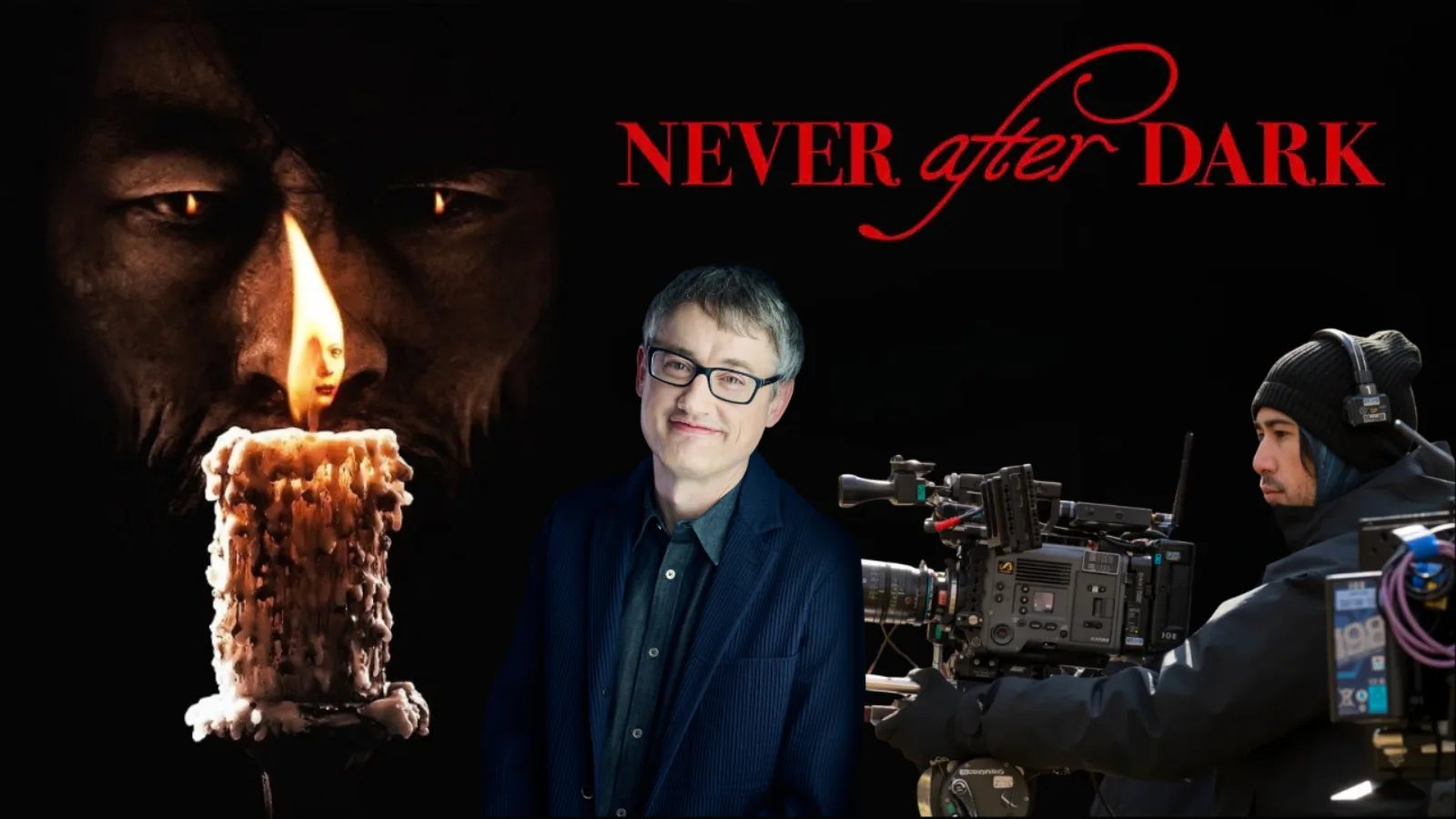
Never After Dark: filming a ghost story in Japan using camera magic
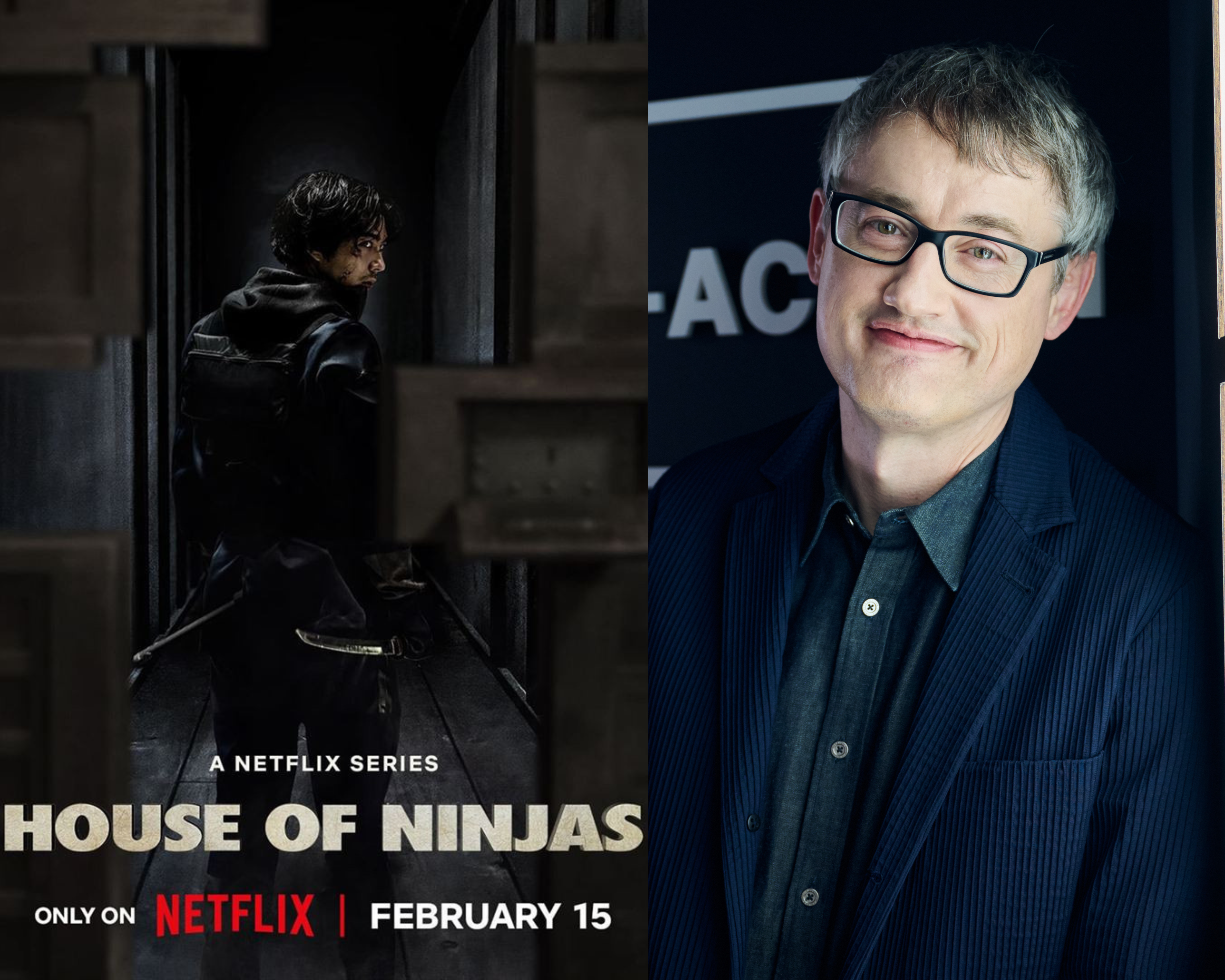
Director Dave Boyle and DP Patrick Ouziel on making the ghost story Never After Dark in Japan: a 28-day shoot, a backlit zoetrope mirror, and in-camera magic. Podcast highlights: -How Boyle, fresh off the Netflix hit House of Ninjas, made the film in Japan. Cast and crew were locked in before the script was finished, a development cycle very different from what happens in Hollywood's. -What it's like to shoot in a language you don't speak. Ouziel worked through a translator and alongside lighting director Hidenori Nagata, whose traditional fixtures and custom mirrors changed how he thinks about light. -How they built the spinning, ghost summoning zoetrope mirror and captured its reflections in camera. With careful tests and planning, Ouziel filmed all the mirror shots exclusively with in-camera effects. Never After Dark opens September 25 in New York and Los Angeles and expands nationwide October 9. Find Never After Dark in theaters: https://www.magpictures.com/neverafterdark/ Find Dave Boyle: https://www.imdb.com/name/nm2279419/ Instagram: @thedaveboyle Find Patrick Ouziel: https://www.patrickouziel.com/ Instagram: @patrickouziel Hear our previous interview with Dave Boyle on House of Ninjas: https://www.camnoir.com/ep254/ Show Rundown: 02:16 Close Focus 13:03-01:01:42 Interview with Dave Boyle and Patrick Ouziel 01:02:14 Short Ends 01:08:49 Credits The Cinematography Podcast website: www.camnoir.com YouTube: @TheCinematographyPodcast Facebook: @cinepod Instagram: @thecinepod Blue Sky: @thecinepod.bsky.social
Show notes
After writing the second season of the Japanese Netflix series, House of Ninjas, director Dave Boyle was ready for something new. “My producing partner Kento Kaku and I were just really eager to make a theatrical movie after being in the streaming world for so long. We just really wanted to make something for the big screen for theaters. And Kento just straight up asked me, ‘If you could just do anything, anything you want, what would it be?’ And I said, ‘I really want to make a ghost story. I want to make a horror film.’ And he said, ‘Let’s do it.’”
Without a finished script, Boyle began planning for the film Never After Dark. Japanese production begins even before scripts are written, with actors booked up to a year or two in advance. Crew and stage space are scarce, so the team locked them in early. Meanwhile, Boyle wrote his Japanese gothic mystery about a medium who uncovers real and supernatural dangers at a remote house in the forest.
Boyle asked cinematographer Patrick Ouziel to fly out to shoot the movie. When Ouziel arrived from Los Angeles, he was struck by the culture of preparation. “The amount of prep that every department wants to do to make sure that everything is going to be just so, even when it’s a low-budget movie, is kind of incredible,” he says. With a fully boarded film and 26 of 28 days at a single house location, he and Boyle could walk sets the night before and plan the next day’s blocking.
Though he doesn’t speak Japanese, Ouziel had a translator who also helped coordinate equipment logistics. Lighting director Hidenori Nagata brought some old-school and unfamiliar tools, such as ceiling-rigged inkies-small Fresnel spotlights- and custom mirrors that bounce light onto faces. “It was honestly kind of a dream workflow,” Ouziel says.
In Never After Dark, Airi, (Moeka Hoshi) the medium, uses a mirror with a spinning zoetrope around the edge for summoning spirits. The prop is a stunning visual that effectively shows her transition into the spirit world. “I wanted to get away from Ouija boards, like the usual sort of tools that you see in movies,” explains Boyle. “And so I wanted to come up with a convincing ceremony that she would do.” Production designer Yûji Hayashida designed the prop. “He has a knack for creating these interesting occult items that totally feel like you could find them in a back alley antique shop in Paris or somewhere in Eastern Europe or something,” says Boyle. “I wanted people to be able to watch the ceremony and understand what she’s doing without any explanation whatsoever. I wanted to do it all in camera, without any sort of CG component.”
The zoetrope was backlit with small LEDs. Ouziel tested it, and ended up using a shutter angle between 180° and 360° so the animation would read without a smeary look.
Mirrors were the film’s recurring theme. When one reflection shot wasn’t working, the fix was simple: flag the HMI, shade the sunlit ground outside the window and raise the camera to shoot against something darker. “You see it happen on the monitor. It’s kind of magic,” Ouziel says. For the shot of the mirror in Airi’s eye, he rigged the prop inches from her face behind a diopter.
Boyle says finding theatrical freedom after years in streaming was extremely rewarding. “I’ve spent so much of the last half decade or so in the streaming world where the downward pressure to not do anything that would make people turn it off and watch something else is so strong that you’re not always at liberty to make the best creative storytelling choices for that particular story,” he says. “In this case, we really only had ourselves to blame if anything went wrong. We had full creative authority to do it however we wanted.”
Transcript
Read full transcript
Hi, this is Dave Boyle, the director of Never After Dark, and we're on the Cinematography Podcast. Hey everybody, this is Patrick Ouziel. I'm the cinematographer of Never After Dark, and we're on the Cinematography Podcast. Dave Boyle: I see it just as a gothic... mystery with a ghost in it and hopefully it goes in a very, very unexpected direction. That prop and that ceremony that she performs in the middle of the movie was kind of the reason I wanted to make the film. That was the first idea that came up was love to make a movie about a medium. would love to get away from the Ouija boards, you know, like the usual sort of tools that you see in movies. So I wanted to come up with a convincing ceremony that she would do. Patrick Ouziel: The prop is an incredible thing. To be able to point the camera at that prop, and when you spin it, you just see it with your eyes that, like, this cool animation is happening. Intro: This is Cinepod, the cinematography podcast, a program about the art, craft, and philosophy of the moving image, presented by Hot Rod Cameras. I'm your host, Ilya Friedman, and today on our show, I speak with director Dave Boyle and cinematographer Patrick Ouziel about their new Japanese ghost story, Never After Dark. The movie opens September 25th in Los Angeles and New York and expands nationwide on October 9th. We dive into how Boyle, fresh off the hit Netflix series House of Ninjas, made the film in Japan, cast and crew locked in before the script was ever finished, employing a very different development cycle from what typically happens in Hollywood. What it's like to shoot in a language you don't speak. Ouziel worked through a translator and alongside lighting director Hidenori Nagata, whose traditional fixtures and custom mirrors changed how the cinematographer thinks about light. How the team built a spinning, ghost-summoning zoetrope and capture its reflections in camera. With careful tests and planning, Ouziel filmed all of the mirror shots in the movie exclusively with in-camera effects. After the interview, stick around for our short ends, our pet obsessions of the week. But first, find out what's going on in the world of entertainment in a segment called Close Focus. Illya Friedman: Hey there, Ben Rock. Ben Rock: Hey, Illya Friedman. How the heck are you doing? IF: I'm fine. Hey, it is our... focus time of the show. It's the time we talk about what's going on in the world of entertainment. There is one really big story going on right now in entertainment. We've been talking about it for some time. It's all over the news and it's a big deal, particularly for the world, for the world of entertainment, like quite literally, not just Los Angeles, not just the country, but the world of entertainment. Of course, I'm talking about the Warner Brothers Paramount merger. BR: Yep, it's happening. It's totally happening. And I would love to talk about anything else. But I feel like we can't really talk about the entertainment world without discussing this. I'm guessing this means Paramount isn't moving to Tennessee, which I think is the emptiest bluff in the history of empty bluffs. But it also kind of shows that we're the billionaires on the planet. We all just renting our little our little plot of land here because they can literally force anything to happen above and beyond our state lawmakers. Here in California, our Attorney General, Rob Bonta, I think did his best to fight the good fight. IF: Did he? Did he really do his best? BR: I mean, I don't know what his choices were. IF: Well, he could have held out until the fucking trial. I mean, I don't know. I feel like that's actually something he could have done. It sounds to me, at least the pundits who are talking about this are saying the pressure was so intense on him and that he couldn't imagine holding out until March to when the trial would actually happen. And I feel like not only did he fold, he folded really, really quickly. BR: But all the AGs folded. Multiple states folded. He's the leader. He's the leader of that whole cabal of AGs. IF: I mean, look. I felt like the states held all the cards. I felt like the that the Paramount Warner Brothers merger was was ultimately like they say that they'd be vindicated at trial and that that that, you know, this was, you know, government interference. But. I don't think that's the case. I think this could have actually been something that was for the books and really protected a ton of people. And instead, it looks like the protections are super weak. BR: Yeah, here in Los Angeles, I feel like we're all kind of bracing for the impact of job losses as synergies and efficiencies are found between the two corporations as they merge. You know, it's like they're not going to need, you know, two comptrollers of home video or whatever. You know, like they're not they're going to. A lot of people are going to lose their jobs. And, you know, it is still fewer people than if Netflix had purchased Warner Brothers. IF: Maybe. I mean, you know, it's debatable. BR: But, yeah, it's frustrating because I feel like a lot of this hinges on... And I don't mean to get political on our show, but it hinges on the midterm elections that are coming up. And if the Democrats took the House and Senate, there would be higher oversight over an antitrust, which as far as I'm concerned, this is the definition of vertical integration or an antitrust. And I'm not a legal scholar, but I'm not the first person to say this. Several people who deal with entertainment law have referred to this as an antitrust. And, you know, can it be broken up once they're put together? I don't know. IF: It's a lot harder, I think. I think it's easier to stop it before it happens. BR: The Ellisons are promising, and they did make some concessions, but, you know, they're promising to still make 30 features a year that 20% of them have to be independent, like, you know, smaller budget films. I don't know. You're not making an independent film. paramount or warner brothers it's the opposite definition of independent they're supposed to be uh independent oversight over their news divisions which has been a big bone of contention uh because you know having these people controlling cbs news and cnn etc etc and being so in the pocket of the current administration is a conflict of interest because these are people who don't necessarily they're not coming from a news as a public good background they're coming from a news as entertainment background and if we want all of our news to uh to to be basically fox news uh this is one way to get there but if they truly do have independent oversight you know we'll see IF: yeah anyway it gets my dander up a little bit because it's like i really thought that california was uh was gonna fight the good fight i really thought that this was um going to get decided by a court. I really thought that there was going to be meaningful and strong protections for California workers and a real effort put forth to try to maintain something that some sort of semblance of good fair play. Variety makes a really great observation. And actually, we'll put a link in the show notes to the Variety podcast where they talk about this because I feel like... You and I yakking about it can only do so much. And they spent a ton of time going into it. And if you want more information, it's worth going over and listening to that podcast. But one of the points that they make, and the reason I bring this up is... uh rob bonta appeared at the press conference with no handmaidens he didn't have anyone else out there like you know uh standing up there to uh really celebrate this this win like he was trying to take a victory lap but supposedly when you're up there alone that doesn't exactly speak volumes about the number of people who actually think it's a win and he used the word adequate many times rather than the word win and that basically sounds like the opposite. Sounds like it's inadequate. Sounds like it's not a win. BR: That's what we were all looking for is adequate. I mean, I just think that in aggregate, this is going to be yet another body blow against the industry in Los Angeles and the people who work here. And is it going to be a body blow against kind of the production people who are, you know, my folk? The circus folk? Probably not because they're planning on shooting certain numbers of things here in Los Angeles. And this might actually be a good thing for a lot of us in that that work is going to maybe start picking up and there's going to be more stuff shot here as a result. But what it will mean is that the infrastructure people, the rank and file people who keep these studios working, many, many thousands of them are going to be displaced. And they have kind of specialized jobs that don't necessarily move over to, you know, the textile or the fashion industry. So what are these people going to do with their lives? I mean, I guess if you're an accountant, you can probably find some other place or if you're a comptroller, you can probably. find find something else but it's uh it's gonna be shitty for a lot of people i do want to say that there is a a teeny tiny cherry on top of this uh which is that coyote versus acme which warner brothers tried to make a tax write-off basically making all of us pay for it crossed the hundred million dollar worldwide IF: box office yeah yeah BR: I think that that generally refutes kind of everything about david zasloff as if we needed it too. I'm still interested to see, like, hey, maybe Batgirl could be pulled out of Mothballs and released somewhere. Maybe, you know, maybe it's good. Who the hell knows? We're never going to know unless someone releases it. But I think that David Zaslav has done a remarkable job of failing upwards, mismanaging a studio, and then getting out of there with, I believe, half a billion dollars of a golden parachute for himself. It's gross. Can I just say it? IF: Yeah. No, no, it really is. It's really gross. BR: It's super gross. I know somebody who used to work for Discovery Channel and worked directly with David Zaslav when he was running Discovery. And I remember when he took over Warner Brothers, that friend of mine went on a tear on social media, basically saying how he was going to destroy Warner Brothers and HBO and everything else he touched. And it's interesting. I mean, like, it's not destroyed. I think the brand is intact. Not yet. Yeah. I mean, I feel like merged with Paramount is... It's not good if the Disney Fox acquisition is any indication. I feel like the long term prognosis for how it will affect the industry isn't great. It's like we need more competition. And that's why we have things like antitrust law. IF: Agreed. I think that there was a really, really unique opportunity here to say and to really put up a big warning sign to anyone else trying to. to do this type of acquisition. But instead, no, it's no longer a cautionary tale. If you've got enough money, pretty much Hollywood is for sale. BR: Yay! IF: Yeah, and damn the repercussions. It's like they can basically do whatever. Anyway, and I'm sure that Paramount wouldn't view it this way. But word on the street is that executive offices of Paramount are ecstatic right now. Everyone over there is really, really thrilled. BR: Oh, really? IF: Yeah. Paramount feels like they won. They got all the things that they were asking for. BR: Right until 6,000 or 7,000 of them lose their jobs. I'm sure many high five. IF: Most of those losses are going to come from the Warner Brothers side, but we'll see. BR: Yeah, it remains to be seen. Because it's not like Paramount didn't just have a ton of losses when they got acquired. When Paramount got taken over, there was, again, a total shedding of people. So thousands of people lost their jobs from those layoffs. So the idea is that it's going to be from the Warner Brothers side more likely. Oh, no, like I'm looking online right now, and apparently Warner Brothers studio has been turned into a spirit Halloween store. IF: Well, those jokes are going to keep coming, I'm sure. But I've got a lot of friends at Warner Brothers. Warner Brothers is a client of mine. And this really makes me apprehensive and concerned for the future because, I mean, lots of great people, lots of incredible work coming out of there. HBO is part of that family. And so all that stuff you love on HBO is, they say they don't want to touch it, but... we'll see. Who knows? BR: Yeah, we'll see. I mean, it should probably be good for your business, hopefully. If they stick to their promise and they're doing X number of productions here in Los Angeles, you'll probably sell a lot of gear. IF: We'll see. It's hard to say. It's really hard to say. Nobody knows right now. All right. On that very happy note. BR: Well, it's true, though. IF: We should get to the interview now with Dave Boyle and Patrick Ouziel from Never After Dark. BR: All right. IF: which is great. BR: Cool. Let's do it. IF: I'm joined now by Dave Boyle and Patrick Uziel, the director and DP of the new movie that's coming out next week in L.A. and New York, Never After Dark. Welcome to the Cinematography Podcast. Dave Boyle: Thanks for having us. Patrick Ouziel: Yeah, thanks for having us. So good to be here. IF: Dave, I know you also wrote this movie and you also produced this movie. Set the scene for us. Get us into this project. What's it about? And how did it arrive out of your brain? DB: Yeah, absolutely. Producing was really a group effort on this thing. And that's kind of where it started from. I was in Japan for a long time making my Netflix show, House of Ninjas. My fellow co-creator and producing partner in Japan, Kento Kaku, and I were, you know, we wrote a season two for that, and we were also working on some other projects together. And we were just really eager to make a theatrical movie after being in the streaming world for so long. We just really wanted to make something for the big screen for theaters. And Kento just straight up asked me, like, what? If you could just do anything, anything you want, what would it be? And I said, I really want to make a ghost story. I want to make a horror film. And he said, let's do it. I had this idea kind of in my back pocket. I love ghost stories. I love haunted house movies and everything. I think that they're oftentimes really hard to end. So I wanted to do a little bit of like a hybrid story approach where it goes in some unexpected directions. And luckily, Kento was... was on board with that um the way that you know production and development and stuff works in japan is quite different than it does in the in the us so we ended up kind of locking down the the cast and the crew and stuff before we we even had a script oh wow but then once we yeah but then once we kind of had everybody set in stone we had that that start date where it's like we you know got to have that script. IF: That's really interesting. I've never heard of locking down cast and crew before having a script before. Did that include Patrick? Was Patrick also locked down then before this came to be? DB: Patrick was sort of the wild card in this whole equation because we were... We were taking a lot of our crew from House of Ninjas straight into this movie. The way that sort of development and production cycles work in Japan oftentimes is that everybody is kind of, whether it's cast or sort of the main department heads and stuff, are kind of soft-locked off of just basically like a project Bible, let's call it, a project proposal or something. But, you know, Kento was really adamant. And I also just really felt like we wanted to add some new members of the team. And we also just... i wanted to uh patrick was somebody that i wanted to work with for a long time honestly and and kento was really eager to just have the experience of working with Some new faces and a cameraman from overseas as well was something that he was really interested in. Just while making movies is the same all over the world. I think that was just something that he was really interested in. Because Patrick was somebody I wanted to get on a movie for a really long time. And I saw my chance. And everybody involved in the movie just really loved Patrick's reels and everything. And so, yeah, so it was a really easy sell. But there were all these things about, you know, getting a work visa and all this. There were all these kind of... of the puzzle that had to come into place before I could call Patrick and say, hey, the job is yours. But from the beginning, I sort of had my eye on him as like, this would be a great thing for us to finally get to work together on. IF: Wow. I got so many questions about this, but I'm just kind of curious, the whole idea of like soft holding and locking people into projects that maybe not even fully written yet, is it a... a money-saving sort of slate methodology then where you just block out a period of time he's like we know we're going to be working at this point so you know the script's got to be ready everything's going to be ready what why uh why lock people in before before something's finished i i've never heard of that before. DB: This is oftentimes why i think uh because i i hear about you know american producers or directors going to japan and and having um you know challenging experiences and i think it's often because like the expectations and can be mismatched or there's just such fundamental structural differences that it's hard to for everybody to get on the same page the entertainment industry structurally is so different you know the for example the way that talent agencies work is just fundamentally different in in japan and the u.s and so for even Most working actors, like even not necessarily names that are going to open a movie or whatnot, most working actors are booked far, far out in advance. Sometimes, you know, a year and a half, two years. So like now, if I tell my colleagues in Japan, you know, I've got this new project, I'm thinking about starting shooting. quarter one 2028, everybody will sort of be like, well, you better get you sure you have enough time, you know, like, it's, it's a, so there's a little bit, you know, the cycle here of like, you develop until until it's ready, and you have the scripts, and then and then you take that out and you put together the other pieces is tends to be There are projects that function that way, but then there's always that waiting for when all the people, because the pool of available crew is also much smaller than it is in the U.S. or in other countries. And studio space is extremely hard to come by. And now that the streaming companies have come in as well, I think Netflix has... Toho Studios Stage 7 on lock for like the next 10 years or something, something ridiculous like that. So for theatrical movies to be able to get, you know, the people and the space to do what they need to do, it sometimes is a long wait. So oftentimes what you'll see is like they got the book or the manga, the piece of IP that they're adapting. They have this list of four stars. you know that are are um available in this window that that we're all aiming for um and we have a director and uh so we we got the go ahead now let's get that script you know and so a script is usually not written as a tool to sell as a, a tool to convince people to, to make the movie. And, you know, so, so that ends up just fundamentally like the, the character of a Japanese script ends up being different than, um, than a Hollywood script. Cause you're, you know, it's, it's, there, there isn't this interview. I don't want to, I don't want to oversell the difference, but it is cause there's, it's obviously like case by case. Right. But, um, and each one of the studios kind of has their own way of doing things. But I do think that like having that start date and everybody aiming for that is, and then the development process sort of works towards that is one pretty big difference. IF: Yeah, it sounds like a fundamental difference and it's fascinating to me. I'd never heard this before. Patrick, I want to bring into this conversation, was this your first time working in Japan? Did you have to jump through a bunch of hoops to make this happen? Was Dave and his crew able to wave a magic wand and it was suddenly easy for you to fly over and do this? How did the process go and what was that like? PO: I mean, honestly, I had to do a little bit of kind of paperwork and going down to the embassy in downtown L.A., but, I mean, they made it pretty easy for me once I provided my passport photo and all that kind of stuff. I told them I don't speak Japanese. They got me a translator because pretty much all of my crew spoke only Japanese with a few exceptions. And so, yeah, I felt very, I was kind of pinching myself the whole time I was there because I remember like the first day that I came in, you know, I arrived late at night. I slept one night in this apartment. Everyone came and greeted me at the airport and they took me to my apartment. And then the next morning went into the production office with Dave and met everybody. And it just felt like. I felt pressure to deliver like a lot of things had been done to get me all the way over there and I was going to be there for a few months. And so it just it was a good motivator for me. I was like very head down in my work. I probably should have explored Tokyo and stuff a bit more while we were in prep. But I I was I was very keen on making sure that I did a good job. So, yeah, I'd say that. I mean, as far as. You know, I had an English language script. I think I was like the only one referencing it on set. And yeah, and then I had an incredible translator, Sue Inagawa, who I mean, I kind of liken her in the end. It was very similar to the kind of dynamic that you hear about with James and Roger Deakins were like. I had all of my notes and kind of my equipment schedule and stuff that I had notated. But she really kind of then took the lead in coordinating a lot of things like, oh, the probe has to come from Tokyo on this day. Steadicam is coming on this day. And I would do all of kind of my shot breakdowns and stuff. And she would translate them all and disseminate them to all the crew. So it was honestly kind of a dream workflow. Like I think we DP sometimes are. It just allowed me to focus a lot on the creative. And also I had an incredible lighting director who is just an absolute legend. Hidenori Nagata, who has done a bunch of Kiyoshi Kurosawa movies and is very, very experienced. And so kind of the way he managed his crew and dealt with all the pre-rigging and everything like that that had to happen was... It was a very smooth shoot in that sense. I kind of was freed up to focus on a lot of the creative discussions with Dave about how we were going to shoot things. IF: Was this movie entirely shot on location as well? Yeah, we did. I think it was 28 days and we did 26 at our main kind of house hotel location and then two days out in the forest. We did a process trailer day and then a day of other scenes. IF: This movie is a contained thriller. And I feel like contained thrillers, there's usually a couple of different types of real hurdles that a contained thriller has to overcome. It has to never get boring because you're always in one with sort of location. And you guys did an incredible job of making sure that I always felt like there was a new nook or a new cranny or some new part I was seeing. We weren't just living in one room this entire time. But still, it's on location. Also, With the idea of the contained thriller and a slow burn, so much pressure is on the DP to make this interesting because this is not, oh, we're going to hide it in a couple of cuts. We're going to cut, cut, wham, bam. Slow burn is all about the visuals. It's all about what's taking place on the screen. So my hat's off to you guys. You guys really hit it out of the park. My question is, you know, since you're... Patrick, since you're dealing with, you know, a translated script and you're working with a translator, I mean, obviously Dave speaks English and you guys can put your heads together. But did you ever feel like it was difficult to get out what you most intended onto the screen? Or was this actually a pretty fluid and pretty smooth process? I mean, you guys had never worked together before. Is that right? PO: Yeah, we hadn't worked together. But I mean, I've been a huge fan of Dave's work. It's kind of a long story that I won't go through the whole story. But I both was a camera intern and on a day of his feature, Man From Reno. And then I worked at the post house that did the DI for that movie. So I was familiar with his work and especially that film. And I loved it. And I thought that the way that he blocked scenes and moved the camera in that film was just exactly my style of filmmaking and camera movement and so it was it was kind of a thrill to get asked to do the movie because I knew that we were gonna want to do similar things and then add on to that kind of that's like just our taste but then Dave also wanted to kind of go a little bit more retro bring in some zooms like we watched some old 70s films and so it was kind of just Dream and then add on to that it's shooting in Japan. There's great locations our production designer. Hi, she just on was amazing So like it's I think all DPS know that when you can point the camera at beautiful locations and sets and costumes It makes our job a lot easier and then add on to that my lighting director being in kind of someone bringing all of his own taste to it You know, I presented to him a deck of of ideas of how we would differentiate different aspects of the film like the kind of spirit world versus the regular world and how i wanted to use haze and things like that but um he brought so many additional ideas and like because he was so well kind of organized in terms of how he was pre-reading sets for us it was like i mean it's a dream dave and i would like finish a day and then be taken to a set and like look at kind of what they had roughed in and could then be be discussing what we're going to do the next day or the next week. And, and so, I don't know, it's all just like time, like having 28 days to shoot a low budget movie is, is also very, we're very spoiled. I feel like all of my friends who shoot movies in LA that are low budget have like 15 days or under 20 days. And so when you have time to think through and you're also at the same location, it's like awesome to just be like, Oh yeah, we haven't blocked that scene yet. Like, let's go up to that bedroom and look at what we're doing tomorrow that are in two days. And also we scouted a good amount, so we boarded a lot of the film. You know, Dave had a very well -defined shot list, and then taking that to our multiple scouts, we had a very good sense of what we were going to do going in. So, yeah, I'd say the only things that, you know, when you're working with a new gaffer or lighting director, that's what they call in Japan, like there's a little bit of kind of getting on board with the same taste and kind of finding out how to ask for what I wanted to ask without, you know. This guy's way more experienced than me. I don't want to offend him. So, you know, my translator, I think, always softened how I would ask for stuff to make it, you know, the best way of making a request. But it was a really, we had so much fun. We would sit and we would be in the tent together and like be making jokes. I'm so happy with how it looks. And I think it's because of the combination of like Dave's taste and my taste, but then also having someone like Nagata-san bring like a different approach to lighting, like using different instruments than what I would use normally. So, yeah. IF: Can you give an example maybe of one of those instruments? PO: I mean, I hadn't seen like, just like, you know, inkies rigged from ceiling, little 150 watt airy Fresnels in a long time. And even so much stuff is LED. And we obviously did use, you know, he had Titan tubes like you would expect, but just a lot of traditional. fixtures and a lot of mirrors too like he would love to like he had a lot of custom little mirrors that either were clean or had like shattered patterns in them yeah I don't do a lot of kind of mirror like bouncing light into a mirror and then hitting a face directly is just not something that I would do but then he started doing stuff like that and seeing how it falls off on the face was really it creates a different quality of light that I think it looks beautiful and so I'm trying to remember all the little tricks that we learned over there and put them in my next movie. IF: Dave, I've been thinking about how best to describe this movie without spoilers. And I don't want to try. I'd like you to give us, you know, the quick sort of like log line or synopsis, you know, spoiler free version of it, because I enjoy so much just having the movie unfold. And, you know, it keeps revealing new layers. The foreshadowing sort of flash forwards that happened throughout this movie. It reminds me of like the late 80s movie Dead Again and things like that, which is just was like, I thought done so well to give you little pieces of a puzzle. you get the full puzzle, but I don't want to speak out of turn and ruin this for someone. How do you describe this movie for people? DB: It's one of those things where I'm torn between, you know, the less you know, the better the experience you're going to have, but also, you know, wanting to tell people enough about what they're in store for. I see it just as a gothic mystery with a ghost in it. and hopefully goes in a very, very unexpected direction. For people who love ghost stories, who love... you know just kind of classically told ghost stories i think that i think that they'll have a lot of fun sort of seeing the nice and cozy familiarity that this movie has and then the the kind of twist that that it takes you on i hope is what the the pleasure of this movie is but just kind of the the nutshell synopsis of it all is a medium named Airi who's played by uh shogun's moika moika hoshi is called out to a house in in the countryside and she's accompanied only by her older sister who is actually a ghost and her her constant companion and she's called by a family for a pretty ordinary job just to help them get rid of this uh this spirit that's that's in their house that's a man with a grievous wound on his face and so she settles into this job that's very routine for her and she's somebody who's very accustomed to ghosts and ghosts are not scary for her but something that is very frightening is lurking just around the corner. So that's about how I'd describe it. IF: I think that's a great way to describe it. There is a sense of creeping dread throughout this entire movie, which I feel like is something that is really hard to pull off. I feel like creeping dread, you have to give people just enough that they're really concerned that something bad is going to happen and pull it back so that bad thing doesn't happen. And then you get a little bit closer and closer and closer all along through the story. Can you talk just a little bit about like the mise-en-scene, the scene, the amount of dread that is sort of like closing in all the time around Irie and how this movie explores that sense of unease that the audience feels? DB: Yeah, that's a great question. I think that, you know, you're always in a constant battle of pacing, of wanting to have the audience excited. about what's happening next but also not getting too far ahead of yourself not releasing the tension and and i find in a lot of these movies that every cut or every for example jump scare is a little bit of like a tension release but people are so accustomed to the visual grammar of these kinds of movies it's it's also very hard to surprise people i i just approached it from a way of trying to make it feel as subjective as possible put ourselves in Aidy, the main character's shoes. And then separate from that, there's moments where we are from a more third-party kind of objective perspective. And then what does that feel like? How do we make that feel that there's sort of another presence here? How do we get the feeling like this place is alive with supernatural energy without overdoing it? And the fact that we were making this as a theatrical movie also sort of... I think informed the way that we could do that and the choices that we could make. I spent so much of the last half decade or so in the streaming world where the downward pressure to not do anything that would make people turn it off and watch something else is so strong that you're not always at liberty to make the best creative. storytelling choices for that particular story um in this case we really you know we really only had ourselves to blame if anything went wrong like we we had full kind of creative authority to to do it however we wanted and so i i always feel like you know less is more uh i i tend to gravitate towards that and i also just try to create a a certain set of rules and then, you know, you break them when you have to, but just the visual grammar tends to be very instinctual for me. And I think like, you know, just trusting your gut on the first idea and everything is often, for me at least, I think it's key to part of that. i think you know especially in the first half of the movie we we just wanted the feeling that the the camera was not locked into standard coverage that we are you know we tried to do as as many things as as in a stately and choreographed manner as we could and just really make the frames feel alive so that there was a constant people were feeling sort of a constant tension of what was going to be coming out of the shadows, like with the camera movement and everything, since people are so attuned to anticipating jump scares and everything like that. Taking the audience into the world and making them anticipate something that may not come when they expect it, that was sort of the joy of coming up with the visual puzzle pieces to make it work. IF: Yeah, Patrick, there's a ton of shots in mirrors, in reflective surfaces in this movie. So did that present a unique challenge for you for all of that sort of work too? Because like there's mirrors that are constantly readjusting, there's reflective surfaces. I mean, it's part of the joy of watching the movie because there is this whole spirit connection to the reflections. So how did you want to visualize that? PO: I mean, we had discussions about, you know, mirrors, split diopters, how pulling references for what, you know, the people who are in the reflections look like. The thing with mirrors is that it's always you kind of know what it's going to you kind of just know you're going to be messing with it on a day. And like you could have sometimes like you plan it out and you've tested it. There was one scene where like we tested it all the night before. We're like. We had this overhead shot of the mirror and then a hand has to reach across and you see this thing. And then we took meticulous notes about how it was going to be done. And then still on the day, it was like almost rediscovering it from the beginning because like just the slight difference of actually having, you know, the real actor there or whatever, it just wasn't quite working. And so I think it's just about being patient and giving yourself time to find those things. And similar, I mean, there's one scene that I really love where you see, you know, this person, Airi is in the mirror and then you see Miku also in the mirror and then we did kind of like a transition and in-camera transition where she disappears and that was always something that we thought would be really fun to do in camera I think when we scouted it and we framed up the shot like it must have that it was actually sunset so like the Sun was kind of hitting the person directly so they had a lot of light on their face and you could see them perfectly in the reflection and then when we ended up having to shoot that scene was like in the morning and so We knew that we were going to have to put light on their faces, so we had a big HMI going through the window, but we just were not seeing. It just wasn't working. We couldn't see their faces. And it was because the ground that was out the window was too light. So then we had to put up a big, I don't know if it was a 12-by or maybe a couple 12-bys, but basically just to create some shade so that then you could see the reflection against something darker. And that was one of those things where we were having conversations like, should we just try to do this later? Um, because it's like not quite working right now, but then with enough kind of conversations with lighting director and we, we came to a solution and I think it looks so cool in the movie. Like it's just like, it's such a simple thing where they're just putting like a flag in front of the HMI to like cut the light off of the person that we wanted to kind of fade into the, into the darkness. But it was the kind of thing that it's like, you see it happen on the monitor. It's kind of magic and it's a great, there's a lot of little things like that that are kind of done in camera. um that are really fun IF: i think you just saved the vfx DB: i also remember you you probably raised the the camera about three or four feet and then that PO: yeah to aim at i had to aim at something dark it's like it's like such a simple thing like yeah i guess it just yeah how's a reflection going to be read against a ground that is being blasted with sun directly um so yeah it's one of those things that you can't You have to be able to... I'm a huge planner. I thought it was awesome that we had so much of the movie board in advance, and I shoot a lot of commercials with one director in particular where we board everything so meticulously. And so I like that process. I like feeling going in with a really solid plan, but you just have to be able to still improvise and figure it out if something's not working or change it up if the plan no longer makes sense. I think one of the things that's... Always interesting is when you block it with like an AD on a scout and you're like, great, this is perfect because like they just have to go from here to here and then we can move the camera perfectly and it's a great shot and then like the actor, it doesn't really, yeah, like we're not actors so we kind of do something a little more for the camera and so you have to be willing to, I think it's a big part of a DP's job to not inconvenience or encumber the actor's performance by saying like you have to do this or that and I think there are times when, You know, you're doing very specific. We did a kind of tribute to, it was like a clute tribute where we had like a slash across her eyes against Aidi's eyes. And like one of that, it's like they have to stand in a certain spot so that the like the slash that you put lands there. But in general, I try to, I don't want to like inconvenience an actor's performance with like lights that are so close to the edge of frame that they can't take a step left or right without ruining it. IF: You get to work with a really cool prop that I'm sure was built for this movie that's sort of like a zoetrope that's backlit. I kept thinking to myself, like, this is so visually interesting every time we see it. And we get to see, like, little extra details or nooks and crannies as a... of goes around can you talk a little bit about like the way that that plays in and how you're shooting it and like I feel like you're revealing there's sort of like these symbols that look like people but it's like you don't really get all of that so can you talk a little bit about this prop and how this prop plays in the story and Dave, Patrick, either one of you can jump in here on this because I'm sure you both have different perspectives on it. DB: I can talk about the origin of the prop, and then Patrick, if you want to talk about shooting it. That prop and that ceremony that she performs in the middle of the movie was kind of the reason I wanted to make the film. That was the first idea that came up, was just love to make a movie about a medium, would love to get away from... The Ouija boards, you know, like the usual sort of tools that you see in movies over long periods of time. And so I wanted to come up with a convincing ceremony that she would do. This spinning mirror and candlestick set that she uses for it is something that was just designed. by our production designer, Yuji Hayashida, who's somebody I worked with on House of Ninjas and is a very total legend, did 13 Assassins, Shin Godzilla, among many, many other movies. But he just has a knack for creating these interesting occult items that totally feel like you could find them in a... I don't know, some back alley antique shop in Paris or I don't know, somewhere in Eastern Europe or something. So we talked a lot about where the thing might have come from and how I wanted people to be able to watch the ceremony and understand what she's doing without any explanation whatsoever. And also I wanted to do it all in camera. I didn't want to have any sort of CG component of the ceremonial materials itself. So he designed sort of a zoetrope animation that was almost like a flip book. that then they sculpted in 3d and and put on the uh fabricated that mirror from scratch but it felt like there was one one more kind of element missing to to make that animation in the zoetrope really really pop and so when we were at a big production meeting they had kind of the first iteration of the mirror available i got this on in the and the lighting team just suggested having an LED apparatus on the back of it that they could dim up and dim down to just kind of highlight that animation and make sure that it was coming across. And so it was great. We had that prop. fabricated early on so that we could shoot tests with it. IF: It's so great that they suggested that. And Patrick, that must have made your life so much easier too, because that backlight, that LED that's inside of there means that, I mean, it just adds so much to it. It completely changes it from this sort of like inanimate object into this like this really, really cool thing. And it's like this orangey yellow sort of like, you know, very tungsten sort of like color. Can you talk a little bit about, I know that you're going to have to balance exposure of all these things. Did you have the ability to to dial that into a level that worked or was it ever too bright too dim did you have the full range or PO: yeah no I mean actually so the the rig itself was I mean first of all the prop is an incredible thing so it's like really to be able to point the camera at that prop and you when you spin it you just see it with your eyes that like this cool animation is happening so that's the biggest component is is the art department and Hayeshita-san making an incredible prop that was cool to point the camera at and then what nagata-san the his crew did was they put i think it was i don't remember how many but like mc pros on the back um so you know something that we're all used to using these days a little led kind of brick light and then yeah fading it up and down and we picked a warm color that looked nice and on the camera side when we did our our main camera test it was really just about looking at it and And I'm trying to remember when we discovered, I think it might have just been like filming it on the phone at one of the production meetings being like, oh, it doesn't. It's like when you're filming a car tire and it like spins weird. It doesn't like go the way you expect. So I knew that we would have to do some amount of just testing different shutter angles and frame rates in order to be able to see the animation clearly and have it look the way we wanted. So when we did the test, we just ran through a few different shutter angles. And I think we landed somewhere in the middle of like not quite. 180 but not like 360 actually looked the best for the shutter angle because you could really see it didn't truncate any of the animation But I feel like sometimes 360 just has that smeary video look so I'm a little scared of doing an open shutter like that It works amazingly in collateral that's the only time that I think the open shutter worked in the history of movies Yeah, so I think again like I think that the cool thing about Being on a film like this and I think there is a culture of this in Japan from what Dave has told me and having being there myself is like the amount of prep that like every department wants to do to make sure that everything is going to like be just so, even when it's a low budget movie and you don't have a lot of resources is like kind of incredible. Like there's so many, you know, department heads showing you something well in advance so that you can kind of sign off at it and do a test. And so by the time you're shooting it, you know, you have. you feel confident that it's going to work. IF: Was there a lot of versions of that prop? Did you go through during the testing process or was like, okay, and here's version 17? Or was it pretty much nailed right out of the gate? How did that revision go on that? DB: It was pretty much nailed right out of the gate. There were intermediate steps along the way in picking the design and sort of the content of the animation and some of the fine details. This is just sort of a fun detail, but production meetings happen. Any movie worldwide is going to have production meetings. Japan has a very specific... kind of like formalized style of prep that all sort of lead up to this one a very sort of formalized style of production meeting where everybody involved is has to be there from beginning to end and basically doing a page turn of the script and going through every single prop we were sort of trying to start early enough that fully fabricated functioning version of the mirror that was just ready for basically final tweaks and like how are we going to shoot this we'll be ready for that meeting It's called a beauty, which just means artistic meaning. But it's a word that's only used in the film industry and does not compute if you try to use it in everyday life. Luckily, we were able to do that. Like it started out with, you know, in the production office, I got there one day and in the art department's room, they just had... Every variety of toy Zoetrope that they could get their hands on to study and to kind of use as an example. So if anybody's a fan of the famous cartoon character. Doraemon, there was like a Doraemon zoetrope. That ended up being sort of the thing that was like, yeah, this feels like it's about the right size and it's spinning the right way. And they're getting the, they had to figure out how to sort of get that some kind of shutter on the thing to make it read as animation and sort of focus your eye in one place. So every step along the way, there were discussions. So it wasn't like there wasn't like, OK, we fabricated the mirror and now we're going to scrap it. And it was just, you know, one step by step. It was we were just perfecting it until it was time to get on set. And then, you know, there was a technician actually on the set with with a whole tool set and everything to be able to adjust it and fix it on the spot and adjust the speed and all that kind of thing. IF: It's super effective, and it's really interesting. And every time it gets spun in the movie, it immediately commands attention. It's immediately like, oh, here's the focus of attention, which is so much fun. In fact, there's a shot that even made the trailer that you guys did of this device being reflected in the actress's eye. I'm curious, Patrick, that you had mentioned when we were talking before recording here that you used some probe lenses. Was that a probe shot right up to an eye with a super close focus? Or how do you pull that off? PO: I think that was just like a lens with a diopter on it, like an 85mm or something like that. I had done a short film years ago. where we it was like a Christmas like short film or something and there was a shot of a little girl with and we wanted like the Christmas lights in her eyes and at first I was like not having any success with it and then we just bunched up like a ball of them and put them like like right here like inches from her eye you know because the shot's so tight you can't tell and so I kind of had the instinct Dave and I discussed it at one point in a meeting that we were having and I was like I'm pretty sure if we just rigged the mirror this close it will read in the eyes and it did That's great. But that's the magic of movie making because, of course, it's not supposed to be that close to her. Yes, exactly. But as an audience member, when things are really close like that and those extreme close-ups, no one knows what that's supposed to look like. It's always, you know. That's one of my favorite things about filmmaking in general is just the kind of the cheats that we know exist about geography and everything like that. Actually, Dave would tease me a lot sometimes of like screen direction and things like that. I would be a little more concerned like. Can I put the camera here? Dave has a rule that I now kind of carry into everything, which is that when it's clean singles, like, yes, the eye line should be good. And when it's not, and you have even just a shoulder, then it really just doesn't matter. I started to be... Just a little more relaxed about that. But he teased me. He's like, all you AFI DPs are always obsessed with the eye lines. DB: No. Let me clarify. Let me clarify my thoughts here. IF: Dave's not going to let that one go. DB: Yeah, yeah. It absolutely matters. It absolutely matters. It's because I'm quite particular about eyelines, to be honest, especially when you're looking at clean singles. I really spend a lot of time thinking about sort of when something is, you know, you're seeing somebody and then you're seeing their POV or when we're in sort of a have somebody dirty in the frame or, you know, sort of the meaning behind what. what you're trying to get across i always every movie i feel like is different in terms of the approach to that my experience of doing eight episodes of a streaming show where you're just kind of in it and have to blow through a ton of pages i became like a lot more conscious of what you could get away with oh yeah simply simply because of and it wasn't it wasn't a super rushed we had a actually a really really nice schedule on those shows it was just that i was working with a legendary dp who comes from the his name is shoji ebara who who is a veteran of the kyoto like jidaigeki scene so he's a long history of shooting samurai epics and and um that filmmaking tradition has such specific must not break rules and none of them involve eye lines or screen direction wow so so we're you know we he and i would get into things where where you know i'd be like i don't think that that eye line is gonna match and he's like well what eye line do you want you know kind of thing and uh which which was great it took me out of my comfort zone and he that yeah i learned so much from watching the kinds of rules that that he had and the kinds of things where he was just totally open to whatever i wanted to do the visual grammar that comes from that whole world tends to not be as concerned about the 180 degree rule but on the other hand like it's almost always when it's dirty frames you know So as long as you have something to latch onto, you know where people are and stuff. But, you know, I watched the first few episodes of House of Ninjas now, and it's just like, man, we're just jumping the line all over the place. But I guess he got me used to it. That whole show was all cross-boarded, all eight episodes. So there'd be some days where, you know, you're shooting scenes from episodes one, three, and eight all in the same day. You know, a lot of the stuff later on, I started to become a little bit more relaxed about eyelines and stuff. I'm really glad you bring this up. But then Patrick came in to sort of... whipped me back into shape. PO: Actually, I mean, one of the great, you know, there's something that happened in prep too with, because I mean, I did not mean to suggest that Dave is not specific about the visuals because he shot listed the entire movie very specifically, actually. I don't think anyone took that away. But something that like was interesting is that I always wanted a dolly and there was conversations about, you know, often. Like David had told me that on House of Ninjas, like they have a like a kind of Fisher Chapman style dolly only specifically when they need it and otherwise they don't really carry it the whole show. And for me, it's a dolly is such an integral part of the way I like to work and just position a camera and finding the lens height and everything like that. And I actually at one point for budget reasons had said, you know, I guess as long as I have like a jib and a remote head, I can kind of boom up and down and it'll be a little more finicky because we have to be on the remote head. But we kind of gave away the dolly for a little bit. And then, thank goodness, my dolly grip, Tsunyuki Aiko, discussed with the producer how we could have the dolly for almost the entire shoot. I think we had four of the initial days without it. And then we had our peewee for the rest of the shoot. And I really relish, like, underslinging the camera, getting exactly the lens height that we want. And I'm glad that Dave appreciates. That kind of fine tuning of the of the camera position, because to me, it can totally change the psychology of the shot and what an audience experience is. IF: I'm really glad that you you bring up the whole concept, though, of eye lines and the and the dogma and the 180 degree rule that that goes along with film production. I spent. 10 years working as a first AC. And I don't think that this is something that translates really well out into the rest of the world of sort of the more casual film fan or film enthusiast. They don't necessarily realize all the rules and battle plans that go into almost every single thing. When I was a fairly young first AC, I worked with this DP who got irritated that I was constantly leveling the ball head. So it was like we'd move the setup and I'd level the tripod. I do it over and over again. And finally, he says to me, he goes, that doesn't matter. You know, he's like other people might want that, but I don't care what that bubble level says. If I look through the camera, it looks OK. That thing is completely irrelevant. And I was like, you know, you're absolutely right. There is certain amounts of stuff that that we're all just sort of trained with. And I think that eyeline is part of one of those things. Like I had someone else on the show talk about how they rigged up. lights coming in from both sets of windows on the left and the right. And they were both supposed to be the sun. So it was two suns. But, you know, he says it looked right. It looked right for the scene. And so, you know, that's what it is. Is there anything else that things that you experience like on set that are maybe dogma or pre -existing conditioning that we all have sort of like, you know, the film language, the film grammar, the film progression that you think is less important than it's made out to be? PO: I think that lighting matching is definitely one that like the amount of cheating you can get away with from a wide to a close and the quality of light changing. I mean, it's, it's incredible what you can get away with when you go from a wide to a close up. So I think that sometimes I'll get a little irritated with, I mean, I was on a commercial recently and we went from like a wide to a tighter shot and my DIT was kind of like, does this match? And I got a little like, like, of course, and then he showed me and I'm like, yeah, that looks like very very close I'm confused like why it wouldn't match I also think that when you do color grading I like when you just like let a scene play and see what jumps out to you instead of like sitting on a shot and then like doing a bunch of stuff to it because like sometimes you do a bunch of stuff and then like you hit play and you're like oh like they moved immediately out of that thing that we spent all this time like power wind or whatever so I think that just like continuity of matching stuff is like whether it's lighting and color doesn't quite have to be as like perfect you know like when you're split screening a shot from like the beginning of the scene to the shot at the end of the scene it's like well that actually I mean, you want to see if you've drifted, but does it actually matter if it actually looks the same? What matters is that it cuts from the last shot that was right before it. And that it cuts well into the next shot. So I think that kind of stuff is, it's all about like also saving time. Like if you spend a ton of time obsessing over that stuff, then you can't spend time doing other interesting things in the color grade. Yeah. And then continuity stuff can drive me nuts sometimes too on set. Cause it's like, you watch like Scorsese movies and like the hand, like someone has a cigarette here and then the next shot it's down. It's gone. No one cares. So I think like within reason, like you want things to. to to match and obviously a script supervisor's job you don't want to diminish anybody's anybody's role but it is about knowing what's important so that you can spend the time on set doing you know the things that matter the most to the audience. IF: dave do you have anything as a writer director producer that uh that uh you know you think is overblown DB: i was gonna say something real similar to to patrick i mean sometimes i think there can be like a real focus on like the logic of the light or the the reality of the light whereas i i tend to prioritize what's more dramatic i mean i've worked i've also worked in a lot of different ways like this this movie was something that we really pre-planned and and shot exactly how we planned it but i've also done worked in a way where you just watch the actors and figure out the angles from there and and sort of find it and that can be a very valid approach for for certain kinds of things you know i i tend to not worry about continuity and and uh continuity of light all that much and you know on on this movie we we actually like you even though i've worked with tons of great script supervisors we we didn't have a script supervisor on it just just to be able to kind of hire more ads and also uh more folks on the practical effects side and to to be able to beef up that part of that side of production and and also just because i felt like this movie was going to be it's obviously it's it's a continuity sort of nightmare but i just i just felt like what i what i mean by that is the story itself presents all sorts of opportunities for for continuity errors and um but i i just wanted to prioritize the the dramatic over the realistic and yeah so our approach just all stemmed from that. IF: That's pretty fascinating to me. Have you ever worked without a script supervisor before on a project or was this the first time? DB: I have. My last feature, Man from Reno, also didn't have a script supervisor. I mean, House of Ninjas was Netflix, so they had a wonderful script supervisor who was there the entire time. And the other thing is in Japan, the system is different. The script supervisor stays on through post-production. So they're there watching you edit. And there's various historical reasons for that. The way it was explained to me was back in the studio days and the film days, the director would sort of... moving on so quickly to the next project that there needed to be somebody in the edit room who knew all the basically knew all the take numbers and knew all the footage and could speak for the director and make sure that it all cut together according to the script and that has has stayed on as is really outside of that system it's a little harder to get used to it's just different but uh but it was great on that for this I want a different way. IF: Well, it's a real achievement. It's a real fantastic movie. And it's about to come out in theaters, LA, New York, this week, right? Or this coming week. So really soon. DB: September 25th in New York and LA. And then October 9th, it's going to be all over the country. So people will be able to see it. It'll be a bunch of AMC cinemas. It'll be all over the place. So if folks go to neverafterdark.com, they'll be able to see it in a theater near them. IF: Well, I highly recommend it. And congratulations on the LA premiere the other night. I saw some stuff on social media. It looks like it was a great time. And kudos to whoever came up with the teeth in the tin. That is as mints as the giveaway item. Chef's kiss. That's wonderful. That was a popular share thing I saw when I was doing a little search for this. Gentlemen, it's been great. Great having you on the show. Where can people find you? Do you exist online? Do you do the interwebs or the Instagrams or things like that? PO: I mean, my website is my name, Patrick Ouziel, O-U-Z-I-E-L.com, and my Instagram handle is also the same. I really hate Instagram. I find it to be just the... It creates all additional stress of comparing yourself to other people, so I wish I didn't have to engage. But I have to post my work, and it helps me sometimes get some commercials and stuff, but I wish I didn't have to. IF: Dave, how about you? Do you exist online anywhere? DB: I have accounts. I don't really use them, but if you look up Dave Boyle, not Danny Boyle, Dave Boyle, no relation, you can find me out there. IF: Fantastic. Well, we will put links to your guys' social media in our show notes over at camnoir.com. Thank you guys so much for being on the show. It was great. DB: Thanks for having us. Thanks so much. PO: Thanks for having us. IF: All right. So that was Dave Boyle and Patrick Ouziel. Hey, thank you so much for being on the show. I loved Never After Dark. I can't wait to have you guys on again. If you're hearing the sound of my voice, Never After Dark is probably in theaters now or about to be in theaters. You should definitely look it up and check it out. If you don't know where to find it, go to the Cam Noir website. I'm sure we'll have a link over to figure out how to find Never After Dark. It's great. BR: Sweet. IF: All right, Ben, it is our short end time of the show. Time we talk about pet obsessions. What is your pet obsession? BR: Well, my pet obsession is something that does not need my help one bit. And that's the new Resident Evil movie, which made a hundred million dollars in its opening box office and opening weekend worldwide. Only a mere 60 million here in America. It's awesome. And I want to shout out. It is shot by Darius Wolski, the legendary Darius Wolski shot it. It is so. freaking good. And I have seen the previous Resident Evil movies, several of them, most of them made by Paul W.S. Anderson, not to be confused with Paul Thomas Anderson, starring Mila Jovovich. And they're fun. They're very comic book-y and video game-y, and there's nothing wrong with them. But this is a totally, totally different thing. And if you are sitting around considering whether you want to see it, I would say this is almost the dictionary definition of a horror movie, which is fun. It's just a crazy, crazy story. And instead of it being about scientists and technologists and people who run around kicking everyone's ass, it's just a regular ass guy stuck in a terrible situation. Austin Abrams, who was in Zack Greger's previous movie as kind of the drug addict character, that was weapons, is the main character. And you're basically with him the whole ride. and uh i'll just say it's nuts it's it's it's really well paced it's beautiful the art direction and the cinematography are great and i i feel like uh this is gonna go down in history as one of the best years for horror movies we've had so many really good horror movies and this might be the best one of them. in my opinion. I mean, it's, it's. IF: Wow. That's, that's strong praise coming from you, Mr. Connoisseur of, of horror films. BR: It's just great. I mean, Zach Cregger, in my opinion right now is three for three, you know, I mean, he did barbarian, he did weapons and he did this. And, you know, if I had to choose a favorite, it's probably weapons of those three, but this is really good and good on a big screen and good with a crowd. It's the kind of movie that really gets an audience squirming and shrieking and freaking out and laughing too. Cause it's actually got a lot of humor in it. It's got solid homage to The Thing. For people who are into the game, and I'm not a big gamer, but for people who are into the game, there's like kind of a running joke about coming across chained up fences with padlocks that can't be destroyed or opened. And I guess that's a thing from the game. There's kind of a lot of sideways references to the game, but you don't have to know anything about the game to watch it. There's also a couple of minor references to what I believe are the original. uh movies the you know the paul ws anderson movies sort of a passing uh world crossing over not with an actor or anything like that but just sort of like some similar themes, which I guess are inevitable given the material. It's just, it's freaking great, man. It's great. Again, they don't need my help. And usually I like to kind of pitch something here that maybe people haven't heard of. If you give a crap about what we talk about or go to the movies ever, you're very aware of Resident Evil. I was afraid it wasn't going to do well because the marketing didn't seem to be very in your face, but... Apparently it did the job, whatever it was. They knew it was tracking, I think, to do like 40 or 50. And it surpassed the tracking by more than 10 million domestically. And the fact that it's already basically in profit in one weekend is a huge deal. It's also got like, you know, really good reviews. Every critic I pay attention to liked it. And also the audiences liked it. But this year, man, this has been a really good year to go to movies and theaters. IF: Yeah, Darius Welski, no slouch. That guy can shoot some really great stuff. I met him years ago. He's got the distinction of being the only person to have shot a studio feature with the Dalsa camera way back when. BR: Oh, really? Which one was that? IF: It was called Alice in Wonderland. It was Tim Burton. BR: Oh, I didn't realize. I thought that they just shot some sequences. Did they shoot the whole movie with the Dalsa? IF: 50 plus percent of it. So yeah, about half of it. BR: So Ilya, that's it for me. What is your pet obsession this week? IF: It's actually something I think you will really like. So buckle up, Ben. This is right up your alley. Are you aware of the clown panic? BR: I was not aware of this. Clown panic, no. IF: Clown panic. So in 2016, there became sort of a satanic panic thing, a national hysteria surrounding clowns. It started in a small South Carolina community, and it escalated to reports all across the country of essentially evil clowns out in the world. And I was completely unaware of this, but there is a trailer about this new documentary called Clown Panic, which is going to debut on Hulu. in a couple of weeks because it's now Halloween season. It's part of Huluween. It's going to be on October 12th. Anyone outside of the U.S. can see it on Disney+. It looks fantastic. It really, really looks great. I was completely unaware that this was a thing. I didn't know that there was parts of the country where people were spot... I mean... 10 years ago i i'm trying to think of like where i was at but i completely missed this this was like this is a national obsession for a little while and it turns out incredible documentary producers over at lightbox put this thing together and interviewed people in the and i BR: was anybody like were there like people putting on clown outfits and hiding in the woods with uh IF: yes Yes, this is what was happening. It became a whole thing. Something I didn't think would be real. But anyway, Lightbox, they produce this. They produce tons of great, great documentaries over the years. It's Simon Chin and Jonathan Chin who are the people behind it. And they always find the little kernels of slice of life, either American life or otherwise, that is like something that you didn't know. And then they explore it. They, of course, did the E.T. video game documentary about burying the ED cartridges out in the desert. A friend of mine was a producer on that. I saw this and I was like, holy crap, this is great because it totally seems to be a panic. It doesn't seem to be actually anything really substantial behind it. But the interviews that they cut together for the trailer are just like comedy gold. They hit the level of concern and horror and straight up humor. So pitch perfect. It's worth watching. We'll put a link to it in the show notes over at Cam Noir. Clown Panic. Go check it out. Hulu. october 12th BR: great you're exactly right that's totally up my alley IF: All right, Ben, that does it for this episode. Where can people find you if they want to get in touch? BR: You can find me at benrock.com. Check out my sexy new website. Watch a bunch of my stuff. Whatever. Have fun. Let me know what you think. I'd love to, several people who listen to the show have responded and told me, actually, a couple of them found a few typos. And since I'm just doing this by my own self, I went and fixed them. So thank you very much to those people. How about yourself, Ilya? Where can people find you? IF: You know, it's funny. I had the exact same same situation as you. I had a couple of people reach out to me and go like, did you mean to write this on your Web site? You can find me at Ilya Friedman dot com, which is also brand spanking new. And I had to go through and go like, no, that was totally unintentional. So. So, yes, it is getting better every day. Every day. There's a little there's a little improvement. BR: Yeah. You'll kind of do that for I mean, I think I think I finally settled it, but I'm still open for any notes that anyone has. And there's still like I don't know, there's still a couple of things where I'm like, oh, you know, it would be more symmetric. if I added one more video here, but do I have too many videos at all? I don't know. IF: All right. So Ben, who made this show possible? Who do we have to thank? BR: As always, we have to thank our predator, Alana Cody, who our producer and editor, who is out there getting the interviews. We have a couple of really great ones coming up really soon. And then we got to thank Kays Alatrakchi, who composed all the music that we use in the show. You can check out Kays's website, musicbykaze.com or Kaze Lab, where Kaze will fix your synthesizer. more importantly, hire Kays to compose a score for you. That's what Kays was put on Earth to do, was to make amazing music for film and video. And I hope more people reach out to Kays. IF: Yeah, I do as well. All right. That does it for this episode. Do you want to take us out? BR: Thanks for tuning in. This has been CinePod, the cinematography podcast presented by Hot Rod Cameras. Find your next camera, lens, or accessory at hotrodcameras.com. Watch and subscribe to our show on YouTube or listen on Apple Podcasts, Spotify, or wherever you get your podcasts. Follow and interact with us on Instagram, threads, Facebook, Blue Sky, and LinkedIn. But not X. Don't do that. Thanks for tuning in.