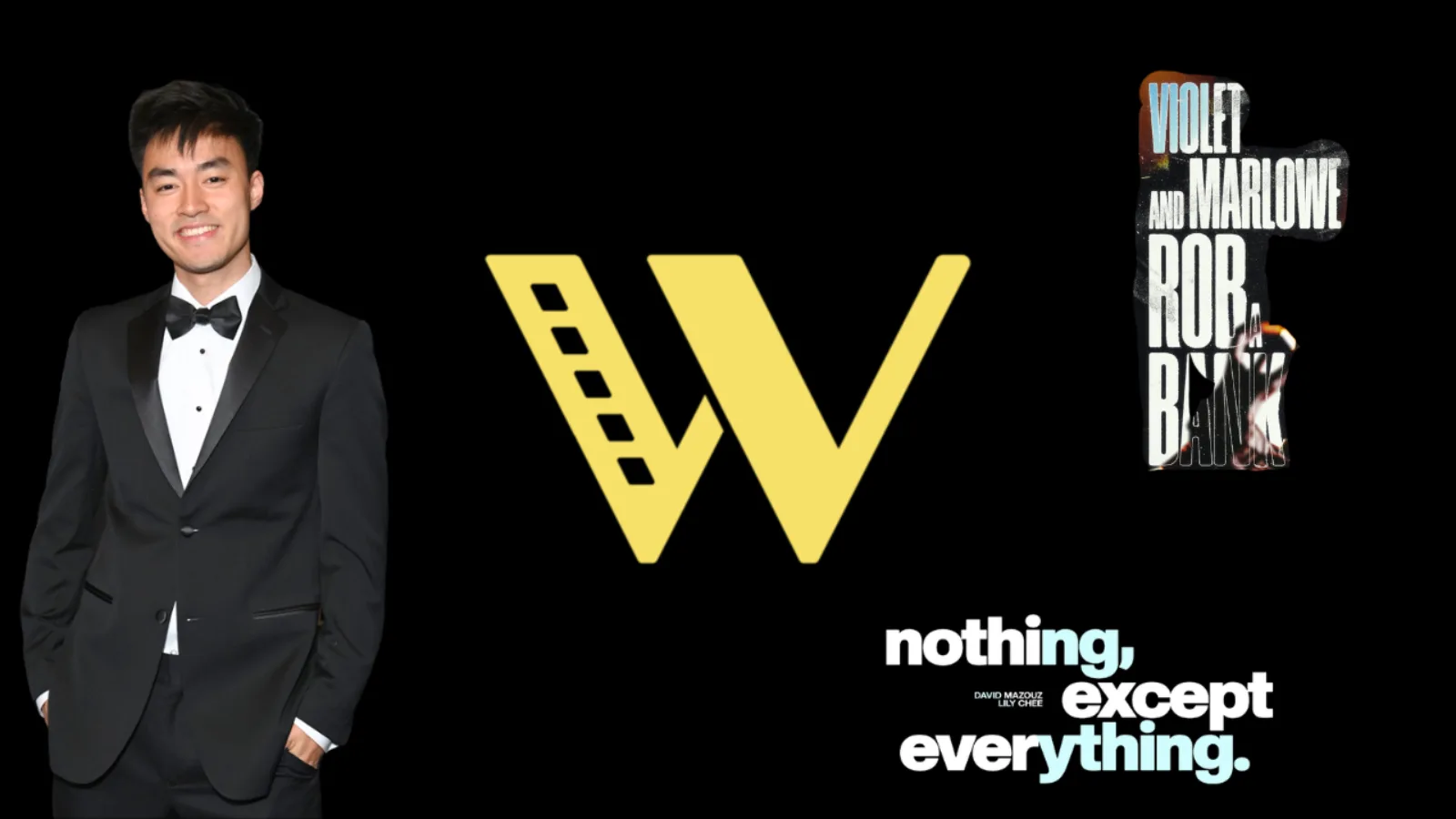
Wesley Wang on building a studio for the internet generation
Director Wesley Wang on building Wesley Wang Media, an indie studio incubator for online creators, launching a $100K open contest, and staying a filmmaker himself. Podcast highlights include: -How Wesley Wang Media flips the traditional development model. Rather than years of notes and pitch meetings behind closed doors, the company funds small, low-cost proofs of concept and lets online audiences decide what gets scaled toward streaming or theatrical. -The $100,000 open filmmaker contest the company just launched. No agent, lawyer, or prior credits required — just a 60-second pitch video, with finalists flown out for a filmed "camp" challenge to help pick the winner. -What it's like negotiating the split between building a company and staying a filmmaker himself. Wang talks candidly about the pull toward becoming an "executive producer" full-time, and his plan to keep writing and directing on the side. -Where Wang draws the line on AI. He explains why Wesley Wang Media isn't funding AI-made or AI-assisted projects right now, and compares the pull of human-made films to why nobody roots for a computer chess player over a grandmaster. If you're a creator, brand, investor or anyone with a great idea, Wesley Wang Media would like to hear from you! Email: team@wesleywangmedia.com Apply for the $100,000 filmmaker contest: https://wesleywangmedia.com/apply Find Wesley Wang: https://wesleywangmedia.com/ Instagram: @wesleywanggg @wesleywangmedia Show Rundown: 02:13 Close Focus 09:13- 52:47 Wesley Wang Interview 53:11 Short Ends 59:52 Credits The Cinematography Podcast website: www.camnoir.com YouTube: @TheCinematographyPodcast Facebook: @cinepod Instagram: @thecinepod Blue Sky: @thecinepod.bsky.social
Show notes
Filmmaker Wesley Wang first landed on the industry’s radar while he was still a teen, when his short film nothing, except everything. caught the attention of Darren Aronofsky. Made when he was just 18, the short film led to a studio deal with Sony in 2024, making him one of the youngest filmmakers ever to land one. The projects didn’t materialize, and now Wang has decided to start his own company: Wesley Wang Media. He sees his new studio as an incubator built to fund and produce work from filmmakers who’ve found traction online but haven’t had a shot at scaling it.
The pitch is straightforward: instead of years of studio notes and closed-door greenlighting, Wesley Wang Media puts up modest budgets of roughly $100K to $150K for shorts and pilots, and up to $700K for higher-end projects with co-financiers. Real audience response will decide what moves forward. “We’re kind of building it in a more public way,” Wang explains. “A lot of studios will have years of development and notes, to spend like 35 million dollars on a feature film without knowing if audiences will show up. We’re basically allowing the audiences to green light whichever films and shows come now, rather than a group of executives that are behind closed doors.”
For filmmakers and students trying to break in, that framing matters. Wang says the model grew directly out of his own frustration with the traditional pipeline. “I realized going through that that there are just tons of other problems that I think a lot of filmmakers were experiencing but didn’t really talk about,” he says. Long development times and creative standoffs are barriers he wants to eliminate at his own studio.
The company’s first big swing is a fully open $100,000 filmmaker contest. Applicants submit a 60-second video pitching their idea, with no agent, no lawyer, and no prior credits required. Finalists get flown out for an in-person filming challenge, documented in a reality-TV format to help pick the winner. “It’s going to be open submissions,” Wang says. “We just want to see the best idea win, basically, and we’ll let the internet decide.” For students especially, that’s a rare on-ramp that doesn’t require industry connections to even get in the room.
On AI, Wang is direct: Wesley Wang Media currently won’t fund projects made wholly with generative tools. As a champion chess player, Wang compares it to chess, where AI has long surpassed human players, yet people want to watch humans compete with each other. The company’s bet is that audiences will increasingly gravitate toward “authentic creators and voices” as AI content floods the internet, and both craft and originality will be the two things hardest to replace.
Wang’s goal isn’t to abandon directing for the executive chair. He intends to keep writing and directing his own projects alongside building out the company, citing Markiplier’s Iron Lung as a model for balancing both.
If you’re a creator, brand, investor or anyone with a great idea, Wesley Wang Media would like to hear from you! Email: team@wesleywangmedia.com
Apply for the $100,000 filmmaker contest
Find Wesley Wang: Instagram: @wesleywanggg @wesleywangmedia
Transcript
Read full transcript
WESLEY WANG: My name is Wesley Wang and I'm on the Cinematography Podcast. WESLEY WANG: My personal experiences at Studio System, because after nothing except everything sold to Sony and Darren Aronofsky, which was a dream, I realized going through that that there are just tons of other problems that I think a lot of filmmakers were experiencing but didn't really talk about or wasn't very well known in the industry, where it's just long development times, a lot of creative differences. We're trying to eliminate that by letting filmmakers prove their ideas and make stuff rather than go through development and not have any kind of audience feedback along the way. ILLYA FRIEDMAN: This is Cinepod, the Cinematography Podcast, a program about the art, craft, and philosophy of the moving image, presented by Hot Rod Cameras. I'm your host, Ilya Friedman, and today on our show, Ben and I speak with filmmaker Wesley Wang about his new venture, Wesley Wang Media. Wesley describes his new studio as an incubator for funding and producing films and pilots for internet filmmakers building an audience online. We dive into how Wesley Wang Media flips the traditional development model. Rather than years of notes and pitch meetings behind closed doors, the company funds small, low-cost proof of concepts and lets online audiences decide what gets scaled towards streaming or theatrical. The $100,000 open filmmaker contest the company just launched. No agents, no lawyers, or prior credits required. Just a 60-second pitch video with finalists flown out to a filmed camp. challenge to help pick the winner. What it's like negotiating the split between building a company and staying a filmmaker himself. Wang talks candidly about the pull towards becoming an executive producer full time and his plan to keep writing and directing on the side. Where Wang draws the line on AI. He explains why Wesley Wang Media isn't funding AI-made or AI-assisted projects right now and compares the pull of human-made films to why nobody roots for a computer chess player over a grandmaster. After the interview, stick around for our short ends, our pet obsessions of the week. But first, find out what's going on in the world of entertainment in our segment called Close Focus. IF: Ben, it is our Close Focus time of the show. It's the time we talk about what's going on in the world of entertainment. What's going on this week? BEN ROCK: Well, it was something you brought to my attention, and it's about a slew, a roundup, if you will, of indie favorable initiatives, would you say, that are happening around the industry? IF: Yeah, initiatives, opportunities. I think it probably makes sense to start with AMC. AMC, you know, everyone knows AMC, big, you know, movie theater chain. Yeah, not the network, the movie theater chain. Movie theater chain has just announced Leawood Films or Leawood Films. It is named after Leawood, Kansas, which is where they're headquartered. But they're also basing this out of Los Angeles. They have a presence in Los Angeles. And they say they're going to focus exclusively on... films fully financed by the filmmakers and that are already completed. So they're going to be leveraging their exhibition, marketing, and distribution expertise to expand the supply of movies for a broad array of theater operators across the U.S. and internationally. BR: You know what I think this... pertains to a little bit is that when we're talking about releasing movies, we're always talking about P&A, prints and advertising. But the P part of prints and advertising doesn't cost anything anymore because all you need to do is make a DCP and put it on some kind of FTP server or Dropbox or something and you can mass distribute your film to every digital theater in the world and it makes programming your movie basically effortless for the theater chain. The A part of P&A is what AMC is basically offering. They're giving you a screen and they're marketing you, correct? IF: It sounds like it. It also says that they are going to be very strict and respectful of 45 day or greater. for premium vod uh streaming as well as a 90 day or more window for uh the the free sort of uh s-pod streaming. BR: That is smart i mean well so that's amc kind of i mean because the theater owners want to be able to control that. IF: we'll put a link to in the show notes to um The press release, which is inside the AMC Investors page, so you can read all the details, but there's a lot more stuff in this roundup we've got to get to. We should probably talk about Tyler Perry. Tyler Perry Studios has just launched a new specialty film division championing... visionary filmmakers and it's called maxine and uh maxine is named after tyler perry's mother maxine but this is spelled slightly differently it's spelled max s-c-e-n-e and max scene i get it you got it all right very clever tyler So this specialty division is dedicated to expanding theatrical opportunities for filmmakers with distinctive voices. It is a new arm of Tyler Perry Studios and will focus on creator first and audience focused projects that are unbound to any blueprint, which to me sounds like he's willing to take some chances, willing to take some risks. And I think that's super amazing. And and we should all applaud that. BR: He's going to unleash a universe of new David Lynch's on all of us. IF: You know, there could be a David Lynch acolyte in there, but, you know, who knows what else, you know, we might get hit. And actually, he's got the number one movie on Netflix right now, too. I just saw. So it's like Tyler Perry's having a moment. He shut down a lot of production at the early days of A.I. saying that, you know, everything was there was too much risk. And, you know, who knows what was going to happen next? That all went away. He's doubling down on traditional filmmaking and and. getting into doing more and unique and interesting stuff. So I'm super excited for it. BR: As I recall at the dawn of generative AI stuff, I remember he was going to expand his studio and he halted the expansion. I wonder if he's picked that up or if he's figuring out how to just keep on keeping on in the massive space he already has, which used to be, I believe, Ted Turner's stages in Atlanta. IF: I don't know the whole story, but I would love to have him on the show. He's such an interesting guy. He's always doing interesting stuff. Tyler Perry, if you're listening out there, we'd love to chat with you about what you're doing. BR: He's directing a movie and two TV shows and a live show at the same time. I mean, that guy is prolific. He gets so much done. IF: He is. I don't know of anyone more prolific than him. It's really impressive. We should also talk about a couple other things going on. in the sort of indie film space like ripcord uh ripcord has a halloween film festival which is going to run october 19th the 29th there's uh 50 shorts that they're going to show in this film festival and there is going to be two hundred thousand dollars in cash prizes uh going to the filmmakers and they're going to show at the tlc chinese theater in hollywood so BR: nice IF: yeah it's it's a whole big thing the winner gets a hundred grand so 50% of it right there. And then the next nine runners up, they get like 11 grand or whatever they get. They split another $100,000. So it's at ripcord.film. If you're a short film horror filmmaker and you would like to submit, you should do it now because they're still taking submissions. I think so. Their festivals next month. It is. So it says submit now. Or, yeah, submit your film, watch and vote. So you can submit via Film Freeway. But, yeah, check it out. Ripcord Halloween Film Festival. BR: I might have a horror short film that I could submit to that. IF: You should. You might win some money. And, of course, I think this all dovetails really nicely into what's sort of going on at the box office in Indie Film. Buddy is up to $21-plus million. BR: Congrats to friend of the show, Casper Kelly, and personal hero of mine. IF: And just what an incredible year for horror, and indie horror in particular. It's dynamite. And this all dovetails really nicely to our guest this week, which is Wesley Wang. Wesley Wang, of course, famously sort of... plucked out of obscurity by Darren Aronofsky, got the studio deal, youngest person in the history of Hollywood to get a studio deal. That studio deal fell apart and he went and did his own thing. And we're about to talk to him. We're going to talk all about it. So I don't want to give it away here in our intro, but Wesley is a super cool guy. He's got lots of interesting thoughts and ideas about the industry and how he wants to approach his take on an indie studio. Ben, do you have anything to add to this? BR: Nothing, just having done the interview with you, I'm just shocked at how much more together and coherent Gen Z is than our generation when it comes to this kind of stuff. They just really have their shit together, and he's really smart about how he's approaching all of this. IF: Yeah, it's a really great conversation, and I think we should get to it right now. BR: All right, let's do it. IF: Hey, we're joined now by Wesley Wang. Wesley, welcome to the Cinematography Podcast. WESLEY WANG: It's great to be here. Thank you so much for having me on. BR: Hell yeah. IF: You came on my radar a few years ago with your short film that really sort of blew up on YouTube. And then it was announced in the trades that you got this incredible deal. You were the youngest, either the youngest or one of the youngest people ever to get a studio deal. And it was, you know, you were like discovered by Darren Aronofsky. Can you talk just a little bit about this, you know, this very audacious start to your career? WW: Yeah, I mean, it was kind of a whirlwind of just kind of everything I dreamed of, you know, like at a young age where I made this film and so many people responded to it on the internet. I tried to get it made into a feature film a long time before that, but only the success started coming in after that, you know, online audience validation came in. And yeah, and it was just kind of, you know, obviously Darren Aronofsky was an idol of mine, like growing up and watching his movies. And so it was a dream to, you know, be... be reached out to by him and even considered to be made into a feature film. All right, great. Well, tell everyone the title of your movie and what inspired this. Yeah, so the movie is called Nothing Except Everything. And it was inspired by just all my, it's a coming of age movie about this kid who tries to find meaning in the number seven. So it's just, it's kind of a weird premise, but it was just inspired by a lot of my high school experiences. you know falling in love growing up and all these things you kind of experience when you're 17 and and just you know all those thoughts kind of poured into the page IF: awesome uh we'll put a link to the uh to the short film in the show notes over at camnoir.com but uh i'm burying the lead a little bit the reason you really wanted to come on the show and talk to us today is You got something new going on. You got a new venture. You got a new idea. And it is inside the independent, non-dependent DIY filmmaker space, which is a space that Ben and I are super interested in and that we have spent our lives and careers and, you know, one foot in and one foot out at various points. Tell us about what you got going on. WW: Yeah. So I just started this company called Wesley Wang Media. you know original name i know but um it's uh it's a yeah it's basically we try to help filmmakers who are you know have have either had some success online or we feel like can can have success and and haven't gotten the chance yet and so we will support and fund and produce you know very small proof of concepts and release them online and help get the word out for them and then try to hopefully scale that ip as it you know um goes into you know streaming or or theatrical and all that stuff. IF: okay so so tell me about then the uh the formats that you're looking for you're looking for then future films or television series I think there's stuff that could become television series and feature films. WW: So some of them is short films that we want to turn into feature films or like pilots that we want to turn into full seasons of TV shows. IF: I guess, you know, the most obvious question is how is this different from other sort of short film development, online popularity contest projects that have come before? What makes your project different? WW: Yeah, well, we hope to... know we're kind of building it in a more public way so more so a lot of studios will like have years of development and kind of notes and and to just spend like 35 million dollars on a feature film and without knowing if you know audiences will show up but we're trying to build um audience validation more publicly where we release stuff that like for these low prices and try to see how audiences respond so we're basically allowing the audiences to green light you know whichever films and shows come now rather than, you know, a group of executives that are behind closed doors. BR: But is it like an incubator? Would you see it as an incubator for... WW: I think an incubator is a good way to put it. We kind of pitch it as like a YC combinator for films rather than an IP, rather than startups. So we kind of take really small bets, but, you know, hopefully have the ceiling is, you know, super high as we've seen with, you know, back rooms or obsession with these films that have kind of come out on... didn't come out on YouTube but the filmmakers came up through digital platforms and kind of got their start that way and so we're kind of trying to incubate the same kind of filmmakers and IP on digital platforms and then scale them you know to other forms of monetization IF: so so you went through a development process with with your short film is what you're doing now sort of like the development process that you wish that you had is this is this WW: So yeah, I kind of, that was a big inspiration for starting this company and all these projects that we're working on now where, you know, it started off with... personal experiences at Studio System because after nothing except everything sold to Sony and Darren Aronofsky which was a dream like I realized going through that that there are just tons of other you know problems that I think a lot of filmmakers were experiencing but didn't really talk about or wasn't very well known in the industry where it's just long development times a lot of creative differences and so we're trying to eliminate that by you know letting filmmakers prove their ideas and make stuff rather than, you know, go through development and not have any kind of audience feedback along the way. BR: Let's say somebody comes to you and they've got an intriguing body of YouTube work or whatever, and they have an idea they want to do. What is the gatekeeping process on your side going to look like if not a development process? Because I think Ilya and I have both been through development hell. I'm currently in development hell. And, you know, I understand that like I like I literally had a year go. by where my executive didn't even talk to me like not i wasn't like being uh uh shut out i was just backburnered and and uh and and it's like you're sitting around waiting for that so like are you saying that your process will be expedited uh and and if so like you know what what would you say would qualify someone to make a project for you WW: yeah i mean these are great questions The great thing about our company is that because we're taking such small bets and we kind of are agnostic to genre and the only thing we really care about is if you can actually prove yourself and people are responding and we're actually seeing communities built around you and your IP and stuff. And so we kind of... We'll fund things for very small and that means we can take a lot more bets. And so most studios will put out, you know, two or three movies a year, basically. And we're trying to put out, you know, closer to 20, basically, short films and pilots and TV shows. And so we are more so like we, you know, want to put our money where our mouth is and kind of just like. you know, actually make things. And because I think that's the best way to see if something is actually responding rather than on the page or, you know, a treatment or an outline and stuff like that. Like we kind of just want to give filmmakers the chance to make stuff. BR: When you say like a modest bet, like what budget range are you talking about? WW: So it can range from, we also do in-house marketing for all these projects. And so marketing included probably around 100 to 150K for our projects. And so. um they could range from anywhere from like you know 45 minute pilots to like um we're working on one that's a little higher budget but usually sometimes higher budget stuff will find other co-financiers to de-risk um and so those can range from like 400 000 to 700 000. BR: oh wow IF: that's real money yeah those are those are real budgets you can make real stuff when you're what yeah when you're working with those BR: i know multiple people making full features on budgets like that so WW: Yeah, no, for sure. And that's the most impressive part, I think, of nowadays where it's like, I think we've gotten so much better at making stuff for cheap because, you know, especially if you're releasing stuff online, the barrier to entry is so much lower. And so, you know, and also I think a lot of filmmakers are being accustomed to making stuff for cheap because it's just really hard to convince people to make something for, you know, over two million, three million dollars nowadays. IF: It's really... been talked about a lot in the trades and um are basically around uh los angeles in particular that pilot season is kind of dead pilot season doesn't exist the way that it used to and it was really really important tool for studios producers to know what they were pouring their money into was going to pay off. Do you feel like Wesley Wang Media is sort of like a new form of pilots? It's a new, it's a pilot season essentially running all the time for studios? WW: Yeah, I think that's a good way to put it. I would say we're kind of... this incubator to allow filmmakers to basically prove themselves, get a chance to prove themselves. I think a lot of filmmakers and creators online want to make narrative stuff and want to make these things, but they can't with their own money. And so that's where we step in to basically help them de-risk. And also we have our own, you know... in-house marketing system and all these producers and and executives to also help them pitch their work to studios and also get their word out there and so it's this process of like we help fund but also we help you know hopefully market and produce and sell their work too. IF: there's a there's a real uh issue with novice filmmakers and people who first get into the industry about IP and IP theft. And there's a reason why the industry more or less runs with agents and lawyers for everyone. The people who are submitting to you. Are you taking open blind submissions or are you making people go through an agent or through a lawyer? How do people get their projects in front of you? WW: That's a great question. Actually, it's a good time to announce like what another thing that we're doing at our first project of our company is actually we're giving away $100,000 to a filmmaker. and you can or anyone it doesn't you don't even have to have like formal filmmaking experience it'd be nice obviously because you know we want to see also previous work that you've done but it's going to be open submissions as you said so it's like we literally will accept anyone from you know the internet just like you all you have to do is post a 60 second video explaining your movie idea and um why you should make it basically and so it's yeah no no agents lawyers you don't need to have any of that we're kind of we again want to build a brand that that you know, it supports filmmakers and from all backgrounds, like you don't have to have experience or connections for this, in my opinion. And so we just want to see like the best idea win, basically, and we'll let the Internet decide. And so we're going to be giving a filmmaker one hundred thousand dollars to make a movie, basically. And. And yeah, and we're going to have like the top 10 applicants actually fly out to New York as well for this kind of three day camp experience where they do filmmaking challenges. And we're going to document all that in like a reality TV show type of format to decide the winner. IF: that's cool you've got this uh you know uh open to all comers i think that you might get overwhelmed here with stuff i'm also i got to imagine that your your corporate lawyer must have been like uh are you crazy because it's like at some point uh you know if you produce something else that like was submitted to this contest are you concerned about uh someone coming back saying you stole my idea you you you ripped me off. WW: Yeah, that is a great point. We need to figure out a lot of the legal stuff behind that as well still. But yeah, no, I assume like the submissions that they put in, like, you know, ideas, there are tons of ideas floating around every day. It's really hard to track like who started these ideas. And so, yeah, well, obviously. We're obviously not going to be trying to steal anyone's idea when they submit to us. IF: No, but I think that's kind of the point of Hollywood, though. It's like nobody, I don't think anyone ever sets out to, well, maybe there are some people who do set out to steal ideas. BR: There definitely are, yeah. IF: But I was going to say, I don't think that, I think it's just, it's the risk. It's the risk of then getting embroiled in these things. BR: I've gone to pitch meetings where, like, before I could even pitch my idea, they made me sign a release saying, like, You know, if I go into, you know, pitch my awesome movie about a bunch of clowns robbing a blood bank and they have something similar in development and they make that, I can't go sue them. WW: Yeah. Yeah. BR: The lines get really weird. You can have that one, by the way. That's free. If you want clowns robbing a blood bank. Who wouldn't? IF: All right. So, okay. You've got this contest. How soon does the contest start? When do people get the chance to submit? So applications open. next Wednesday. So actually in eight days. So you can literally submit, you know, anytime from then till October 4th. And all you have to do is submit a 60 second video of you explaining your idea. And yeah, and it's kind of open to anyone, basically. Anyone from the US, actually. Unfortunately, we have to figure out the visa situations. IF: Yeah. All right. So next Wednesday, that would be September 15th? 16th. IF: 16th. Okay. So this is probably going live right around then. So if you're listening to the sound of my voice, you should go over to wesleywangmedia.com. Is that your URL? Yes, wesleywangmedia.com. WW: Yeah. And then we'll have applications open on the website. IF: Terrific. All right. So Wesley, I got a few more questions about this. What does your team look like? How big of an operation are you? How did you get funding for all this? Where did the inspiration come? What's the backstory of this project? WW: yeah um i mean the company started maybe four months ago so we're still relatively new but we just hired like four people i think full-time full four four so five including me now um that you know all come from various different backgrounds one of them is creative director that has done a standup comedy and has also filmmaking experience. And then we have one that also came from Sony and Netflix. And so he has more studio experience. And so we kind of have a nice blend of different people working on it. And then, yeah, in terms of funding, so we basically raised from angel investors in around June, a million dollars. And so we kind of, that's how we got our start. And we're hopefully gonna raise more money in the next month or so. um and yeah and so they kind of all believed in the mission of of just like um you know incubating ip online and i think it's just a it's a new way of kind of bridging the creator economy in hollywood i think we're just seeing a lot of shifts that you know and hollywood is so outdated now where there's bound to be you know dramatic shifts and whenever there is dramatic shifts there's always room for you know opportunity to to to help the people that are kind of coming up IF: yeah uh So, OK, so you're working on all these projects. You've got these budgets that are not considerable. And if you've raised a million right now, you're going to have to raise some money. You've got all these people working for you because your runway is going to move really quickly as soon as you start writing checks. to produce this and make this contest and everything else. Do you have sort of like a 12-month roadmap of what success looks like? How are you going to be gauging success as you go along? WW: Yeah, I think about that every day, man. The runway of the money that we're spending is scary. Sometimes I look at our bank account and it's just like negative $200,000. Like, what are we going to do? But no, it's definitely stressful, but we definitely have a plan. And it's kind of just a lot of us just figure it out as you go. You know, you make cool stuff and you try to just do as many cool things, obviously economically, viably cool things and and the money will come somehow. And so obviously from all of the projects and the IP that we're making, we own some of the IP. And so we're going to try to sell it to studios or streamers that are consistently now looking for stuff online that has proven audiences and communities. And so that's. probably our biggest way that we're going to try to recoup our costs but obviously there's other ways like brand sponsorships um you know merchandise and all the above and so um and also we're going to raise more money from from um from venture and angel investors soon in the next months or so so but in terms of what success looks like i'd say um hopefully find you know more exciting IP and have a big sale to one of the big streamers or studios, I would say. And yeah, we have a couple of cool projects cooking. I'm working on a murder mystery TV show that is going to be interactive. And so hopefully we get a lot of people there. We get a lot of applicants for this Filmmakers University kind of project that we're running that I was just saying. And so, yeah, there's a bunch of different metrics for success, but I'd say overall just kind of growing the team, growing the company and creating cool projects overall. IF: I want to ask you, okay, so your company is going to own a portion then of all the projects that go through it that you help nurture and bring into the world. What is that percentage? How much do you, if I'm a filmmaker, how much do I give up by working with you? WW: Yeah, so typically it's 50%, but if we have co-financiers come in, sometimes it'll be less than that. And so it just, it kind of depends on the project. It just varies differently. Some filmmakers have more leverage when they walk in because they already have, you know. talent or, you know, a deal or something with a studio. And so it just depends on a lot of different things. But typically around 50% if we're kind of the first one that come in, because again, we want to also feel as incentivized as possible to, you know, market and produce and help shop the film or short or TV show or whatever it wants to be. Okay, so if you take 50% and I'm a filmmaker and we end up working together and... we do all this development you put guys put in money and then ultimately it seems like no one's going to buy it. It's going to be a pass. IF: What happens to the IP? Does the IP still remain part of Wesley Wang? Does it go back to the filmmaker? Is it still a split? What happens after? WW: Yeah, so that's a great question, and it's different every time. So sometimes we keep the IP for a certain amount of time, and then it reverts back to the filmmakers. And so sometimes, you know, the filmmaker already agrees that, you know, we don't really want to pursue this IP, and so we kind of take it out to other filmmakers. filmmakers and creators, but it just depends on each project, but typically it usually reverts back to the filmmakers after a certain period of time, like 12 months or 18 months or something like that. BR: I mean, my main question is, you know, like as a filmmaker, you've got an amazing style. And when I heard that you were doing this, I always feel bad when a director I love moves into being an executive producer primarily. And it happens all the time. And I get it. Directing is exhausting. And being an executive producer, although stressful, you know, you get to keep bankers hours. what are you keeping your is is is this signaling that you're not developing further as a director uh instead of being kind of a mogul i also like i just wonder sometimes am i just ossified and old and stuck in in the in the paradigm of uh of of how how it was because you know the creator economy is kind of totally its own thing you know like markiplier making iron lung like he's he's he's been writing directing editing producing his own stuff forever and then he just stepped it up and put a bunch of his own money into it and had an enormous payday as a result but does does any of this were down to you as a filmmaker because i what i want to see after watching your film is i want to see more films from you not necessarily more films that exist because of you that's cool but i want to see your directing? WW: Dude, the great question. Honestly, that's something I think about every day now where it's like increasingly more of my time is on the business stuff. But How I think about it is this next few months is like for me to kind of solidify the team and the company so that they can kind of run in their own capacity and me as just more of like an overseer. And so most of the stuff that I'm producing and executive producing won't be like me on the ground kind of doing it with them. It will be at the start like it is right now. But the goal absolutely is to retain as a filmmaking voice, a writer, a director. I think even Markiplier when he was making Iron Lung, obviously there he was super, super focused on. on making Iron Lung. And I suppose for my projects that for a couple of months, for example, I'll just have to be away to write and direct a TV show or a movie or whatever it is. And so that side of it will never be gone. But even for Markiplier, like I was just saying, it's like. I'm sure he still had his other business ventures on the side, like when he was doing that movie. And so that's kind of the goal for me as well. BR: Still is now. I mean, like he's he's still going. But I mean, like, you know, I don't I don't know if the same goes for the team that made Obsession, for instance, or the is it the Philippa brothers who made Talk to Me? They were big YouTubers and then they did Talk to Me and Bring Her Back. And, you know, they're visionaries. I sometimes wonder if like their whole endgame, at least for. part of the time was get out of the youtube world and get into making movies and i know a few people are like that markiplier obviously is going to do both he knows where his bread is buttered if he takes his success on iron lung and uses that to springboard let's say a giant mainstream you know mega hit will he go back to doing the YouTube stuff? I don't know. I mean, will he have time to? It's a big question. And you're more of a filmmaker. You're not like one of the, you're not a YouTube content guy, right? WW: Yeah. I mean, I kind of see it as, you know, the two worlds are kind of converging, right? So like a lot of the stuff, like for example, Nothing Except Everything was a film that was released on YouTube. And so that was content, but it was also a film, right? And so I see a lot of the things I'm making, like even this murder mystery show that I'm writing and directing, it's going to drop on YouTube primarily, but it's going to be, you know, its own kind of show as well. That's like, you know, has legit, you know, production and all this stuff. And so, you know, I think there's now it's like we're seeing there's ways to monetize off these digital platforms like YouTube, Instagram and TikTok and, you know, not just ad revenue, but also just like sponsorships and kind of, you know, all these other, you know, pay per view and stuff like that. And so I think the two worlds are kind of converging. And so I kind of see myself as like this, like, you know, obviously YouTube was a platform that I got my start on, but it's kind of this, it's just a vehicle to, you know, make. BR: You got your start on it by. by dropping an amazing film on it that got a lot of views, but you couldn't, you couldn't, you can't make a film of that quality three times a week. WW: Oh, for sure. No. BR: Yeah. You know, like, like that, that to me is what differentiates kind of filmmaking, even filmmaking specifically for YouTube versus, you know, the content creation, which is, you know, someone filming themselves playing geometry dash and making wise ass comments for an hour and a half. And, and both are valid. I'm not like saying one is, one is not a valid thing, but what you're. going after correct me if I'm wrong is more of a movie TV kind of a cinema aesthetic than a content creator kind of a process. WW: yeah but also so so and how I envision my channel on YouTube specifically is also a vehicle for stuff that i'm doing on the side that you know my team is more so working on of just like releasing like for example mr beast is a great example like he posts i don't know like a ton the best example yeah of just like stuff that you know obviously he's not creatively that involved in anymore he used to be but not anymore and so he has a team that does it and um but it still goes up on his channel and so i see it like my channel as an extension of that but also a place to you know post the work that i'm more seriously devoted to that i'm writing and directing if that makes sense BR: No, no, that's great. Yeah, I mean, like, I mean, yeah, you bring up Mr. Beast. There are things like Mr. Beast or Dude Perfect. Not that I have an eight year old son, but I do. Yes. But like Dude Perfect basically is a TV show that's just made for YouTube at this point. They've got a full team like any other TV show would have. Yeah. Then that's the coolest part about it. Like we're seeing like these, you know, worlds converging and yeah. And I think it just gives a lot more opportunity for people to have their work kind of discovered. Where do you see the future going as those worlds converge? Like I keep thinking like YouTube, like TV and YouTube are going to become almost. This just the same thing, like, you know, like talking about aspirin or Kleenex. It's just I'm going to go watch YouTube because everything will be on it. But I'd like to know from you, because you're kind of a native of that. You grew up with that. How do you how do you see the future of of of digital media, of YouTube, of like what we're going to want from YouTube? WW: Yeah. I think what people are going to bet on more than ever now, especially with AI content, that's probably going to flood the internet as well, is authentic creators and voices. So whether that's on YouTube or theatrical or different platforms, people want to root for someone and kind of support creators. And so that's kind of all the... our main mission as a company is like building a brand that also that does that but also building a brand around each ip and individual creator and so i think we're going to be seeing a shift a lot more to communities and i think why people have gravitated for two creators for so many years now um is that they already have that built in you know what i mean they have a direct channel and a direct relationship with their audiences and i think that's going to become increasingly more important over time and so um you know whether that's through youtube i'm not exactly sure but i i think um that's the reason we've seen we've seen that shift for so long and i think hollywood's going to have to start to adapt IF: You actually say on your website that your company is for the internet generation. Can you explain that a little bit? Is that your modus operandi? What do you mean that you are for the internet generation? WW: Yeah, that's a great question. It's like a catchphrase. It definitely doesn't encompass everything that we're trying to do, but I think it's a good kind of framework for at least communicating. that that we're trying to make stuff in a new kind of way and a new kind of way of distributing but also producing and and finding talent that is younger, that also makes stuff for younger generations. And so I think our audiences are going to be predominantly younger because they come from these digital platforms and they're going to be the ones that are supporting these things online, but then also going to the theaters and streaming platforms when we do scale, hopefully, these IPs larger and larger. And so I think that's kind of the idea that we're making stuff in a new way, but also for a younger generation and also by a younger generation. IF: When you say making things in a new way, are you talking specifically about development or are you actually talking about the physical process of making the projects too? Are you trying to utilize new technology? different crew arrangements how do you what do you mean by that WW: um i wouldn't say exactly through the making of things i would say more so through the funding and marketing and distributing of things which is honestly um i think what is outdated and is not um up to speed i think production is getting you know cheaper and cheaper but i think that's kind of been tried and true of like you know what what is the best way to make stuff and i think that's not the area of expertise that that we're operating in we're mostly operating in a way of giving you know film is a proper framework of, you know, letting them, you know, make their art rather than impeding in the actual production of things. IF: Cool. I think that we should switch gears and talk about your movie. Talk about like being a 17-year-old filmmaker in high school, deciding you want to undertake this thing. Now, it's got really, really high production value, but of course it all starts with a script. What's the backstory of your short that kind of got all of this rolling? WW: Yeah, it was it was honestly just and a lot of my work is this or just like finding stuff I'm interested in. And that one specifically was I was just interested in these thoughts I was having in my own life and these feelings I was having. And so just being a high school kid and when you're 17, I think that movie could only be made when I was 17 rather than, you know, I am now because they were just intensely kind of thoughts and feelings I was having about just high school and leaving home. You made it when you were 17. I wrote it when I was 17. Yeah. And then I made it, I guess when I shot it, I was 18. But yeah. Oh, old man. I know, right? You crossed the 18 barrier. But yeah, no, I think it was definitely, it was definitely like just a lot of, you know, thoughts of whether I'm going to remember all this, whether, you know, I'm going to remember all these friends. And so just a lot of those existential thoughts and kind of. I had this one scene that that scene actually in the in the nighttime, you know, scene where the or, you know, he arrives home with the girl and stuff that was actually autobiographical, like where we were in that car. And so that was that was the first scene I wrote down and everything else just kind of flowed from that. BR: And that's a great scene. IF: It is. It's that's sort of the heart of the of the movie, I would say, actually, too. What's what's quite interesting to me is that there is a lot of maturity in. your project there's a lot of maturity in in this short uh you don't see a lot BR: i wouldn't show you the stuff i made when i was 18. IF: but but also just saying that like uh quite often when I see movies made by high schoolers or people just starting out in the world. They don't have tons of extras. They don't have tons of motivated camera movement. They don't have flashback sequences. There's a lot of like stuff that's built into this. BR: They don't have good acting. IF: They don't have good acting. They don't have a good DP. BR: It's almost a cliche of like first films that the acting is all hokey and wooden and crappy. And your acting feels very genuine and real and connected, which, you know, again, when I when I look at your work, it's like. I want to see that guy keep going as a director because it shows a great deal of maturity. It's something like, because Illya and I both came up in the old film days and everything was crazy expensive to make back then. And even as we moved into digital, like editing, VTRs, decks, all that stuff is crazy expensive. And I remember like when DSLR showed up, I'm like, I'm terrified of someone who's in middle school right now who has access to a DSLR. Adobe Premiere Final Cut or whatever. And like they're building their film grammar. Like it's just part of their personality, like an artist with a sketch pad. And because like by the time I got to film school, you would go to film school just to get access to gear. But nobody needs to do that now. You could make a film on your phone that would look good. And when I saw your film, I had no idea you were 18 when you made it. But it's like the maturity of the filmmaking itself, of the cinematography, of the performance, editing, sound mixing, yada, yada. Like that shows me somebody who's got a real voice. WW: Thank you. Yeah, I mean, we have to thank Illya from what I know for a lot. of those innovations that allowed, for example, people like me when I was 17 and 18 to make stuff with higher quality cameras for cheaper and stuff. And so, yeah, it definitely, I think that even the fact that it got made at that production value is kind of a testament to how much technology is. of improved and allowed uh filmmakers to explore bolder ideas for for cheaper and without you know with less experience or less funding and all that stuff IF: let's break down a little bit how you pulled this off i mean uh you hired a dp did he show up with his own camera do you uh you hired some actors you did some casting calls it wasn't just like hey i know some people and we all got together you had a production manager or someone who could break all this down you had a first AD run the set what is your what is your process how the usually first time filmmakers, uh it's i'll just say it's a shit show. i i assume that BR: my first attempts at it are total garbage hot garbage WW: it was still a shit show i think we just managed to to hide um all those production difficulties it was definitely a tough shoot um and so yeah i mean It was kind of what you said, honestly. We found a producer that was experienced and way more experienced than me and just believed in the vision. It came after like 200 cold emails where I was begging these producers. that have gone into these festivals and had made these big short films. And so he came on and then he reached out to two cast members and then a bunch of cast members, but mostly Daveed and Lily, who are the ones that came on to play the leads. And then, yeah, and then we kind of had a DP as well come on that I interviewed a bunch of them and I thought Stefan was the best. And yeah, we had a first AD and kind of all those things came after the producer, the actors, and then the DP, I think were the three main pieces and then everything else. was just kind of flowed from that and then yeah like we posted an extras back extras casting call on backstage and just begging you know anyone to come basically and we just gave him like free pizza for for the day and so yeah BR: it's a lot of pizza for some of those shots WW: yeah those shots were funded by pizza basically IF: yes I was going to say, you've got that graduation sequence, and I'm wondering how much your budget would have been just for cap and gown rentals for all of those people sitting in the background. WW: Surprisingly, those are the cheapest items that were. Yeah, I know. That graduation sequence, we didn't even need that many people, though, for that shot. We just did some VFX tricks. You can actually do compositing. IF: You composited some people? WW: Yeah, you can see the red shirt girl. every everywhere but uh no now i'm gonna go watch it again even the fact that you were clever enough to do it like that to me says so much oh but i was i that that stuff is all just like people believing me and taking a pay cut and just like being like you know i see the vision and and they were the ones that came up like there was no way i could have come up with that specific idea um maybe if you've given me enough time but yeah a lot of it stems from just the fact that i had a really really good team supporting supporting me that just believed in me as well. IF: Yeah. What was your budget for your student film? WW: It was 45 to 50, I think around, around 48. And yeah, it was just, we funded it through mostly, so I taught chess lessons as a... like just after school as like a high schooler, middle schooler. And so a lot of taking funds from that and then just like an Indiegogo campaign where we posted like a video that we tried to just convince friends and family just to fund. And there's also this kid who like just wanted to be a part of it and EP it. And so he also put in some money. And so it was just like very scrappy kind of. friends and family um and just you know a side side hustle as well you know a lot of people look at uh indie film especially short filmmaking as uh a lottery ticket and uh they hope that something comes from it even if it's like just a festival screening IF: you're the first person i think i've ever talked to who uh invested 50k in a in a short film and actually then really had something that came out of it so it's like they're it's a very elite group of people who who actually got like a career and things and the ball rolling because they proved what they could do what is your advice to other people out there who are thinking about like doing the same thing yeah do you think that would you would you encourage other people to take that same risk or would you say yeah just be sure what you know what you're getting into WW: in hindsight it might it might have been stupid i thought i lost 50k after i submitted to all the festivals and it just went nowhere so i was in the same boat and i was like am i gonna ever make a short film again you know or i have to like scale down massively um but luckily obviously like youtube or like you know these means of distribution kind of saved me in a way um but Yeah, I would recommend like that film was obviously the result of like a lot of other films that had made before that, that were a way smaller budget and I could take risks there. And so I would say, you know, I would recommend kind of scaling up gradually, not just, you know, trying that 50K. I think that's the same with all the filmmakers that you see and that they didn't, they weren't just handed a big budget. And so, yeah, I'd say like my advice would just be to kind of scale gradually, develop your craft and learn from, you know, and obviously, you know, hopefully studios and companies like ours now that are emerging. that are also supporting filmmakers with these small budgets can also help them get a chance to prove themselves, as you said. But it is really tough. It is like a lottery ticket. That'll never change, I think, because there's only so much content in the world that people can consume. And so I think you just have to be really confident in your voice, tell an authentic story, and as you said, build up the craft gradually so you don't invest so much money on something that you weren't really prepared for. BR: I have to ask you, because to me, it's the elephant in the room of filmmaking right now. Where, if anywhere, do you think AI belongs in this process? Because, you know, like I find myself on the fence about it because like. My friend yesterday sent me this Indiana Jones AI generated short that's like 25 minutes long. And I watched the whole thing and I still feel nothing, but I can be very impressed by some of the visuals. I always hear that younger filmmakers are pushing back against it. I mean, like, honestly, I push back against it because, you know, I don't go to art to find out what a robot thinks. But I'm just curious where you stand on it. WW: Yeah, no, this is a question that I think about every day as well. I think it's a very complex issue, obviously. You know, personally, I'm not using it in any of my work in the next coming at least few years. And I also don't think it's at the point where it's even, you know, reaching a point where it's like I would feel... comfortable even other people watching stuff like that and so i see it as a means more so as you know helping me for example uh just like write emails or stuff like that or it's like you know condensed thoughts and stuff um but i don't see it as a way for for me to express um you know all the art that i'm making and but um you know i obviously see it as a means uh that in the future could could could help production in various different ways BR: I mean, if somebody came to you and pitched your company an idea that was primarily or substantially AI, would you... dissuade them or would that be a disqualifier to you WW: yeah i mean i think it's for now it would be um i think when i see that there are kind of interesting ways that it can be used in the production process in the future that i there aren't currently feasible right now then it could be a conversation for later but currently our company is not really um supporting films that are made you know entirely or or even um you know partially by ai IF: i got a question then uh And this is going to relate to chess. So, you know, we're talking about AI, but there have been AI chess algorithms for decades now that are capable of beating the best human players. But I don't ever hear about like people wanting to go watch or follow the latest algorithm that fights another algorithm to see which one is. BR: I can't wait to watch my Apple go up against Deep Blue. IF: i was i was gonna say there there seems to be something like very fundamentally human about filmmaking just the same way there is about competition in sport like chess where people want to root for humans, you know, humans who are involved in this. Do you draw any parallels between the AI-fication of, you know, the high ends of this, like, you know, these chess mathematical problems and algorithms versus like, you know, because there's a huge chess community worldwide of people who are like super, super, you know, dedicated to this and no one's like rooting for Big Blue. WW: So, yeah, that's not a thing. I think that's absolutely a great parallel to filmmaking. I think, you know, are we going to see an inshittification of the internet and a kind of AI slop kind of taking over to a certain degree? Yes, like there obviously is going to be a ton of stuff that is made that looks good and is, you know, technically great. But us as a company, we want to be on the other side that's making stuff, again, for the audience that will still show up, I think, for, you know, human-made films that are kind of, you know, made by people that, you know. have something to say, I guess. IF: Ben, you got anything that you that you BR: No, it just warms my heart to hear you say that. I mean, you know, I were as we're talking within the last week, it came out that in Danny Boyle's new movie, he's copping to the fact that they used A.I. for like 30 seconds of the movie. And already I'm seeing people disdaining it. And, you know, I think Danny Boyle's a freaking genius. And I don't know that I would skip his movie because he used A.I. for 30 seconds because I guess it was just animating still photos or something. But also the same week, Paul Schrader, the writer of Taxi Driver. is making his whole next film in AI, according to him. Yeah, which is crazy to think about. WW: Yeah, because like Paul Schrader, again, like these people I've looked up to for so long. BR: Yeah, like when I think of Paul Schrader, I think of like very emotional, primal stories. And when I think about AI, I don't think about any emotion at all. WW: More so, I'm also just curious to even see the... product and it just it's intellectually just interesting to see what you know ai is capable of and can do um in the future and so um you know i i like you said like i'm still like i'm still curious and and and would want to watch it just to be you know informed and like updated about these things but um i don't see myself as finding joy in in using it on on you know in in personal projects BR: Yeah, I'm with you. I see it as like, it'll be great for visual effects. Are there big things about your, your venture that we haven't asked you about that you, that you'd like to plug, like to talk about, you know, big struggles that you're overcoming? WW: No, I think just, you know, if you're a filmmaker, apply to Filmmakers University or like the, you know, westlymedia.com slash apply. And, and, you know, I think, again, like, I truly just want to help other filmmakers right now that are. that I hope won't go through the same process as I did or have to go through these roadblocks and can, you know, again, it is still a lottery as obviously there's going to be a lot of applicants. But I think when you take enough swings and you take enough bets on yourself, then, you know, something will land one day. And so we, you know, we want to be those supporters who take more bets with these filmmakers. IF: I do have one question about the contest, which I think hopefully might be helpful to some people who are thinking about applying. uh your judgment criteria uh ultimately you guys are looking for for uh proof of feedback proof of enjoyment from the the people who are going to be voting and you know sharing and promoting but ultimately i assume you must have some sort of like panel of judges of people who are going to make the final decision what sort of criteria what sort of stuff are you guys most looking to see in in your filmmakers what what are you hoping that they'll bring to the table? WW: that's a great question i i I'm just going to answer in a super boring way, but I think it just really does come down to originality and craft. I think those are the things that, as we talk about AI, and I think those are the two things that are just going to be very difficult to replace. And I think that's what we want to see more of in our work that we make. And so that's what the kind of filmmakers we're looking for can do. And so I think those two things, and obviously, you know, whether you're the most technically experienced or you have the largest budget to us doesn't matter as much. It's more so if we think you can do things in a small budget and you're good with, you know, crafting a story and narrative and obviously, you know, visuals and have something that's unlike anything we've seen before, then it's probably... that we would definitely highly consider. IF: Wesley, this is super inspiring. I really hope that this contest and your company are tremendously successful. And I want to thank you for being on the show. WW: No, thank you guys. You guys ask great questions. IF: All right. So that was Wesley Wang. Wesley, thank you so much for being on the show. I can't wait to see what your studio comes up with. I'm going to be following this with a lot of interest and we'll be sure to give some updates on the podcast as... Things progress. BR: And I want him to keep making his own films. Just saying. IF: Yeah, for sure. IF: So, Ben, it is our short end time of the show. It's the time we talk about our pet obsessions. What are you obsessed about this week? BR: Well, we have an interview coming up, but I wanted to kind of let everybody know about it because I think it's really cool. So David E. Williams, whose name you might know because he used to be the editor in chief at American Cinematographer. And I know him and maybe other people know him as well because he used to be the editor of Film Threat. back in the day way back in the day in the early 90s um and uh but you know for a long time i i would always read americans IF: wait a second wait a second we have a lot of younger listeners for those who don't know what is film threat BR: film threat was like a very irreverent magazine about film culture and indie film culture and uh it would often you know take people who were big time filmmakers like Steven Spielberg. Or I remember there was an issue that really went after Point Break when it first came out or The Doors or whatever. I mean, we're talking like early. They were around from like the mid 80s, I think, until the late 90s. And it was a. physical magazine children so you would like go to a bookstore and get it off of a magazine rack or you would subscribe to it and they would send you a magazine in the mail uh the mail i'll explain that to you as well later but um you know uh they also had a spinoff magazine called film threat video guide and i would love to talk to david e williams about about this a little bit when we have him on the show but film threat video guide was uh kind of the down and dirty version of Film Threat. I believe it was quarterly and they would review anything. So the first film I ever made when I was 19 years old, I made this short film on VHS and I sent it to them called No Subtlety and they just tore it apart. They just hated it. My first film review ever. I still have it. I should frame it. IF: Wow, that's great. BR: Yeah, yeah. In fact, the guy who reviewed it, his name is Dave Williams. But I always assumed that he was separate from the editor, David E. Williams. But it might be the same guy. I don't know. IF: Oh, you should pull it out and you should read it to him. BR: Yeah, I should really torture David. No, but it didn't discourage me. And I kept going. And also, you know, I was I was 19. And, you know, by comparison, you know, the guy who made the back rooms is 19 when he made it. So David E. Williams wrote a book in which he interviewed. legendary cinematographer Owen Roisman. And if you're watching our YouTube channel, you can see I got a copy of the book here. And it is a handsome freaking book. He got kind of unprecedented access to Owen Roisman, who, you know, he's the DP on things like the French Connection and Network and Tootsie. and like all of these amazing, amazing movies. And he's... it's just a gorgeous book and we're going to be having David on the show. And, you know, I want to talk to him about the book. Obviously I want to talk to him about film threat. I want to talk to him about American cinematographer because he was the editor in chief over there for a long time. And he supposedly is working on a new book about some, some guy named Toland. Never heard of him anyway. So, but anyway, that I've been reading the book. I just got it in the mail a couple of days ago and I think it's super high quality work. And David E. Williams is. a treasure to any of us who are excited about cinematography. And check it out. Get in, loser. We're reading about Owen Roisman. All right, Ilya. So that is my pet obsession of the week. What is your obsession this week? IF: It's really simple. It's Wonder Man. Wonder Man, which is a Hulu. Well, actually, it's a Disney Plus series, but it's currently on Hulu. I think it's great. It's a fantastic, fantastic. Marvel, it doesn't feel very Marvel-y to me. And I think that's probably why it got canceled. It seems like they're not going to make a season two, which I'm really disappointed about. But it was shot by Brett Pawlak, who was just on the show for Spider-Man. So, yeah. Have you watched any of this, Ben? Have you seen it? BR: I haven't seen Wonder Man, no, much to my chagrin. I haven't had the time. IF: It's a great cast. The cinematography is wonderful. And it's a little bit of a slower, more dramatic take on something that just happens. It's more like it's a drama that just happens to have something superhero-y in it. Now, you might not be totally on board because it is sort of an industry story. It's a story inside of a story. But it works out great. And Ben Kingsley comes back, reviving a character that he played before. BR: Gandhi? He's Gandhi in this? IF: No, no, he plays, he recreates this character named Trevor Slattery, who was this, who was an actor who played a terrorist in another. BR: Iron Man 3. Yeah, I know he was. Yeah, no, I remember. IF: And he's great in this. So anyway, Josh Gad, Joe Palantonio, a bunch of other guest people have come into it. And it's fun. It's different. It doesn't feel like typical Marvel. And I think actually sort of like, was it Moon Knight? That's sort of when they're at their best. BR: I love Moon Knight. Moon Knight is so good. IF: And frankly, that's kind of, I think, what makes Spider-Man popular is that he's the most self-doubting superhero of all time, which is fantastic. BR: Have you watched Lanterns, by the way, on HBO Max? IF: I have. BR: And have you watched it? IF: Yes. BR: I'm wondering if I just opened up a can of worms. I really like it. IF: But I thought the first episode was really, really poor, about two thirds of the way through. And then I felt like it picked up. And I have to say that I think I'm caught up with lanterns. It's OK. I would love for them to do something that's great. I feel like it's better than their usual. But but yeah, it's no wonder, man. Sorry. BR: That's fair. I just think that it kind of fits into what you're saying, where even though Lanterns has a superhero as its lead, it basically has two Green Lantern characters, two famous Green Lantern characters, and both of them are not presented as superheroes. They're both presented as extremely flawed, normal people. IF: Yes. BR: And I got to say, that's what Lanterns has going for it. It has really good performances from Aaron Pierre, who plays Jon Stewart, and Kyle Chandler, who plays Hal Jordan. They have a really good chemistry and back and forth repartee. And, you know, it's got its moments. But yeah, I got to say. IF: I look forward to Wonder Man and I've been watching Lanterns, but I keep wondering if I'm going to keep watching it. BR: Oh, I'm like every week I'm like, oh, it's Lanterns Day. Anyway. IF: All right. So, Ben, I think that just about does it for this episode. Where can people find you if they want to get in touch? BR: You can find me at BenRock.com, which I think I finally finished revising. So come check it out. Let me know what you think. Watch some videos. Check it out. I'm pretty proud of the website and how it's how my stuff is presented. My stuff can speak for itself, whether you like it or not. How about yourself, Illya? Where can people find you? IF: For the second week now, you can find me over at iliafriedman.com, where I've got all of my different things that are going on there. And there's going to be links to the podcast, links to Hot Rod Cameras, links to sort of essays and, you know, think pieces I've been working on, links to some of my technical stuff like the Betty Luminous Reflector and a new project that I'm working on here in Oregon. So, yeah, all of my stuff in one place at iliafriedman.com. BR: Nice. Very good. So, Ilya, who do we have to thank this week? IF: We got to thank Alana Kode, our predator. She is producing and she is editing and she is putting this show together and making sure that we don't sound like complete imbeciles as she does. Now she's going to leave something in and make me sound like she does an incredible job. BR: I'm okay sounding like an imbecile. You know, whatever. It happens. Anyone who's ever met me knows for sure. IF: And we got to thank Kays Al-Atrakchi. Kays, who did all the music you've heard on this podcast over the years. Kays does fantastic music composition, as well as visual effects and all kinds of other... Directing, color correction. Directing, color correcting, and also can fix your synthesizer. And has a whole YouTube channel called Kays Labs, Fixing Synthesizers. You should go check it out. And a business. So if you have a synthesizer that needs fixing... Go to Kay's Labs. BR: We need to make Kays a jingle. We'll work on it. IF: Wait a minute. Kays should make Kays a jingle. Yeah. We should do that. Something like, you know, something catchy and maybe with a rhyme. Yeah. Anyway, Ben, that's it for this episode. Do you want to take us out? BR: Thanks for tuning in. This has been CinePod, the cinematography podcast presented by Hot Rod Cameras. Find your next camera, lens, or accessory at hotrodcameras.com. Watch and subscribe to our show on YouTube or listen on Apple Podcasts, Spotify or wherever you get your podcasts. Follow and interact with us on Instagram threads, Facebook, Blue Sky and LinkedIn. But not not X. Don't do that. Thanks for tuning in.